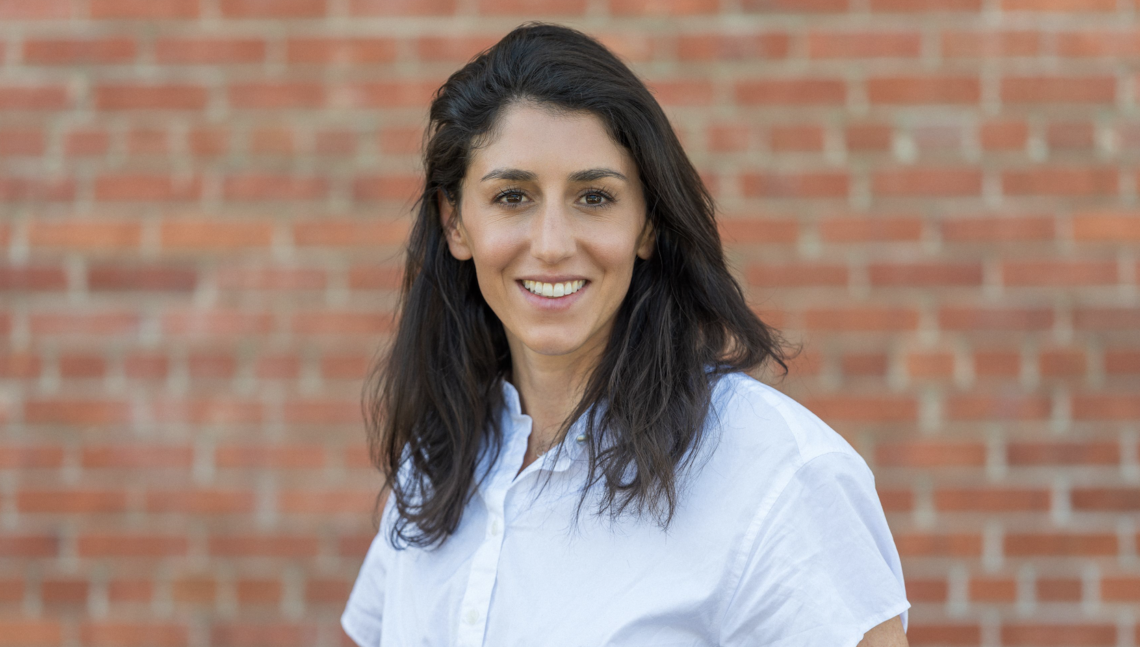

Dakota Gruener leads Reflective, a non-profit research organization aiming to radically accelerate the pace of research into sunlight reflection, a form of geoengineering that aims to temporarily cool the planet by bouncing a small fraction of sunlight back into space—for example, by injecting reflective aerosols such as sulfur dioxide into the stratosphere, mimicking the cooling effect of large volcanic eruptions. Reflective’s mission is to equip the world with the data and tools needed to make informed decisions about sunlight reflection, fast enough to matter. Across a career spanning global health, digital privacy, and climate, Gruener has focused on developing frontier technologies with the potential for worldwide impact—while ensuring the risks they pose are addressed responsibly. Originally trained in biology and political science, she served as aide-de-camp to the CEO of Gavi, the Vaccine Alliance, where she supported negotiations with vaccine manufacturers and helped raise $10 billion to fund five years of vaccine programs in low- and middle-income countries. She was also founding executive director of ID2020, a global alliance committed to ethical, privacy-protecting digital identity, and served as co-chair of both the WHO Smart Vaccine Certificate Working Group, which set international standards for COVID vaccination certificates, and the Good Health Pass Collaborative, a private-sector initiative of more than 125 companies focused on the safe resumption of international travel. Gruener, who holds a degree from Brown University, spoke about solar geoengineering at a Science House Roadshow in New York City organized by Frontiers, the open-science publisher, during Climate Week. She separately agreed to be interviewed by The Innovator on the topic.
Q: If I understand correctly, Reflective’s mission is to give the world the data to decide on sunlight reflection “fast enough to matter.” How fast is fast enough? And is there a climate tipping point that you are racing against?
DG: There isn’t a specific deadline. There isn’t a date by which we can state with any confidence that these decisions will be on the table, but we do think there are multiple forces making that decision more likely, and likely to come sooner. Climate impacts are accelerating. You only need to look at the front page of the newspaper almost any day to see that. The planet’s reflectivity is declining. This is something I think a lot of people don’t know about, but it is startling and quite scary to lots of climate scientists. Governments are beginning to look at this topic and say, “My God, the costs of adaptation, the damages that we’re about to see—is this something we should be considering?” There’s now a private-sector company called Stardust that has raised money to build and sell sunlight reflection technologies. All of these forces, we think, mean that decisions could arrive on a five- to 10-year horizon, and our sense is that this research, at its current pace, would take 10 to 20 years, maybe longer, to produce the evidence base required.
Q: You’ve called your roadmap “version one,” something concrete enough for people to argue with. What has drawn the most pushback since it came out?
DG: Two things, and both are actual feedback we’re excited to get. One was the question of who decides the gates. One of the things we think is most important in the roadmap is the introduction of the concept of gates, which we think is a really important protection against a slippery slope: one experiment doesn’t automatically lead to a larger one. What the gates are designed to do is crystallize where the important governance decisions will need to be made. So, we precisely wanted to prompt the question of who decides the gates and what criteria should determine them, and it was fantastic to hear that question surface. Exactly the conversation we hoped this would engender is starting to happen.
The other thing we anticipated, and are seeing, is people saying, “I know a lot about cloud chamber studies,” or “I know a lot about how you might design this particular stratospheric observing system, and I have a different perspective on how you might get after that,” or “I have different estimates on costs or on timeline.” This is also exactly what we wanted. We wanted people to say, “I’m an expert in this, and I’m raising my hand to talk about an alternative way we could get at it.” What there hasn’t been is pushback on the big conceptual pieces.
Q: The roadmap says one research phase could reduce uncertainty about cooling efficacy—how much the planet cools per ton of sulfur—by about 25%. What would it take to get that number to a level where governments could make a real decision?
DG: This is only one measure. We wanted there to be one number that was a useful way to think about the progressive reduction of uncertainty. There are many different ways you could think about this, and we use this one because it wraps up a lot. The amount of cooling you get per ton of sulfur has huge implications for safety in a larger deployment, because how much stuff you put up is how much stuff will eventually come down, and that matters for ecosystem impacts, human health, etc. What we say is that phase one reduces this uncertainty by a quarter and phase two reduces it by two-thirds. By that point, we think that’s really all the reduction you can get before you are actually putting enough stuff up there to start cooling the planet.
Our sense is that by the time you finish phase two, you have significantly improved our understanding of small-scale aerosol processes in the first phase, and of evolution and transport at much larger scales in the second phase. Both are used to improve and refine our climate models. Then the decision hangs on this: now that we have a much better understanding of these processes, and our climate models are improved, let’s forecast what the impacts of an actual deployment would be and make a decision based on that.
Q: At the Frontiers panel in New York, David Keith said decades of research had found no showstopper risks. He argued that what’s needed is trusted assessment of the science we already have more than new science. Do you agree? And if so, why fund more research?
DG: I don’t agree. What this roadmap shows, precisely, is where there are gaps in our scientific understanding. There are two different statements that are easy to conflate. One is David saying, “In my personal estimation, I don’t think more science is going to produce something that radically changes the overall picture,” which I think is what he means by there being no showstoppers. That is different from saying the science is settled and we know everything we need to know. What we’ve tried to do is say there are gaps in our knowledge, and some of them matter a lot more than others. I think we would agree with him that some questions will be much more decision-relevant than others. What we need to do, with finite time and finite money, is focus research on the questions where there might be surprises—where there might be something that impacts decision-making.
Q: What is a realistic governance model? Is it a UN body, a coalition of willing countries, or something new? And what would stop a single country or billionaire from going it alone?
DG: I think a coalition of countries, a club of countries, whatever term you want to use, is probably likely. At this point, I have been thinking much more about what the governance of research looks like: How do we ensure that research proceeds in this stage-gated manner with the necessary guardrails, but doesn’t become a bureaucratic hot potato so that needed research never happens and these decisions are taken from a place of lack of evidence? My sense is that there are countries starting to do research independently, to fund research, or to think about doing research, and there’s a real opportunity for those countries to ask, “How do we collaborate with one another?” I don’t think it needs to be a formal body or deeply prescriptive in any way. But I do think those member countries—which, at minimum, should also be making real commitments to decarbonization—could basically say, “We want to share information with one another about what we’re doing domestically and make sure that as we are learning, we’re learning collectively.”
Q: You built ID2020 and helped set the WHO standards for COVID vaccination certificates. What did standard-setting for a contested global technology teach you that could apply here?
DG: I draw both from my ID2020 and COVID vaccine certificate experience and from my time at Gavi, the Vaccine Alliance. What was really striking to me in the digital ID work was that you could define a set of normative standards for what a good digital ID or digital credential should and should not do, and doing that in plain language was step one. We got actors from multiple sectors—UN agencies, humanitarian organizations, tech companies, etc.—to sit around a table and say, in super simple language, what are we hoping to achieve here? Then we translated that into much more rigorous technical standards, so the tech companies were in a position to ask what it means to comply and whether they could certify what they were doing against it. The decision-making needs to be simple enough that you can bring all of those different perspectives around a common table.
My experience at Gavi is, in many ways, even more instructive. Gavi is an interesting organization that asked, “How do we maximize the benefit of childhood vaccines?” It was founded at a moment when there was a real plateau in vaccine coverage in low- and middle-income countries, and its founders set out to get all of the relevant stakeholders around a common table—again, a coalition of the willing, not everyone. They built it as a new body, UN-adjacent but not an existing UN body, and it makes incredibly consequential and highly technical choices. Do we prioritize vaccination against Japanese encephalitis or malaria, given finite money and the desire to maximize good? Those are really consequential questions that matter on technical grounds and, of course, on ethical and equity grounds, and the challenge is figuring out the appropriate way for all of those criteria to be weighed. So it is, in many ways, a governance organization, although it’s not necessarily thought of as one.
Q: You just touched on low- and middle-income countries. You’ve said in the past that unchecked warming threatens to harm developing regions disproportionately, while geoengineering also raises inequality concerns. How do you give countries in the global South a real vote rather than a consultative role?
DG: There’s really important work that partners of ours like Degrees—formerly the Degrees Initiative—have been leading. It’s an NGO dedicated to building the capacity of global South climate scientists on this topic. The intent is that you need researchers globally asking the questions that are relevant to them. A Ghanaian researcher is going to know that it’s vitally important to understand what the impacts of a particular deployment will be on this watershed or that watershed in a way that a U.S. or U.K. researcher never will. So partly you want people globally equipped to ask all of the questions relevant to them, but it also ensures that those individuals, and by extension their governments, can say, “We feel confident and ready to participate in these global discussions as leaders.”
Degrees is doing incredible work, and I think that’s one necessary piece. Increasingly, we are seeing governments where that is the case—where there has been a robust group of domestic climate scientists thinking about the topic, saying, “We know this is important, and it’s important to us that we aren’t passive or late to thinking about this.” I think that’s a real indicator that their theory of change is working.
Q: My understanding is that Reflective doesn’t accept anonymous donations or money from people whose revenue mostly comes from fossil fuels. Who funds you now? And how do you handle accusations that geoengineering gives polluters a license to keep polluting?
DG: All of our funders are on our website. That was a commitment we made. We think transparency about who funds us is key, so the list of all of them is on the site. We are funded by a range of high-net-worth individuals and foundations, all of whom are doing lots in climate generally. I think it’s important to know that these aren’t funders who see this as a silver bullet. It is part of a broader portfolio of philanthropic investments that could help with decarbonization, adaptation, and stabilization.
The question of moral hazard is a really tough one. I can speak personally, and on behalf of all the people we work with: we are all fully bought in on decarbonization and doing everything we can to bend that trend. That’s true at the personal level, in the commitments we make, and in how we all see the world. The risk right now is that even if we do absolutely everything right—and we’re in a moment where some things are not going right—the timelines are such that we have put so many greenhouse gases into the atmosphere that, even if CDR [carbon dioxide removal] scales at impossibly fast rates, we’re in a position where, as the UNEP [UN Environment Programme] report discussed a couple of weeks ago, 1.5 [degrees Celsius] is inevitable, and we are on a trajectory to almost 3 [degrees]. That means there are near-term climate damages we’ve locked in. Absent thinking about stuff like this—and again, we don’t know if this is a good idea; we don’t know if it should be deployed—if we haven’t considered the tools in our toolbox, we’re throwing up our hands and saying that whatever climate catastrophes come as a result, there’s not much we can do. I think that’s a morally complicated position as well.
Q: If the world faces this overshoot in the 2030s, what decision do you think governments will have to make, and will the science be ready by then?
DG: If we do everything we can to accelerate this research, the timeline we’ve laid out is roughly 10 years to get to the point of saying we now have what we need to make a well-informed decision. So let’s say it’s 2036 and we’ve done that full body of work—and that assumes the funding has been made available and coordination has been possible. Then I think it’s plausible that governments could make a decision to start what we describe as monitored cooling. This isn’t cooling by a dramatic amount on day one and taking your hands off the wheel. You very slowly ramp up the amount of cooling, with very sophisticated observational infrastructure that allows you to ask: What are we observing? Does that match what we expected to observe? And if not, why not? With that, you can adaptively manage the cooling, or at some point say this is behaving in unexpected ways and we shouldn’t continue. We think that is the crux of the decision.
If that decision comes in 2030, and we’ve gotten through phases zero and one, we will be in a much better position. Our understanding will be incomplete—our understanding will always be incomplete—and at that point it will be more incomplete, but at least we will know more than we know now.
Q: What would you like readers to take away from this interview?
DG: I want people to understand that this topic is growing in prominence. It has moved from the fringes of the climate space to something that Frontiers and others discussed prominently during New York Climate Week. We know enough to know that it could cool the planet, but not enough to judge whether, how, and under what conditions it could be deployed responsibly. That leaves us in a tricky spot: We can’t afford for decisions this consequential to be made without a robust evidence base, and building a robust evidence base takes time. It can’t be done overnight. It takes committed financial resources, and it requires coordination. But all of that is possible, and with it, we could be in a position to make much better-informed choices in the future.