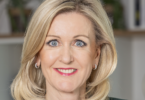

Alessandra Russo is Professor of Applied Computational Logic at Imperial College London, where she leads the Structured and Probabilistic Intelligent Knowledge Engineering (SPIKE) research group. She has held a number of significant leadership roles, including Head of the Department of Computing (2024–2025), Chair of the former Imperial-X initiative on interdisciplinary AI, and Convening Co-Director of Human and Artificial Intelligence at the School of Convergence Science. Since 2021, she has also been Co-Director of the UKRI Centre for Doctoral Training in Safe and Trusted AI, a partnership with King’s College London.
Her research tackles a central challenge in AI: how to build systems that learn from complex, imperfect data while making their reasoning understandable and their decisions trustworthy. She has pioneered several state-of-the-art AI systems that learn interpretable and transparent models from complex, noisy data. She is best known for ILASP, a system that learns human-readable logical rules from data and domain knowledge in a robust and auditable way. Her work advances neuro-symbolic AI by combining the learning capabilities of modern AI with explicit knowledge and reasoning. More recently, she has extended this work to large language models, proposing novel methods that use syntactic and semantic constraints to guide frontier models toward outputs that satisfy task-specific requirements without fine-tuning. This research is particularly relevant to high-stakes decision-making, where accuracy, safety, and generalizability are essential. Russo has led numerous research projects and published more than 200 papers at leading AI conferences and in journals. She is scheduled to speak on Oct. 15 at the GESDA conference in Geneva, on a panel about AI and the governance gap that will be moderated by The Innovator’s editor-in-chief.
Q: Rogue AI models are hacking companies and governments now, and the tech companies behind them don’t have control over their own technology. Some of the heads of these companies are begging for governance. Others are saying, “We don’t need it.” U.S. President Donald Trump has said that if the U.S. has a “smart president” like him, there is no need for rules. How are we going to do this? I am not sure anyone believes that an international body like the UN or the OECD will be able to establish and enforce effective guardrails.
AR: I strongly believe we need safeguards and some common standards when AI is used in public services or to support high-risk decisions, especially in healthcare. When mistakes can have serious consequences, we need proper oversight. This is fundamental.
In my view, the AI companies have always denied this or haven’t wanted to listen, because they wanted to push frontier AI as far as possible. The more constraints you impose on these models, the less free they are to learn from the data. The companies also wanted to understand the capabilities of these models themselves. The moment you control them, you limit their imagination, if you want to call it that, or their creativity: the emergent knowledge they might generate from the data. But they also have a responsibility for how these systems are used.
Recently, the challenge has changed, too. We have reached a point where we are no longer talking about one model answering questions. When ChatGPT first appeared, much of the discussion focused on a single model answering questions. Now we are moving toward agentic systems in which many AI agents work together. So, it is no longer about controlling one thing. It’s about letting loose thousands of possible ways of breaking the guardrails, or of models collaborating to do that. Oversight must therefore address both the behavior of individual agents and their interactions.
The technology is becoming so advanced and complex that it is very difficult even for the companies themselves to control it. The volume of code these systems can generate makes comprehensive checking increasingly difficult. It’s like having an army of programmers and letting them loose to do whatever they want. The scale and complexity make control much harder.The incidents we have heard about in the news appear to have had relatively limited impact. But a serious failure affecting society, the economy, or defense could cause a profound loss of trust among governments and the public. I think companies are increasingly recognizing this risk. Being open about the dangers and asking for help also protects them from being seen as having ignored a problem before it caused harm.
What I find encouraging is that the big technology companies are now asking for outside expertise to help assess their systems. They see the value of bringing in people beyond the teams that build the models. Policymakers, regulators, and social scientists can bring different perspectives to assessing their behavior, understanding their implications and determining which safeguards are needed. Governments need to be part of that conversation.
We have a responsibility to respond. Governments need to take this seriously, even if they’re worried about falling behind in the AI race. I think that competitive pressure is shaping the U.S. position and, to some extent, the UK’s.
We cannot ignore what these people are telling us, because they are the ones building it. So, we should listen carefully to their warnings. What they’re telling us may be only part of the picture. If they’re asking for outside help, we should take that opportunity to put proper oversight in place.
Q: We need to think outside the box and not just go to the same international agencies or trust some government branch. As you said at the beginning, this is getting so complicated computationally that there’s no way traditional regulators or the traditional regulatory framework can keep up. I heard a really interesting suggestion from someone who has worked for a Chinese sovereign wealth fund and for U.S. financial groups. He pointed to the example of Singapore, which set up an independent board to oversee its national sovereign wealth fund. Those funds are already investing in AI, and some countries are now thinking about national AI sovereign wealth funds. The independent boards that oversee them and make the investments need to understand the technology because they’re investing in it. They’re independent from the government, but they could be made accountable to it. In the U.S., for example, they could be called before Congress to justify their decisions. Such a group would not only be responsible for investments and for making sure some of the wealth generated goes back to the people but could also be tasked with governance. To me, that seems more realistic.
AR: That’s exactly the point. I have always said this. About a year and a half ago, in a meeting, I said, “What we really need is an international coalition, an international body that responsibly looks at how AI technology is advancing.” That body can be built from every single state having its own rules, because there has to be a balance between sovereignty and international coordination. We will never get agreement from all countries on what to do. But if each nation is responsible for its own governance and we then have international coordination, that would be ideal. Every country has its own needs, its own sovereign principles, its own culture, and a different appetite for risk and adherence to governance. So, it’s good to have a national body.
But those bodies can’t work in isolation. We don’t want silos, because then it becomes competitive, and it shouldn’t be competitive. There needs to be some level of coordination, reporting back, and communication, perhaps some very high-level general norms, and within that each country develops its own sovereign approach. That is really fundamental.
I don’t think many countries would object to that. The EU is an example. Different European countries came together and produced a very stringent AI Act, but they did something. Each country kept its own identity, but they coordinated. I think the UK also needs to decide what position to take, because it is playing a bit in between. There are a lot of fears about obstructing economic growth, and I suppose that is what is holding the UK back from a more drastic intervention. The U.S. is at the other extreme, and so is China. They all have their own way of seeing things.
There is also another aspect, closer to my research: stimulating the development of new technological solutions that embed some form of safety in the way these models are trained and the way they compute. Currently, these models are trained to produce successful answers. The optimization principle is targeted at success. But they don’t have the kind of self-reflection that would let them see where they go wrong and repair themselves according to some societal-good or governance principle. We need to develop those abilities alongside the bodies responsible for oversight. Safety has to be built into the technology as well as supported by the rules governing its use.
Q: This is really needed because AI models that are hacking into companies and governments want to win at all costs.
AR: They’re trained to do that. The optimization function by which these large models are trained is designed to maximize success. I could understand that at the beginning, when the technology was just getting started. But now these companies, and science, need to think responsibly about how to make the models more self-reflective, so they understand where they go wrong and don’t just maximize success but comply better with certain principles or constraints, whatever we want to call them. That is not in the system at all, and people really need to think about it.
Maybe in certain sectors it doesn’t matter if you don’t gain that 0.1% increase in accuracy. You can sacrifice a little, but the system is safe to use. That’s the balance that needs to be struck.
The interesting aspect is that all of this should be seen in a positive light, because the safer these systems are, the more people will trust them and the easier it will be to deploy these tools in society, for instance in healthcare, or even, to a certain extent, in the financial markets. The reason healthcare struggles to use generative AI models is that they are truly black boxes. There are no guarantees on the correctness of what they generate.
There has been a lot of work, comparatively, on medical image processing — years of research. With the very early neural networks, there was big news that a system had identified something negative in an X-ray, but it had actually read a label at the bottom of the X-ray rather than understanding the image. Researchers made incredible advances. They made the systems better and better at eliminating this kind of wrong behavior. We should have something equivalent, at scale, for LLMs and generative AI models: improving them not in accuracy but in their reasoning and analysis, so that the way they think takes safety into account.
Q: How do we ensure that all countries abide by embedding safeguards? I can’t help feeling we’re spinning our wheels. We’ve had so many international meetings with all kinds of government heads, and everyone says, “Yes, yes, we should do something,” but nothing has been done. So many meetings, so many years. We see the danger ahead, but it seems like the world is unable to stop talking and act.
AR: I completely agree. What I was describing runs in parallel to that. There needs to be a starting point somewhere that triggers the process, and having a national, independent body that develops the regulatory framework is crucial. Take COVID, for instance. It was a big emergency, and there was an independent medical body, not the government, that knew the regulations, knew health, and knew the impact and where the vaccine research was going. The domain experts informed policy and liaised with the government. We need something similar: an independent body of experts. Not just AI experts, but experts in policy, government, law, and social issues, working together to design the framework within which these systems can be considered socially acceptable. We need that same mix of expertise for AI.
But rules alone aren’t enough. Without scientific advancement, it becomes an effort that doesn’t lead anywhere. People will try to find a back door or hire the best lawyer to argue that what they have done is not really breaking the law. We see this with social media. How many regulations have we put on social media? And they still find a way around them. So, you want both: a stronger regulatory framework, and a scientific effort to improve how these models are trained and to design better architectures that build constraints and safeguards into the training process. The regulatory framework should be designed into the system from the start, not applied afterward, when people can try to get around it.
Q: But what if European countries and the U.S. comply but China doesn’t? Then the AI companies will say, “We’re at a disadvantage because we have to comply and the Chinese companies don’t.”
AR: There needs to be global enforcement, but there also needs to be a mechanism that sets out the consequences. How do we actually enforce it? We can make regulations, but what happens when they are violated? These models are software. China is developing completely open-weight models that can be made widely available online and used far beyond the country where they were developed. It is getting so far out of control that it’s very difficult to see how we police or enforce this. It’s really not easy.
We also have to accept that no set of rules can stop every misuse. To a certain extent, there will always be somebody who misuses a technology, whatever regulations you have. We already regulate technologies that are very dangerous. We use them for good, but they can also be used for bad, and there are frameworks in place. Still, there is always a risk that somebody misuses them. The question is how we minimize that risk. We cannot eliminate it completely. It starts with how these models are adopted in companies and industry, doing it properly.
We are also responsible for educating our young people. The younger generation is thinking, “I can do everything with ChatGPT. I don’t need to study anything. I’ll just ask it.” That’s another component. Sovereignty also means maintaining our own creativity. The risk of canceling out humanity is a really big one. How do we guarantee that we keep our own creativity, imagination, and ingenuity? How do we protect that?
We need to take on a lot of responsibility on many different fronts. It’s a big problem, but it’s not too big to tackle. We need to start somewhere. In terms of governance, regulation, and agreement at the national level, there needs to be enforcement. I don’t want to use the word ‘punishment,’ and I’m not sure what the best term is, but there needs to be some indication of what the consequences would be. I’m not sure who the right global leaders are, the people with the strength to do that. That’s the question.
Q: You make the great point that we need to start somewhere. What would you recommend be done in the next 12 months? What concrete measures can and should be taken?
AR: I’d start by bringing government, technology companies, academics, and experts in policy and other relevant fields together in a national forum. An organization like the Royal Society could help lead that conversation as a trusted, neutral body. They should be the facilitators. A few years ago, at the first AI summit, all the big tech companies were there, but there were few experts from academia in the conversation. The tech companies are now open to this. They’re actually asking for outside experts. So we need a convergence of government, policy experts, cross-disciplinary experts, and the tech companies, all sitting together.
Why don’t we hold a summit on this, even in one country? Why doesn’t the UK create something like that to start with? Other countries might follow suit. It would show what we can achieve if we sit together. We come up with an action plan we are happy with, take it forward, present it to others as an example, and then engage in a broader international conversation.
The EU AI Act is something like that, but it is too strong. It jumped to strict standardization of everything in a situation where it is difficult even to control these models, because they are completely free. There is a mismatch between what the technology is and what is being imposed on it. Rules need to be developed gradually, also because policymakers and governments might not know all the difficulties. That’s why it needs to be outside the regular regulatory environment.
Q: Do you agree, then, that you need an outside, independent group charged with governance that can be very dynamic and reactive, that has the necessary expertise to deal with this in real time, and that won’t be snowed or bullied by the tech companies? We can’t let them decide how this is going to go.
AR: Yes, company leaders should be part of the conversation, not to dominate it or dictate the terms, but to balance it. We need their knowledge, and we also need the group to remain independent. You also need people with the same level of knowledge, and I think there are quite a lot of them. There are many advanced senior researchers in these companies, some of them academics. They understand the technology, and they are very aware of what is going on inside these companies. That is why some of them are now leaving: they have become scared and don’t want to be responsible. Those are the people we should bring in.
There was an early attempt like that. When ChatGPT came out, there was a petition, signed by a number of people, saying we have to be very careful with these technologies. Then other tech leaders immediately attacked it as nonsense. If we bring in representatives from all the big tech companies, which are now competing with each other, together with these other people, we could have a body that discusses what we should and shouldn’t be doing.
I agree that the level of communication, knowledge, and expertise needs to be on par. But it’s also true that whatever actions are taken or plans are made have to be executed by the CEOs and CTOs of these companies. They need to align with it. We cannot work at just one level. We need to go horizontally and vertically at the same time, from the lay person adopting these tools up to the CEO of a large tech company. It’s a complicated process, but we need to start somewhere.
There is another important angle. I don’t know about other countries, but in the UK the BBC has started running AI programs where they bring in experts to explain what this technology is and what the risks are. This kind of positive, educational journalism is really important, because people follow it and become aware of these issues. On the other hand, we need to make sure journalism doesn’t just chase slogans and big headlines.
Q: What would you like readers to take away from this interview?
AR: Having control of this technology is also a means of controlling our own humanity and of maintaining and protecting it. It is time to act.