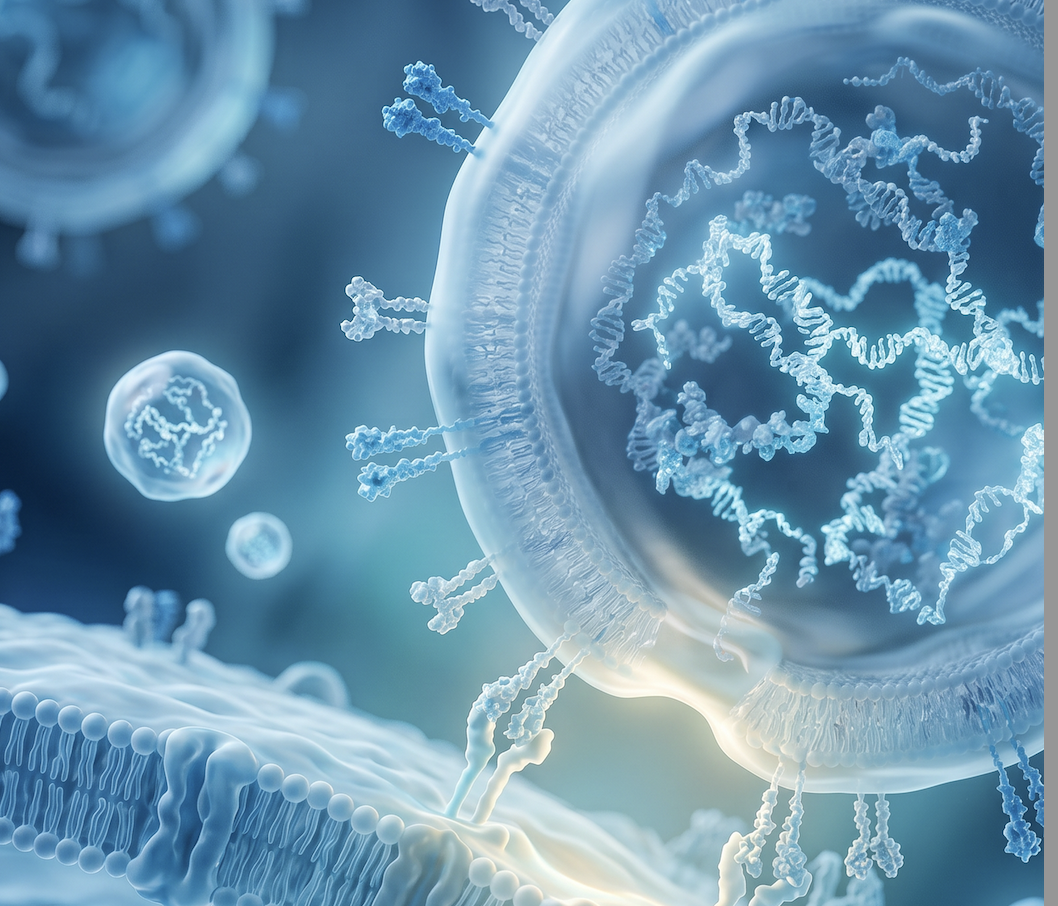

In neonatal intensive care units in Europe, doctors are testing an unusual medicine on some of the most fragile patients imaginable: babies born so early that their lungs are not ready to breathe. The treatment, called EXOB-001, is made by EXO Biologics, a startup based in Liège, Belgium. It consists of exosomes, tiny bubble-like packets that cells release to send molecular messages to one another, harvested from stem cells grown from umbilical cord tissue. The exosomes are delivered through a tube into the baby’s windpipe to prevent bronchopulmonary dysplasia (BPD), a chronic lung disease that the company calls the most common cause of death in preterm newborns and for which there is no specific treatment.
The European Medicines Agency approved the trial in July 2023, making it the first trial of its kind authorized by the EU regulator. The trial registry calls for 36 babies in the first phase, which tests safety and dosing, followed by 203 babies who will be randomly assigned to the treatment or a placebo. The drug has orphan drug designations, which give companies regulatory and commercial incentives to develop treatments for rare diseases, from both the EMA and the U.S. Food and Drug Administration (FDA). If the data are positive, CEO Hugues Wallemacq has said he expects to seek conditional market approval directly after the second phase.
EXO Biologics is one example of how researchers and companies in Europe, the U.S., and China are inching closer to commercializing exosome drug delivery, which the World Economic Forum named one of its Top 10 Emerging Technologies of 2026. The annual report, produced with the open-science publisher Frontiers and published in June, picks technologies for their novelty, development progress, and potential impact, and for signs that they are nearing the point where decisions by governments, industry, and research institutions will shape how they arrive in the world.
Exosomes could carry drugs to places in the body that medicine has struggled to reach, including the brain. The promise is big, but so are the caveats. No exosome-based therapy has yet been approved by the FDA. “There’s a lot of interest and a lot of potential in the technology,” says Driton Vllasaliu, an associate professor in biotherapeutics delivery at King’s College London, who co-wrote the report’s exosome chapter with Gianni Ciofani, research director at the Italian Institute of Technology. But Vllasaliu cautions that the field is still working through a familiar cycle of over-enthusiasm followed by a reality check. “We’ve been here before with systems like liposomes, with systems like cell therapies,” he says. Those fields went on to produce products now used in clinics. The question for investors and drugmakers is how long exosomes will take to do the same.
Solving Medicine’s Last-Mile Problem
The Forum report frames the opportunity as a last-mile problem. A new generation of targeted therapies can silence a faulty gene, correct a mutation, or deliver a protein to a diseased cell, and many work in the lab. But most break down in the bloodstream, are attacked by the immune system, or are blocked by the barriers the body uses to keep foreign material out. “The most sophisticated therapy in the world is only as good as its ability to reach the cell that needs it,” the report says.
Exosomes are the body’s own internal mail system. Cells constantly release these membrane-wrapped packets to deliver proteins and genetic instructions to other cells. Because they carry molecular signatures the body recognizes as its own, the report says, they can survive in the bloodstream, cross barriers such as the one protecting the brain, and deliver their contents into cells better than man-made carriers. Engineering them for drug delivery means loading the packet with medicine and reprogramming its surface so it seeks out a specific diseased cell. “The body accepts the delivery because it recognizes the courier,” the report says.
Using carriers to ferry drugs around the body is not new, says Vllasaliu. Liposomes and lipid nanoparticles, tiny synthetic bubbles of fat, have been used for decades and carry the messenger RNA in COVID-19 vaccines. “Where exosomes differ is they are potentially better carriers,” he says, with better targeting and a better ability to cross biological barriers. One intriguing property: exosomes tend to return to the type of tissue that produced them. “You use the source that you want to target … as a factory to produce your exosomes, and then you load them with drugs,” he says.
The report credits a cluster of advances in the early 2020s for moving the field forward. Automated systems, 3D bioreactors (vessels that grow cells at scale), and new purification techniques raised yields by up to 50-fold, making clinical-scale production viable for the first time. Regulators including the FDA and EMA now classify exosome therapies as biological medicinal products, giving developers a category to work within even as the approval framework is still being built. More than 200 clinical trials have been launched since 2022 in cancer, neurological disease, and long COVID.
The biggest prize may be the brain. “Exosome studies have demonstrated effective delivery of chemotherapies, genetic medicines, therapeutic RNA, proteins and more to the brain, which could revolutionize treatments for a wide range of neurological diseases,” including Alzheimer’s, Parkinson’s, ALS, and Huntington’s, Ciofani and Vllasaliu write in the report. “Given the vast global burden of neurological disease, this capability could impact hundreds of millions of patients.”
Early Results
The report points to several early results. At the University of Texas MD Anderson Cancer Center, pancreatic cancer patients with no remaining treatment options received engineered exosomes carrying small interfering RNA (siRNA), a type of genetic molecule that switches off a specific gene, aimed at a mutation in the KRAS gene that has defeated earlier drugs. MD Anderson’s April 2025 announcement described 12 patients, six of whom saw their target tumors stop growing, with no dose-limiting side effects.
In an interview with The Innovator, Ciofani warned that it is important not to over-interpret that result. Stable tumors are not the same as tumors shrinking, he notes, and the benefit did not last: the disease in patients eventually progressed. The findings “support feasibility and target engagement, but cannot establish a survival benefit,” he says. A follow-on study combining the exosomes with an existing immunotherapy is now listed by the U.S. National Cancer Institute.
The same caution applies to the brain. Vllasaliu says the evidence that exosomes cross the blood-brain barrier, the protective filter that keeps most drugs out of the brain, comes from animal studies. “Before we find that level of evidence in humans, I think it would be a bit premature to conclude” that neurology is a key therapeutic area, he says. The 2025 gene-editing study highlighted in the report injected engineered vesicles directly into fluid-filled spaces in the brains of mice, bypassing the barrier altogether, according to Ciofani’s written answer to questions from The Innovator.
The report’s imagined scenario for 2031 has a neurologist administering an exosome-delivered therapy to an ALS patient in one of the first trials to clear early regulatory milestones. The co-authors call that “plausible as an early clinical-development scenario” if it means permission to start a trial or early safety findings, but “optimistic if interpreted as an approved, effective ALS treatment available to patients by 2031.” UK-based Evox Therapeutics has an ALS program and is targeting first human dosing in Huntington’s disease in 2027, according to a company presentation cited by the co-authors.
The nearest commercial uses may not be drugs at all. The report expects diagnostics to come first, because reading exosomes is easier than engineering them. Exosomes circulating in blood, urine, or saliva carry signals that can flag disease. The co-authors point to the ExoDx Prostate test, a commercially available urine test that analyzes genetic material in exosomes to help doctors decide whether a man needs a prostate biopsy. But they caution that success in diagnostics offers “no automatic regulatory shortcut for an injectable therapy.”
Nor does anyone expect the first approved therapy to be a brain drug. “A narrowly defined indication with an accessible target tissue and measurable clinical endpoints could reach approval before a systemically delivered treatment for a chronic brain disease,” Ciofani says, declining to put a date on it. That description fits programs like EXO Biologics’ lung trial, where the exosomes go directly to the organ being treated and BPD is a clear-cut diagnosis made a few months after birth. Vllasaliu adds that developers are deliberately targeting rare, severe diseases with no good alternatives, both because regulators offer incentives and because “it makes sense to focus on the ones for which the current therapies are not that effective.”
Follow The Money
The report cites a $1.5 billion collaboration between Eli Lilly and Evox Therapeutics as a sign that the industry has taken note. But that deal dates from 2020, and most of its value is contingent. Evox’s announcement at the time specified $20 million upfront, a $10 million convertible investment, research funding, and up to about $1.2 billion in milestone payments, the co-authors note. They call it “historical evidence of interest, not evidence of a recent clinical breakthrough.”
The field has also had a high-profile failure. Codiak BioSciences, once the best-funded exosome company, filed for bankruptcy in 2023. The lesson, Ciofani says, is not that exosome delivery doesn’t work but that a new platform is exposed “when substantial development costs arrive before convincing clinical validation.” His advice: concentrate resources on a few candidates with measurable results in humans and a credible manufacturing plan.
That is where the money is now going. Rather than discovery deals, recent transactions focus on building production capacity. In July, Evox and UK contract manufacturer eXmoor Pharma completed a technology transfer for Evox’s Huntington’s gene-editing program, laying the groundwork for clinical-grade production in Bristol. In August, NurExone Biologic signed a binding memorandum of understanding with Made Scientific for U.S. manufacturing, aiming for its first Good Manufacturing Practice (GMP) batches in the first half of 2027. (GMP is the quality standard regulators require for medicines given to people.) The same month, Celularity agreed to manufacture products for Singapore-based MuseCell Innovations, including exosomes, in a relationship that MuseCell projects could exceed $300 million in purchases over five years. Earlier, in September 2025, Swiss contract manufacturer Lonza signed a manufacturing agreement with U.S.-based RION for its platelet-derived exosome products.
Belgium’s EXO Biologics has built its own factory. In December 2024, its manufacturing subsidiary, ExoXpert, became the first exosome-specialist contract manufacturer in Europe to receive GMP certification. The company says it has also loaded messenger RNA and DNA, the genetic instructions used in vaccines and gene therapies, into clinical-grade exosomes, retaining up to 80% of the DNA cargo in early tests. That capability has attracted partners. French drugmaker Servier has signed a collaboration to evaluate the company’s exosomes as a non-viral vehicle for delivering drugs in an undisclosed disease, and Norwegian and Swedish hospitals and universities plan early-stage trials in Parkinson’s disease and multiple sclerosis using EXO Biologics’ material. The company, which raised up to €16 million in Series A funding in 2024, including subsidies from the Walloon government, is betting it can make money both by developing its own drugs and by manufacturing exosomes for others.
The Economics Remain Daunting
Producing exosomes means growing cells in large bioreactors and then separating out the vesicles through slow, labor-intensive processes such as ultracentrifugation, spinning samples at extremely high speeds. “It’s unlikely to be cheap because the isolation, the production process of these exosomes is super laborious,” says Vllasaliu. Unlike a one-off gene therapy, most exosome treatments are likely to require repeat doses, and no one yet knows what a human dose will cost. That, he says, is another reason companies are focusing on diseases with no alternatives, where they “are more likely to justify a higher price.” Ciofani cautions against reading too much into manufacturing gains: “Fifty times more particles does not necessarily mean fifty times more active doses or a fiftyfold reduction in cost,” he says.
Some researchers think cheaper sources will help. Vllasaliu’s own lab at King’s College London extracts exosomes from ordinary supermarket milk, which is orders of magnitude cheaper as a raw material than stem cells, and uses them as empty shells to carry drugs. The target is GLP-1 weight-loss and diabetes drugs, which are mostly injected. Only about 1% of the drug in today’s oral versions is absorbed, he says. Raising that to around 10% would save enough drug to offset the cost of the carrier. His team has filed a patent and hopes to form a spinout company next year.
Market estimates published this month vary widely. One puts the exosome therapeutics market at $56 million in 2025, rising to $220 million by 2033; another puts it at $275 million in 2026, rising to about $1.5 billion by 2034. A figure of $58 billion circulates widely online, mainly on clinic and wellness websites, and likely lumps in research tools, diagnostics, and cosmetic sales. The thousandfold spread says more about hype than about the market.
The next big test of investor sentiment comes on November 22, when the FDA is due to decide on Capricor Therapeutics’ deramiocel for Duchenne muscular dystrophy. Some market reports have billed it as the first FDA decision on an exosome therapy. It isn’t. Deramiocel is a cell therapy made from heart-derived cells; exosomes are its proposed mechanism of action, and Capricor’s actual exosome candidate is a separate program. An FDA advisory committee voted against the therapy in July, though the agency has recently revived several drugs it had previously delayed or rejected. Even an approval would not end the field’s wait for its first approved exosome drug.
Why There Are No Approvals Yet
The main obstacle is consistency. A liposome is chemically defined, made from two, three, or four ingredients, and comes out the same if the recipe is followed. An exosome contains hundreds of lipids and proteins plus other biological material. “The complexity is what is probably holding the technology back at the moment,” says Vllasaliu.
He illustrates the problem with his own milk exosomes. Will a batch made from milk bought one week at one supermarket match the batch made from a different breed of cow’s milk the next? Stem-cell exosomes raise the same question if the cells age or growing conditions change. “A minor change in the process, in the source and so on could have potentially major implications in the actual final product,” he says. “That is what the regulators don’t like at all.” With therapeutic exosomes, it is also often unclear which of the thousands of components is responsible for the effect.
The co-authors identify the single biggest manufacturing bottleneck as “reproducible biological potency at scale”: proving that every batch carries the same amount of active medicine, reaches the right cells, and has the same effect. The report adds that the field has not even agreed on how to measure a dose. It can be counted by number of particles, protein content, or the activity of the drug cargo, which makes studies hard to compare. The International Society for Extracellular Vesicles has published reporting guidelines, but the co-authors note that these are research guidance, “rather than regulatory approval criteria or a single dosing standard.”
Regulators also want to know exactly where a drug goes in the body and how long it stays. Targeted delivery does not exempt exosomes from that requirement, Ciofani says; “it makes the distribution evidence especially important.” He adds that the FDA and EMA have not created a shared, exosome-specific pathway. Repeat dosing raises further questions, since a reassuring result after one dose “cannot establish safety over years of repeat treatment.”
The field’s reputation is another risk. The FDA has warned the public about serious adverse events linked to unapproved products marketed as exosomes, largely sold through cosmetic and wellness clinics. “That is giving exosomes a bad name,” says Vllasaliu, though he stresses the need to separate damage to public perception from the scientific case for legitimate therapies. Regulatory signals can also run ahead of the evidence. In October 2025, Exousia Pro received an FDA orphan drug designation for an exosome-based therapy for glioblastoma, an aggressive brain cancer, based only on preclinical data.
Geography matters too. Vllasaliu’s research suggests China is ahead in the number of clinical trials, with the U.S. second and Europe lagging behind. Many European countries have their own exosome society or initiative, he says, but there is no coordinated effort to tackle commercialization. “There needs to be a pot of money that unifies various efforts,” he says. Ciofani cautions against a numerical ranking, since trial counts can mix diagnostics, unmodified vesicles, and studies that never enrolled patients. What would help Europe lead, he says, is sustained funding through clinical proof of concept, shared access to GMP manufacturing and analytical expertise, and coordinated trials across multiple centers.
What to Watch
The coming weeks will offer several markers. Industry players gather in Berlin on November 4–5 for Exosomes Europe, where manufacturing and tests that measure a product’s potency are on the agenda. The FDA’s Capricor decision follows on November 22. Further out, investors will be looking for interim safety data from EXO Biologics’ BPD trial, which would trigger its placebo-controlled second phase, and for Evox’s planned first-in-human Huntington’s study in 2027.
Vllasaliu remains optimistic, citing the research momentum behind the field. “There are regulatory barriers to be overcome. There’s issues to tackle, but I think there’s clearly potential in these systems,” he says.
Approval before 2031 would require a candidate to generate persuasive clinical benefit, establish durable safety, and secure reproducible commercial manufacturing, says Ciofani. That is still some time away. “Any forecast about when the first exosome therapy will be approved should follow those milestones rather than a calendar date,” he says.
This article is content that would normally only be available to subscribers. Become a subscriber to see what you have been missing