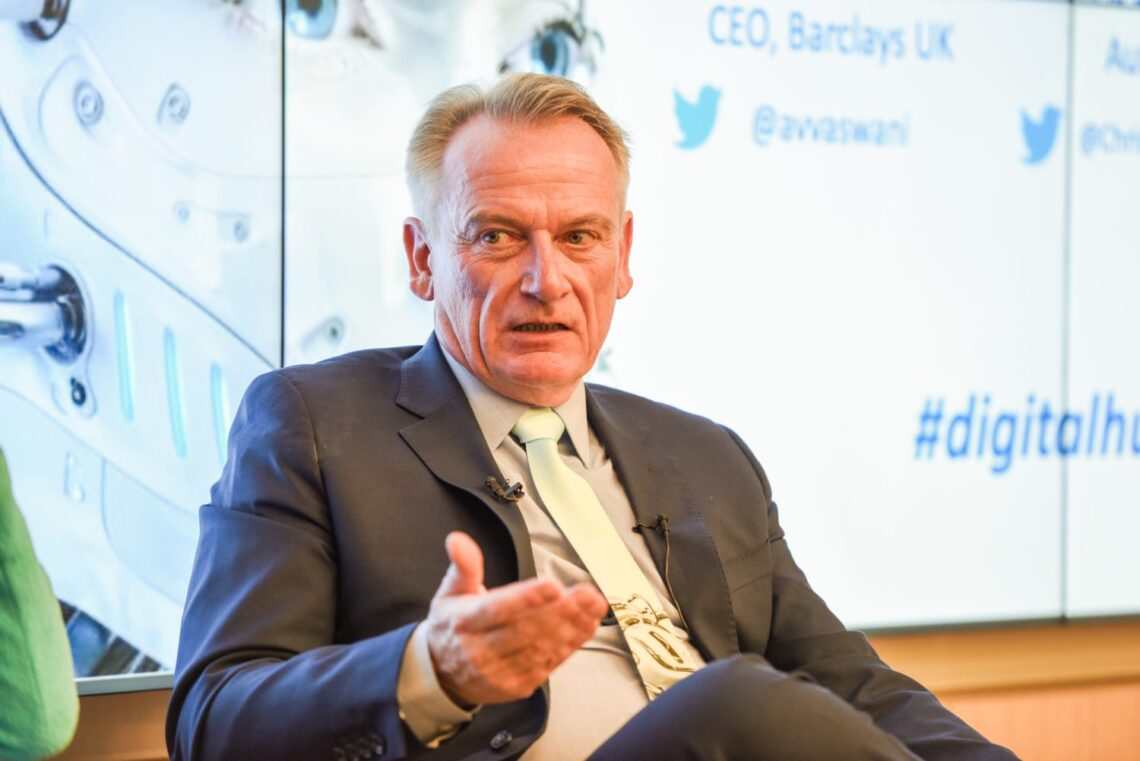

Chris Skinner is a strategist specializing in the future of business, technology and finance. Author of more than twenty bestselling books from Digital Bank to Intelligent Bank, his work explores the intersection of banking, fintech and emerging technologies, with a particular focus on how Cloud computing, mobile networks, artificial intelligence, machine learning, central bank digital currencies and cryptocurrencies are reshaping financial services.
Through his daily blog, The Finanser, Skinner comments on the evolving world of finance and technology. He also helped found one of the world’s first mobile banks and has advised CEOs, policymakers and business leaders globally. Skinner recently spoke with The Innovator about his latest book, The Intelligent Bank.
Q: How do you define an intelligent bank?
CS: An intelligent bank is AI-native and digital at the core. These are layers of technology revolutions in finance, and the book describes the three major phases of banking evolution with technology.
The first phase was about automating the mundane through mainframes. That era lasted for roughly half a century, from the 1960s through to the early 2000s.
The second phase was driven by Cloud computing and smartphones. Banking shifted from back-office efficiency to customer experience. APIs enabled open banking, mobile apps transformed how people interacted with money, and financial services became embedded into everyday digital life. It also created the fintech revolution which, as we know today, has had massive impact.
Now we are entering the third revolution: banking that is AI-native. These are systems with built-in sensing mechanisms that intelligently monitor, analyze and support everything we do with our money in real time. I think this revolution is even bigger than the digital fintech transition.
Q: What will the intelligent bank bring to the customer?
CS: My favorite example is simple. Imagine the bank notices I’m buying expensive subway tickets every day and asks: “Why don’t you have a season ticket?” I reply that I cannot afford the upfront cost within my monthly budget. The bank responds: “Swipe right and we’ll get you one.” Technically, it’s a loan. But emotionally, it feels like the bank solved a problem for me before I even asked. That’s intelligent banking.
What I find challenging with many established institutions is that they are running core systems built for a completely different era. Many banks still rely on aging mainframe infrastructure they have never fundamentally modernized. Systems that were built purely for transaction processing and administration.Yet today’s world is real-time, interconnected and intelligent. Customers expect services to work instantly, securely and invisibly in the background. You cannot deliver that with systems designed decades ago.
Even when we talk about digital transformation, that’s a conversation from a decade ago. If you are still “doing digital”, you are already behind. Digital transformation was yesterday’s challenge. Today is about becoming AI-native.
That is what The Intelligent Bank is really about. It is both a warning and a roadmap. Banks that fail to move from digital to intelligent will not disappear because they lack apps or AI tools. They will disappear because they fail to earn trust in an autonomous, AI-driven world. Who knows what will happen to banks that are still doing digital?
Q: Which banks come closest to being intelligent today?
CS: Many of the neobanks are doing interesting things. Revolut, for example, talks about becoming a global banking super-app. They are pursuing that ambition through open banking, APIs and a platform ecosystem of integrated partners.It shows how banking has evolved from physical branches and siloed services into a world of ecosystems, connectivity and embedded experiences where everything is integrated seamlessly and, more importantly, securely.
That balance between simplicity and security is critical. The banks that win in the future will be the ones that make banking feel effortless while still maintaining trust.
It will not only be the challenger banks that succeed. Institutions such as JPMorgan Chase are investing enormous sums into technology and innovation. You do not spend $20 billion a year on technology, half of which is innovation-focused, unless you understand where the future is heading.
The real issue always comes back to trust. Who do you trust with your money? Why do you trust them? How is that trust created and maintained?
One of the central themes of my book is that true transformation begins with two long-neglected foundations: trust in identity and trust in data. Banks still struggle with fragmented systems, duplicated records and rising threats from deepfakes and impersonation. Without reliable digital identity and clean, connected data, no amount of AI can make a bank genuinely intelligent.
Q: Are most banks ready?
CS: No. Most traditional banks are not ready because many are still trying to complete digital transformation, which is something, as I’ve said already, should have happened ten years ago.
The challenger banks are closer, but even they suffer from technical debt. That means too much time is spent maintaining old systems instead of building new ones.
According to research from Stripe, their engineers spend around 30% of their time maintaining existing systems whereas, in traditional banks, it is often 60% or more. That’s time being spent just to keep the lights on. How can you build an intelligent bank if your best developers are trapped keeping legacy infrastructure alive?
Q: What’s the solution?
CS: Get rid of the old systems.
Q: How else should banks prepare for this intelligent age?
CS: Leadership teams need the right balance of skills and perspectives. Technology cannot simply be delegated to the CIO while everyone else focuses purely on finance or operations. For example, when I wrote Doing Digital in 2020, I was impressed by BBVA because their leadership team included heads of data, engineering, customer experience and digital at the highest level. Even the chairman and CEO came from technology and telecommunications backgrounds.
You cannot become a digital bank if you are led only by traditional bankers. And today, the same is true for AI-native banking. Leaders must understand the fundamentals of technology, data and intelligence systems.
I sometimes walk into boardrooms and deliberately challenge executives by asking questions like: “What’s the difference between distributed ledger technology and blockchain?” or “What’s the difference between machine learning and artificial intelligence?” More than once, someone has walked out saying: “I didn’t expect a technology lesson.”
But banking is technology. It always has been. The difference today is that technology is no longer supporting the bank … technology is the bank. If leadership does not understand that, they are already behind. The future of banking will not be defined by who has the biggest balance sheet or the largest network. It will be defined by who earns trust in a world where money, identity and intelligence are autonomous. The banks that survive will not just be digital. They will be intelligent.
This article is content that would normally only be available to subscribers. Become a subscriber to see what you have been missing