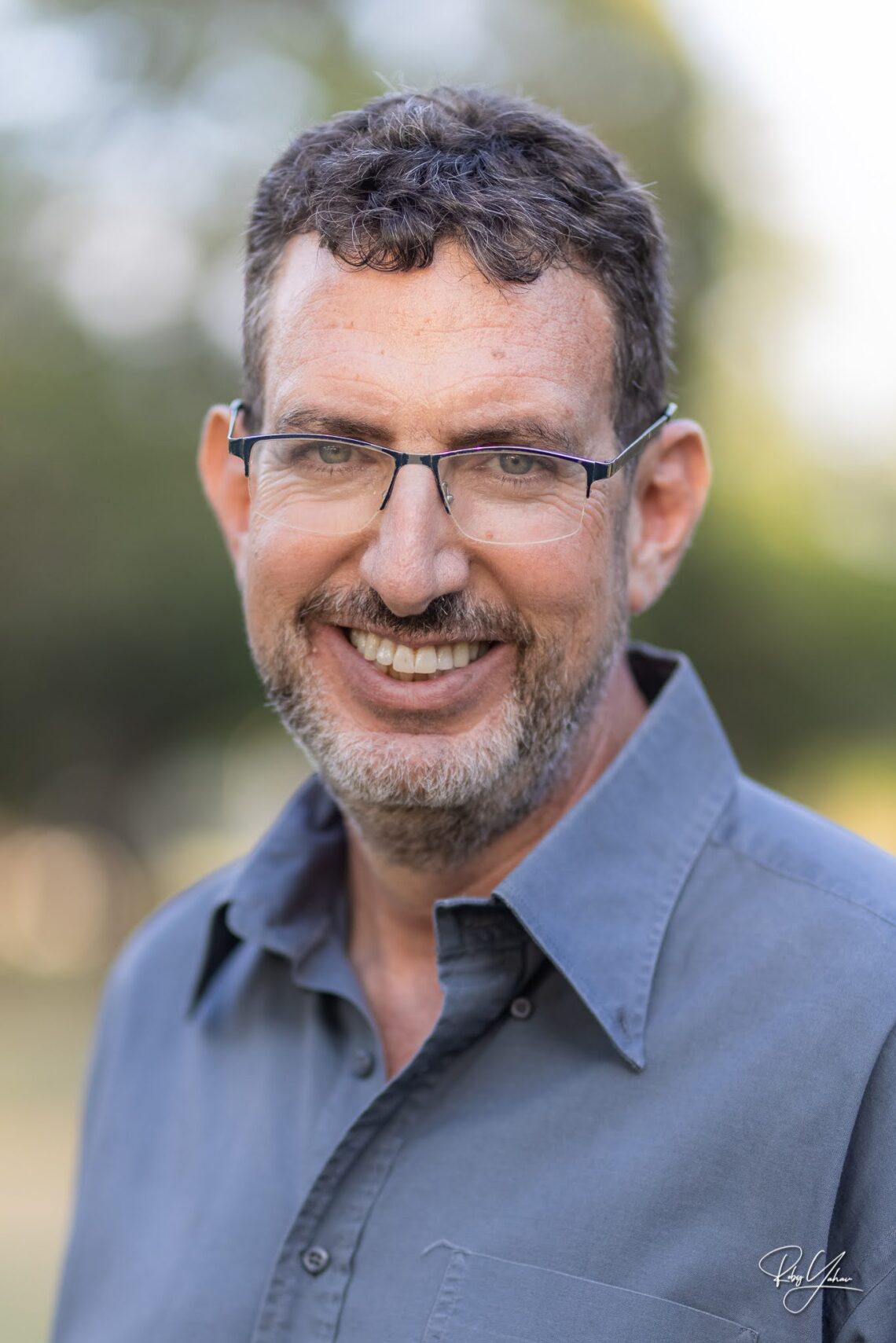

Stardust Solutions, a venture-backed company led by former Israeli government physicists, is developing technology for solar geoengineering — a controversial method of cooling the Earth by reflecting a small portion of incoming sunlight back into space. The company says that deploying its system at a level that will stabilize Earth’s temperature would cost a few tens of billions of dollars a year.
The best way to describe it is as a “sunshield” that temporarily masks the symptoms of rising global temperatures.
There are several ways to do solar geoengineering, also known as solar radiation modification (SRM). Some rely on sulfur dioxide, mimicking the known atmospheric cooling effect of volcanic eruptions, but this approach has distinct downsides, such as ozone depletion and acid rain. Stardust, which has attracted $75 million from investors and has applied for patents, is taking a different approach that it says avoids those complications. It has produced two particles: one made from amorphous silica, commonly used as an anti-caking additive in foods, toothpaste, and cosmetics, and the other with a core of calcium carbonate, the main component of eggshells, coated with an amorphous silica shell.
Both compounds occur naturally, are widely used, and can be produced synthetically at scale. The idea is to release the particles from high-altitude aircraft into the stratosphere, where they would reflect a small fraction of sunlight back into space.
Stardust and its investors are courting contracts with governments that could deploy its system as soon as the end of the decade. “The principal clients are governments, in plural,” Stardust CEO Yanai Yedvab, who co-founded the company in 2023 with Amyad Spector and Eli Waxman, said in an interview. “If and when they decide to move forward, we are positioning ourselves to be the prime contractor providing this service.”
Why is there a need? “The energy transition is taking place, but it is happening too slowly,” says Yedvab. “In recent years, every year we have set new flood and heat records that cost human lives. People are realizing more and more that in the near future we’ll need to add technologies that will stabilize the situation. As part of the scientific community, we feel a responsibility to make sure that, if and when this technology is needed, there are safe and responsible options.”
Yedvab argues that sectors that bear the cost of an unstable climate, such as insurers, banks, farmers and food producers, have a stake in governments having every responsible option on the table.”
But not everyone is a fan. More than 600 scientists and academics have called for an international ban on solar geoengineering.
Why It Is Controversial
Stardust says its particles avoid some of sulfur’s chemical side effects and that its monitoring and control system will significantly mitigate unintended climatic implications, but several of the biggest risks apply to any form of solar geoengineering:
- It does not fix CO₂ or Ocean Acidification: While it can lower global temperatures within months, it leaves greenhouse gases in the atmosphere and does nothing to stop the oceans from continuing to absorb carbon and acidify.
- Termination Shock: If a large-scale deployment program starts and then suddenly stops, global temperature could bounce back rapidly, because the stabilizing effect is stopped. Stardust says its system is designed for safe cessation: it can be phased down gradually rather than switched off abruptly, which the company argues would eliminate the risk.
- Unintended Weather Disruptions: Altering the planet’s energy balance could shift monsoons, alter regional rainfall, and trigger droughts, threatening agriculture and billions of livelihoods (particularly in parts of Asia and Africa). Stardust says that its tight control system would allow adjustment of the deployment to mitigate these unintended impacts.
- Governance and “Moral Hazard”: Critics worry that talking about or relying on geoengineering reduces the political and social urgency to cut fossil fuel emissions.
In addition, some question the wisdom of depending on a commercial company backed by venture capitalists, who are primarily concerned with returns, to responsibly solve a problem that affects all of humanity. Two of the field’s best-known researchers — David Keith, who runs the University of Chicago’s Climate Systems Engineering initiative and has been one of the most prominent advocates of geoengineering research for decades, and Daniele Visioni, a climate modeler at Cornell University — co-wrote a November 2025 opinion piece in MIT Technology Review, “Why the for-profit race into solar geoengineering is bad for science and public trust,” in direct response to Stardust’s $60 million round. They argued that adding business interests, profit motives, and rich investors only creates more cause for concern.
The Role Of Private Capital
Stardust says it weighed the pros and cons of becoming a science project, a nonprofit, or a commercial company. “When you look at all the groundbreaking technology benefiting humanity, such as life-saving drugs or advances in space, a lot of the development is done by the private sector,” says Yedvab. In the end, the company felt that the best chance of furthering the science and attracting top-notch talent was to raise significant private capital, he says.
For context, Stardust’s investors now top the list of solar geoengineering funders by total money spent and committed, ahead of most national governments, according to SRM360, a nonprofit that tracks funding in the field.
More than 50 financial firms, wealthy individuals, and government agencies have together provided more than $115.8 million to nine startups whose technology could be used to limit sunlight, according to POLITICO. The figure is based on POLITICO’s own interviews with VCs and founders and on private investment data it analyzed. Nearly 65% of that went to Stardust.
The Israeli-U.S. company raised an initial $15 million seed round from Canadian and Israeli investors, followed by the $60 million round in October 2025, which was led by Lowercarbon Capital. The other participants were Exor Ventures, the venture arm of Exor, the Agnelli family’s holding company (the largest shareholder in Stellantis, Ferrari, and Juventus); Future Ventures; Never Lift; Starlight Ventures; Nebular Management; Lauder Partners; Attestor; Kindred Capital; Future Positive Capital; and Orion Global Advisors.
Stardust is not only the best-funded commercial geoengineering company; it is arguably also the most advanced. “Until recently, most of what we have seen is academic work and work in the U.S. government labs and agencies,” Yedvab says. “We are starting to see some newcomers, but feel we have a significant moat at this point.”
Stardust has hired an interdisciplinary team that includes physicists, chemists, material scientists, and engineers, says Yedvab. “It is our secret sauce, so the bar for competitors is pretty high.”
Its closest competitor is California-based Make Sunsets, though the two companies are very different. Other startups in the field are smaller, earlier-stage, or pursuing geoengineering as a side project.
Make Sunsets launches weather balloons filled with sulfur dioxide into the stratosphere and sells “cooling credits,” which are unregulated offsets. The company said in April 2025 that it had completed 147 launches. The amounts are tiny: it released just over 240 pounds of sulfur dioxide in 2025, far short of the millions of tons a year needed to change global temperatures, according to The Washington Post. Yedvab stresses that, unlike Make Sunsets, Stardust is focused on research and development, and any decision on deployment belongs to governments.
Stardust’s Differentiators
Yedvab says the company’s starting point is to ensure solar geoengineering can be done with the highest level of safety, including monitoring and control, and then work backward to figure out the critical building blocks.
There are three parts to the technology: the particles, a delivery and dispersion system, and a monitoring system. Stardust has developed a way to put a unique fingerprint on each batch of particles so they can be tracked around the globe in real time and traced back to their origin.
In May 2026, Stardust published a set of research papers describing its particles, made of amorphous silica and calcium carbonate, and how they would be dispersed and monitored. The papers were led by Stardust scientists, with academic collaborators at institutions including Hebrew University, Technion, Columbia University, and UC San Diego. They were released as preprints and in parallel submitted to journals for peer review. One, a modeling study, is undergoing open peer review on EGUsphere, the European Geosciences Union’s public discussion platform, where independent scientists have posted reviews.
“We are committed to provide all our scientific results with no exception to the scientific community for peer review and to share our particles for independent testing,” says Yedvab. “Some of the papers were already accepted for publication and the others are still in the process.”
Since both particles are made from materials found in nature, Stardust says they are designed to recycle into existing natural cycles after they settle to the ground.
As for the impact on human health, amorphous silica has a long and positive safety record, says the company. As evidence it cites how the U.S. Department of Homeland Security used amorphous silica particles as a tracer in experiments in the New York subway system while it was crowded with commuters. And, it says, the U.S. Agency for Toxic Substances and Disease Registry” reports no known health effects from amorphous silica at levels found in the environment or in commercial products. “We designed not only the material but the size and shape of the particle with human safety in mind, and we expect independent validation to test that,” says Yedvab.
The company also says that its approach won’t have a significant impact on the ozone layer. In lab tests the particles show negligible reaction with the gases that drive ozone chemistry, and the protective coating held up under conditions designed to mimic a full year of stratospheric ultraviolet light, reactive gases and ozone, Yedvab says.
For now, Stardust says, all testing involving its particle dispersal is being done in the lab. The company has also run a small number of checks of its monitoring equipment using commercially available safe simulants, such as aerobatic white smoke, which it says do not constitute solar geoengineering experiments. “Eventually we will do outside SRM testing, but it is our firm view that this should only be conducted under the supervision of governments, with specific legislation in place,” Yedvab says.
This is likely to take several years, he says. “We won’t go full volume at the beginning. We will start at a very low level and test how the particles move around. Success criteria will be established by the regulators.”
Governments will decide when the time is right, he says.
Each million tons of particles, replenished every year, would lower global temperature by about half a degree Celsius, at a cost of about $10 billion a year, says Yedvab. “The particles settle out of the stratosphere within about a year. That is why they have to be replenished every year, and it also means the cooling lasts only as long as governments choose to continue it,” he says, noting that it is a reversible effect.
Dispersing a million tons of particles would require a fleet of a few hundred aircraft, according to the company.
How much cooling, and for how long, would be decisions for governments. “Stardust is not deploying this technology,” says Yedvab. “If and when governments decide to move forward, this would be a service provided to them, ideally to several governments acting together, as the world did with the Montreal Protocol [the 1987 global treaty that phased out ozone-depleting chemicals]. Who pays and how the costs are shared would be for them to decide.”
Stardust stresses that SRM could be a crucial tool but not a silver bullet: it should complement, not replace, a wide set of mitigation policies and technologies to stave off climate change.
Regulation in this field is essential, argues the company, including mechanisms for governing the stratosphere — which is inherently transboundary — and oversight of private companies. Although many national and international regulations govern human effects on the natural environment, there is no dedicated governance framework for solar geoengineering research and development, the company says.
Stardust says it will comply with relevant regulations as they emerge and has been urging governments and policymakers to put SRM-specific oversight in place that covers entities operating in the field like itself.
If governments decide not to go forward with geoengineering Stardust says it will pivot.
Action And Inaction Carry Uncertainties And Consequences
The science is still not settled, but it is important to continue working to fill in the gaps in our knowledge, argues Dakota Gruener, who leads Reflective, a nonprofit research organization aiming to radically accelerate the pace of research into sunlight reflection. Reflective’s mission is to equip the world with the data and tools needed to make informed decisions about sunlight reflection, fast enough to matter.
“We know enough to know that [sunlight reflection] could cool the planet, but not enough to judge whether, how, and under what conditions it could be deployed responsibly,” Gruener said in a recent interview with The Innovator. “That leaves us in a tricky spot: We can’t afford for decisions this consequential to be made without a robust evidence base, and building a robust evidence base takes time. It can’t be done overnight. It takes committed financial resources, and it requires coordination. But all of that is possible, and with it, we could be in a position to make much better-informed choices in the future.”
Yedvab sees Stardust as part of the answer. “We need to start the work — which is what we are doing — to ensure that a decade from now humanity does not look back and say, ‘We need this now. Why didn’t anybody build this technology?’”
This article is content that would normally only be available to subscribers. Become a subscriber to see what you have been missing