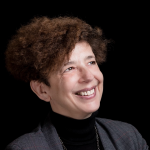
Who: Filippa Lentzos is an associate professor in Science & International Security at King’s College London, where she works in the Department of War Studies. She is also an Associate Senior Researcher at the Stockholm International Peace Research Institute (SIPRI) in Sweden, and a Non-Resident Scholar at the James Martin Center for Nonproliferation Studies (CNS) in the United States. Lentzos chairs the WHO Technical Advisory Group on the responsible use of the life sciences and dual-use research (WHO RULS DUR), and is a member of the WHO Health Security Interface – Technical Advisory Group (WHO HSI-TAG). She is a rostered expert for the UN Secretary-General’s Mechanism for Investigation of Alleged Use of Chemical or Biological Weapons and was a recent speaker at the GESDA conference in Geneva.
Topic: Bioweapons
Quote: “Good prevention means building safeguards into the technologies and research practices where risks are emerging, whether that involves screening DNA synthesis orders, evaluating AI models for biological misuse capabilities, or strengthening oversight of high-risk research. It also means improving our ability to detect and investigate suspicious biological events, something the Biological Weapons Convention has struggled to address effectively. Much of this requires closer collaboration between governments, scientists, and technology companies, not another round of abstract declarations.”
To read the full article and gain access to over 1000 stories about global innovations become a paying subscriber to The Innovator. Click here to sign up.