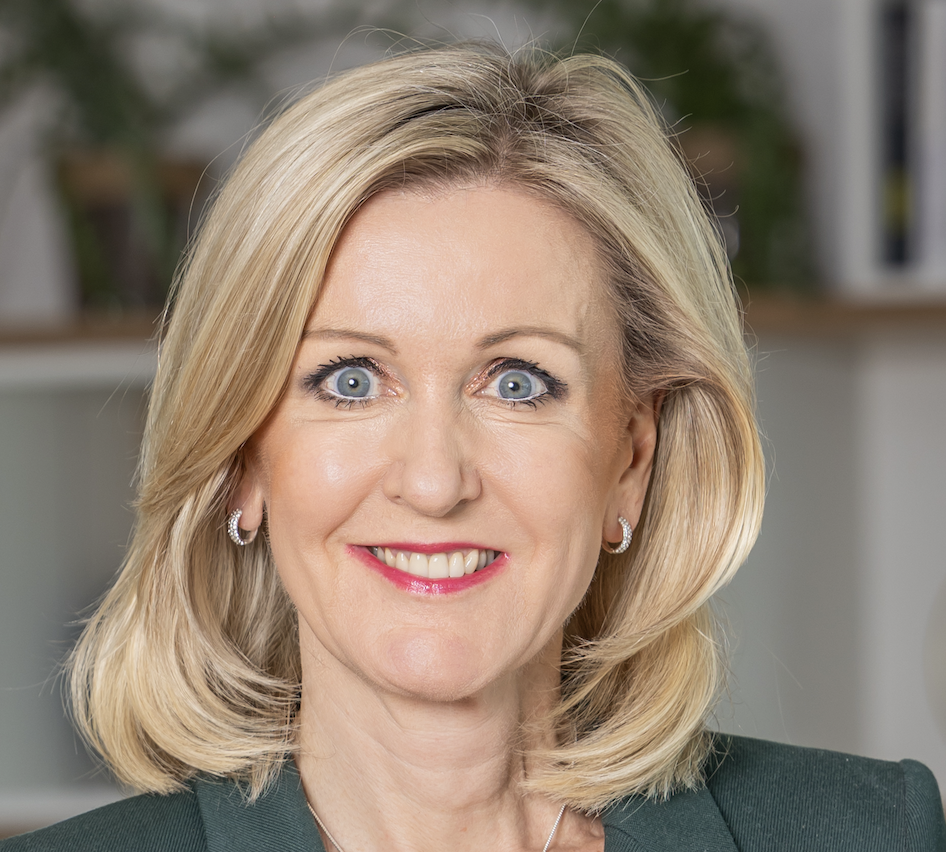

Ann Mettler is President of Catalyse Europe, a new organization dedicated to advancing energy security and clean technology innovation. She is also a Distinguished Visiting Fellow at Columbia University’s Center on Global Energy Policy and serves on the Board of the European Innovation Council. Mettler has over 25 years of experience in public policy at the intersection of technology, innovation, investment, and industrial policy. She has advised global leaders including Bill Gates and Jean-Claude Juncker. From 2020 to 2025, she served as Vice President for Europe at Breakthrough Energy, founded by Gates. Prior to that, she was Director-General at the European Commission (2014–2019). Earlier, she co-founded The Lisbon Council and worked at the World Economic Forum. Mettler is a speaker at a Science House roadshow event on September 21 organized by Frontiers, the open science publisher, during Climate Week in New York City. She separately spoke with The Innovator about the clean energy transition and the focus of New York Climate Week.
Q: Is the current energy crisis — driven by the conflict and the tensions in the Strait of Hormuz — an accelerator or a setback for the clean energy transition?
AM: An accelerator. I think this time around, no one believes we’re just going to go back to the old fossil-fuel-dominated system — there’s too much volatility right now. That said, we need to be cognizant that as governments move toward homegrown energy, this doesn’t necessarily mean renewables and nuclear. In some countries it will mean coal, and we are seeing an uptick in coal in some places. That makes it all the more important that we get clean technologies out to the countries that need them, because the vulnerability of fossil-fuel-based energy systems is now plain for everyone to see.
Q: How do you feel heading into Climate Week? Are you optimistic? What do you see as the biggest challenges?
AM: I’d say I’m realistic. The clean energy transition is playing out, but very differently than many of us expected. A few years ago we thought climate change was the primary driver — and of course that remains relevant — but now clean energy is also squarely in the domain of resilience, security, sovereignty, and industrial competitiveness.
Q: I spoke earlier today with Thomas Laurent of Exelos in Switzerland — his startup helps companies such as ammonia and steel producers make their infrastructure last longer. He argued we need to be realistic that we won’t have a perfect circular economy within 10 years, and that we need to focus on cleaning up and strengthening the existing trillion-dollar infrastructure we already have, since we know it will keep being used. Do you agree, and what technologies should be prioritized to make the most of existing infrastructure?
AM: That’s a good point. Especially in countries that are now cash-strapped and under fiscal pressure, it’s not realistic to say we’re building an entirely new energy system — we need to work with the existing infrastructure. When it comes to the power grid, for instance, AI can help us get much more out of what already exists. I’m working on a project I call “grid productivity.” In some domains — like the grid — we need to squeeze the maximum out of existing energy infrastructure; in others, we can repurpose existing infrastructure for new technologies. A few years ago I worked with a startup that developed a method for green hydrogen to be transported through existing gas pipelines — a huge benefit that cuts cost and time. We need to think much more deeply about what the existing infrastructure is, how we adapt it, and how we make it smart — using new technologies to make components work together as a system rather than in isolation. A lot of what we call electrification is actually digitalization: making things smart and interconnected so they work more productively. It’s a tall order, but that’s the opportunity electrification now affords.
Q: The big AI companies are helping drive new forms of energy — next-gen nuclear, geothermal, fusion. What should the rest of big business be doing to help scale up technologies that already exist and could be doing a lot more with the right offtake agreements, contracts, or investment?
AM: If I were a business, I’d look at the volatility in the current system — exposure to volatile fossil fuel prices and heavy dependence on Chinese clean tech — and ask: how can I diversify? How can I build reliable and secure supply chains? Then I’d look at my industrial processes as an energy system in their own right: electrify wherever possible, capture the heat they generate, store and reuse it, and, where it makes sense, convert that waste heat back into electricity. Those are the questions I’d be asking if I were an industrial leader. And frankly, the industrial leaders who are already on that path — replacing fossil fuels with newer technologies, using AI to drive productivity and innovation — aren’t going back. This is the biggest market opportunity imaginable. The whole world is racing toward electrification, and we want to make sure we’re part of it. There’s still a lot of innovation to come, a lot of business opportunity. My advice: get in the game, fast.
Q: Besides speaking at the Frontiers event, what else will you be doing during Climate Week?
AM: I’m also there as part of my fellowship at Columbia University — I’m a Distinguished Visiting Fellow at the Center on Global Energy Policy [CGEP, a research center located within the School of International and Public Affairs at Columbia University], so I’ll have my usual interactions with other fellows and the Center’s leadership, plus office hours with students. I’ll be taking part in an event on women in energy and a high-level lunch CGEP is co-hosting with BCG and ReNew Energy, dubbed “The New Energy World Order: What long-term shifts are emerging from a year in crisis?” Additionally, I’ll be hosting a dinner called “Energy After Fire” through my new organization, Catalyse Europe, together with Ember, Constructive, and the Carnegie Mellon Institute for Strategy & Technology. I’m co-hosting it with Jigar Shah, one of the most influential voices in clean energy. He hosts the Energy Empire podcast and previously led the U.S. Department of Energy’s Loan Programs Office during the Biden administration, overseeing a dramatic expansion of clean-energy financing. We held the first “Energy After Fire” gathering during London Climate Action Week and were struck by the resonance it generated. The response was so strong that we decided to turn it into a series.
Q: What do you mean by “Energy After Fire”?
AM: For most of the industrial age, energy has essentially meant fire: burning coal, oil, or gas to produce heat, generate electricity, and power machines and transport. Combustion has been at the heart of the energy system for more than two centuries. “Energy After Fire” is about what comes next: an energy system increasingly based on electricity rather than combustion. We dig into what is driving electrification, what it looks like in practice, which technologies and infrastructure it requires, and where the investment opportunities lie. And digitalization is a huge part of that story. Electrification makes it possible to make energy systems much smarter — to measure, optimize, and control energy use in real time.
Most of the big energy conferences, CERAWeek being the obvious example, still have their roots in the oil-and-gas world. We want “Energy After Fire” to offer something different: a gathering built around the emerging electrified energy system and the technologies, companies, and investors that will shape it.
Q: Where do you see the investments that are needed?
AM: We need to be smart, because clean energy and electrification require a lot of upfront capital — high capex, new infrastructure. But the current system is costly too: you buy oil and gas, burn it, and it’s gone. It breeds dependencies, exposes you to volatile pricing, and can lead to economic coercion. This is a huge opportunity, but for Europe and the U.S., it’s important that we think through the manufacturing and industrial processes that underpin electrification, and the homegrown economic value it creates — we can’t outsource all of global electrification to China just because it’s cheaper or faster. We need reliable, secure infrastructure and supply chains, support for our own companies’ innovation, and more investment in technologies that haven’t gotten as much visibility — geothermal, solar thermal, wave energy, and many others. I’d hope for an innovation drive powered not only by climate objectives, which remain valid, but by the realization that we need more homegrown, diversified energy sources and new sectors of the economy. For Europe, I can say with confidence: we have the innovations. It’s now about deploying and scaling them.
Q: Can we get into politics for a minute? The U.S. has such a big influence on the rest of the world, and Trump continues to dismantle what the Biden administration put in place. What impact is that having, and what’s the best way to counter it?
AM: First, the clean energy agenda in the U.S. isn’t entirely dead — look at what’s happening with batteries, geothermal, and next-generation nuclear. Second, it’s important for the people in the U.S. who believe in the climate agenda to help others, including Europe, keep that agenda alive in the meantime. Europe continues to engage on this — Ursula von der Leyen spoke passionately about climate in her recent State of the Union address, which was timely — and necessary — after the summer Europe just had, when we so clearly suffered from the effects of climate change. For now, with a U.S. administration so hostile to the climate agenda, it naturally falls to other geographies to keep it — and the COP process — alive. But the flip side is that this also needs to work economically for us, because here in Europe we have real challenges from the extreme right, much of whose rhetoric is anti-climate due to accelerated deindustrialization. So, it’s important that those of us who still believe in this agenda build bridges across the Atlantic and across geographies to keep it alive.
Q: What would you hope for as an outcome from Climate Week?
AM: It’s remarkable that it seems like everyone who matters in this space is there — there’s a lot of momentum, so clearly a hostile U.S. administration appears to be a reason to be here, rather than a deterrent. Looking at the discussion topics, issues like industrial competitiveness, security, and resilience are much more prominent than they were a few years ago, and I think that’s good, because a climate agenda ultimately needs to also be a successful political agenda and a dynamic, prosperous economic agenda. There’s more realism now that this can’t be achieved through regulation and targets alone, at the cost of industrial capacity. I see a strong turnout from the business community, which is promising. In terms of concrete outcomes, at this point — and given where this is taking place — the fact that so many people are coming together to advocate for and support the climate agenda is itself an important message. Clearly, it’s here to stay and is bound to become even stronger as the realities of climate change unfold.
Q: Anything else you’d like to add?
AM: I want to end on an upbeat note. Everyone is coming — there’s real momentum, and I saw the same at London Climate Action Week back in June. This isn’t going away. Climate philanthropies aren’t shutting down; they continue to engage. The agenda is alive, but it’s changing, and it’s important to be pragmatic about that. One of the lessons is that clean energy is no longer just about climate — it’s now hardcore security, resilience, and sovereignty. And if we do it well, it’s also about building out new sectors of the economy, good jobs and industrial competitiveness — the issues everyone, especially policymakers, are thinking about these days.