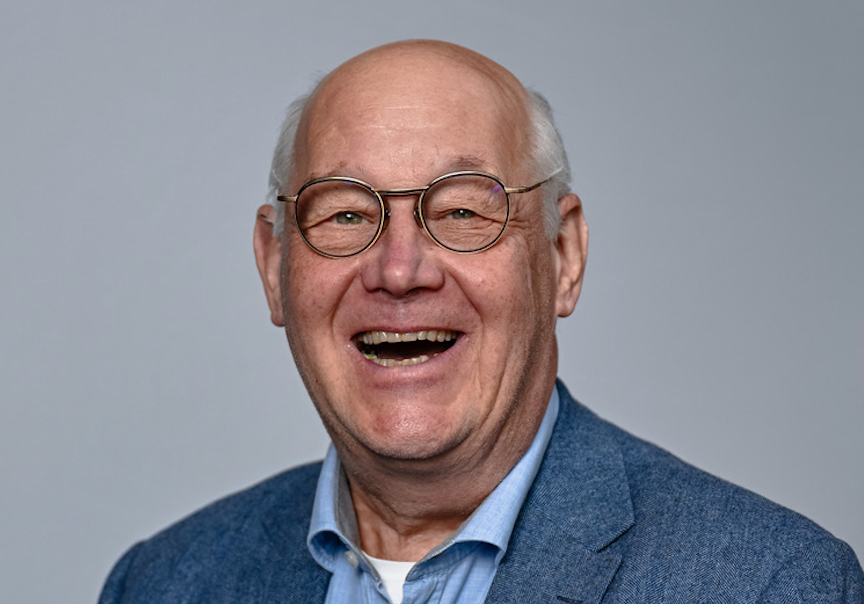

Mikko Suonenlahti, a co-founder of Tyrion Partners, a financial advisory firm, is a Finnish investor and business builder who has spent five decades working with tech founders. He has served on 100+ venture capital backed boards in ten countries, mostly in Finland and the U.S.. Most recently he was the recipient of the “Most In-Demand Mentor Award” of the EIC Scaling Club, an arm of the European Innovation Council, Europe’s number one deep tech investor with over €10 billion of assets under management and investments in almost 1,000 startups. Suonenlahti has been a lead investor on venture capital deals in 20 businesses, which collectively raised €500 million and were sold, went public, or were acquired for a total of €3 billion. Three of these were initially pre-revenue stage businesses. Two filed for a Nasdaq U.S. IPO.
Suonenlahti specializes in offering strategy (go-to-market strategy), finance (fundraising, M&A, IPO readiness), corporate governance (audit and risk management, nomination and compensation committees) and operational support to young companies. He recently spoke to The Innovator about the European tech sector’s strengths and weaknesses.
Q: You have been involved in deep tech for decades. Where do you see opportunities for European startups?
MS: Forty years of Moore’s Law has impacted the trajectory of the tech businesses I am involved with. ? Now I have a terabyte of data in my phone but when I started my career in 1983, the price of 1 terabyte was $31 million. Then about 20 years ago, when I was in the U.S. for five years as an early-stage investor, I was the lead investor for a pre-revenue company. It was the first company in the U.S. to guarantee unlimited backup for $9.99 per month. Why? Because the price of storage had come down from that $31 million in 1983 to about $200 by 2005.
The company, which is called Carbonite, raised four rounds of funding over five years and then did a Nasdaq IPO for a value of $240 million. About eight years after the IPO it was taken private at a valuation of $1.4 billion. That logarithmic curve in the price of storage is my application of Moore’s law.
My latest example is ongoing. There’s an Italian company I am chairperson of called Cubbit, which does sovereign cloud storage, which is a hot topic in Europe right now. Cubbit is driving down the price of a terabyte of memory in storage. Besides being a sovereign cloud for European customers, it is able to offer storage 60% to 80% cheaper than the incumbents. So ,this is my story from 1983 until today, that I’m still driving or am a small part of the drive of Moore’s law, and that logarithmic curve still continues to evolve.
Q: What other opportunities are you seeing?
MS: I am seeing a lot of discussion and a lot of real activity around building a European tech stack. The fear is that suddenly, due to a U.S. presidential order or sanctions or a trade dispute or tariffs, Europe could be shut off from access to American technology. I’m also seeing a lot of activity around dual use and I’m seeing a surprising amount of activity in AI in Europe, on both hardware and software. I’m the chairperson of a pre-seed fund in Finland called Icebreaker. We’ve just closed our third fund, and we have about €200 million under management. And during this year alone, we’ve seen more than 100 AI hardware and software deals. There are a whole host of problems in AI hardware and software that very focused startups can fix. One of them is the amount of electricity data centers suck up.
Q: What about chips? At one moment Europe understood that chips would be the key to everything, and the French and Italian governments merged their national chip companies to create STMicroelectronics so that Europe would have a top 10 company in the global chip market. But today Europe is way behind the curve on AI chips. Can it catch up?
MS: Europe is behind on GPU (Graphics Processing Unit)s, but it is home to the Dutch company ASML, the only company in the world that makes EUV lithography machines used to produce the most advanced semiconductors essential for AI applications, including Nvidia’s latest Blackwell architecture. It is the invisible backbone of the entire AI semiconductor industry — without its machines, nobody can build the advanced chips that power AI. There are plenty of other opportunities for European companies in AI and semiconductors. One of my favorites is founder and CEO Maud Vinet’s EIC-funded Quobly – quantum on a chip!
Q: We have talked about the opportunities. In your opinion, what is holding the European tech sector back?
MS: The EU and national governments are still some of the largest investors in deep tech, and that’s something I would like to change by leveraging pension funds, which are the largest anchor investors of VC funds globally. Some 3% of U.S. pension fund financial assets go into venture capital. According to [venture capital fund] Atomico estimates, European pension funds invest about 1%. If the European pension funds increased asset allocation from 1% to 3% to be at the U.S. level, that would unlock €200 billion of capital. I think that is the shot in the arm that Europe needs. It’s all about fund formation, and in my mind, it should be driven more so by the pension funds and corporates than the EU or the national governments. Why? I believe that private capital is faster and more efficient in driving innovation and consolidation in a fragmented European tech market. But the EU and government funding has a crucial role in encouraging much more private fund formation by becoming LPs [limited partners] or even anchor investors in attracting much more private capital in funds. Europe is the world’s third largest economy, so private capital is the key to growth in tech and European productivity.
Q: What about the public markets?
MS: I do worry about a Finnish quantum computing company called IQM which has raised over $500 million. It announced publicly that it would do a New York SPAC [Special Purpose Acquisition Company] essentially a “blank check” shell company created for the sole purpose of raising money through an IPO in order to acquire or merge with an existing private company]. When I started speaking with my VC friends, they had the same reaction that I did. Why would a European company ever do a SPAC, especially in the U.S. now, instead of a private VC round or a Nasdaq or New York Stock Exchange listing? It’s a question I’m willing to ask publicly, and I would love to hear an answer, especially because the largest shareholders are European public institutions which own 20% of IQM. Why would these public shareholders argue that this is the right thing to do?
Q: European startups – whether it’s a SPAC or a listing on Nasdaq – they all still want to go to the U.S. We’ve known for 30-plus years that we need to create our own capital market here in Europe, but we’re nowhere near that, and we still have all of these national ambitions that get in the way. Do you see that changing anytime soon?
MS: Going to the U.S. for capital is the right thing to do. Let’s look at the example of another Finnish company, Oura Ring, [a ring that gives insights into sleep, fitness, and stress for wellness]. It raised $900 million last October at a valuation of $10 billion. Then, very soon after that fundraise, it announced that it would flip the ownership from a Finnish legal entity into a Delaware incorporation. My speculation is that was done in anticipation of an IPO in the U.S. or an acquisition by a U.S. player, because the U.S. is the largest source of capital, and it’s the largest market for M&A. Oura is doing exactly the right thing. But when do we get European alternatives instead of five main stock markets and 57 smaller ones? We need one big pan-European market for our technology companies not to go to the U.S. The analogue I use is the National Hockey League. The NHL has about 1,000 players and 50 of them are from Finland. They happen to be all of the top 50 Finland has ever produced. The same thing is happening with European startups. We’re an early part of the technology value chain, which U.S. acquirers and American capital then capitalize on, and we lose our top players.
I’ve backed founders anywhere from 16 to 60-plus years old. My 16-year-old, William Wolfram, created a company called DealDash. It is America’s largest penny auction site. This 16-year-old, my summer cottage neighbor, approached me with a financial plan and said, ‘Look, Mikko, help me raise €500,000 and I will do €50 million in revenue in three years.’ It took him five. The point is that he said, ‘I will only go after the U.S. market because Europe is far too diversified.’ So as a 16-year-old, he made exactly the right strategic call with a cash up-front business model. Right off the bat, he was after the U.S. consumer, and today the company has tens of millions of dollars in revenue, is highly profitable, and is still private. This all came about because he had found a new scalable market.
Q: Do you think that EU Inc. [a major initiative to create a single, standardized legal structure for companies across all 27 EU member states] is going to fix the problem?
MS: It’s a step in the right direction. As is the Euro stack, as is the discussion about buying European, as is the discussion about billion-euro funds, where the EU or national governments are the lead investor. I just wish it was driven by private capital, European pension funds, European corporations, as opposed to the EU or national governments.
Q: What about the role of Europe’s largest companies? When you look at the size of the new EU Innovation Fund, it’s a drop in the bucket for deep tech companies. They need offtake agreements. They need Europe’s big corporates to help them avoid the valley of death. What’s your point of view?
MS: What I’m seeing is that Europe is a magnet for American companies who want to acquire young companies and acquire talent. That underscores that we have the technology, we have the founders, we have the companies. But Europe’s large corporates are not taking advantage of these assets. A McKinsey Finland study from September of last year illustrates the gulf between Finnish and global corporates. It compares our large publicly quoted companies in Finland relative to their global peers. The Finnish corporates do not grow. Their growth aspirations are low. They invest less in R&D than their global peers, and their total shareholder return is less than their global peers. So that is a discussion in Finland. What can we do? It comes back to what I mentioned earlier, that 3% of the financial assets of U.S. pension funds are in venture capital and less than 1% in Europe. I don’t have the number for Finland, but I would encourage our Finnish pension funds to become anchor investors in €500 million to €1 billion VC funds that invest in Series A and B and beyond, because that is where the American capital is in Europe, and that is where we don’t have the European or the Finnish capital. Yet.
Q: To what extent should Europe’s largest corporates be working more closely with startups?
MS: They absolutely should be. European companies, and PE funds, could be much more active in acquiring European tech companies and consolidating parts of a fragmented tech sector. They should be hiring a lot more R&D staff, especially because many scientists are leaving the U.S. for various reasons and coming to Europe, so they could encourage that. And this is a great time to capture brilliant technology founders and developers back into Europe. I would also encourage the Nokias and SAPs of this world to spin off some of their own IP and create startups with some of their own engineers and salespeople, and back those startups as a minority shareholder.
Q: What is your advice to startups in Europe?
MS: According to IESE research, there are 50,000 startups in Europe. About 44% are deep tech startups, and of those 60% do not have a formal board. I’m a strong advocate of bringing one or two independent directors to any startup board in Europe. The young technology founders, in my mind and IESE’s, need independent directors to help them with their go-to-market strategy and corporate governance. They also need someone on the board who has raised capital and taken a company to a big exit or a big IPO. These are the skill sets that I would like to see more of in any European technology company board. I think one of the key weaknesses for private and public European tech companies is what I call the equity story, which is commonly known as the pitch deck and the financial plan. And if I start with the public tech companies, too often, when they do their quarterly reports, what I see is an equity story which, in my mind, the board has delegated to the CEO. The CEO has delegated it to the VP of communications, and he or she has gone to an outside agency, as opposed to the founders of that company and the largest shareholders of that company really thinking through what the equity story of this public or private tech company is.
The way I start building the equity stories for my private companies is to start with the founders and their vision and communicate that unique vision in a crisp, clear, and concise way. I build these companies bottom-up, using a three-part sequence, which, in my mind, is the core of an equity story. What is the very specific customer problem that a tech company, public or private, addresses? I’m very keen on understanding it at a real nuts-and-bolts level. And then what is the value proposition of the company? These two elements I usually see in a pitch deck. But the third element, which is crucial, I rarely see. Let’s assume that there’s a company that pays a startup €50,000 a year in revenue. What is the return on investment for the customer for that €50,000 spend annually? The ROI could be tangible, or it could be intangible, but that, in my mind, is the third piece of the equity story. In addition to the problem and value proposition is the customer ROI. I fundamentally believe that European tech companies and European deep tech companies are not in the technology business — they are, and should be, in the customer ROI business. I have seen some nice ROI calculators on startup websites, along with total cost of ownership (TCO) analysis. And when they start with my philosophy, what I see quite often is that suddenly the websites and landing pages of these technology companies start to evolve. Instead of pushing three- and four-letter acronyms, they start thinking about the customer problem and their value proposition, as opposed to pushing technology. This is another reason why early-stage deep tech companies need strong boards, so they can transition from being an entrepreneur managed company to becoming a professionally managed company.
Q: What do you want readers to take away from this article?
MS: Europe is going in the right direction but there’s still a lot more work to do. We have the entrepreneurs, we have the technology, we have the capital to build companies with valuations of billions, or even tens of billions, like Oura. But the thing that is missing in Europe, and I spend a lot of time thinking about it, is the American can-do attitude to risk-taking. That needs to change with the EU, national governments, corporations, pension funds and VC funds and tech founders.
This article is content that would normally only be available to subscribers. Become a subscriber to see what you have been missing