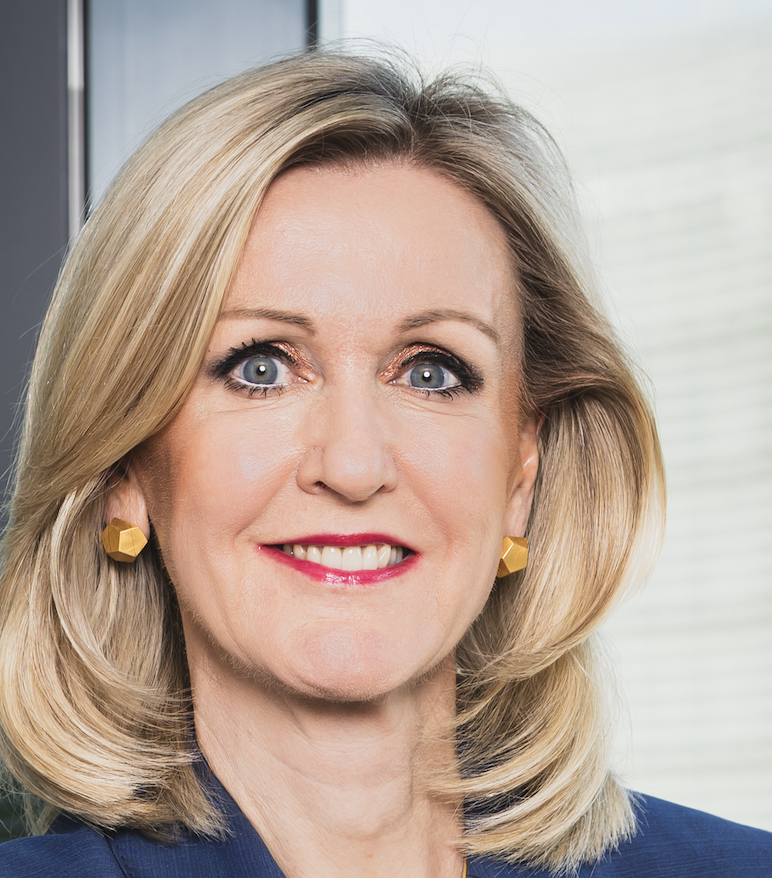

Ann Mettler is President of Catalyse Europe, a new organization dedicated to advancing energy security and clean technology innovation. She is also a Distinguished Visiting Fellow at Columbia University’s Center on Global Energy Policy and serves on the Board of the European Innovation Council. Mettler has over 25 years of experience in public policy at the intersection of technology, innovation, investment, and industrial policy. She has advised global leaders including Bill Gates and Jean-Claude Juncker. From 2020 to 2025, she served as Vice President for Europe at Breakthrough Energy, founded by Gates. Prior to that, she was Director-General at the European Commission (2014–2019). Earlier, she co-founded The Lisbon Council and worked at the World Economic Forum. Mettler spoke to The Innovator about Europe’s energy strategy, security risks, and the role of defense in the clean energy transition.
Q: The war in Iran has exposed supply chain vulnerabilities. How should Europe increase energy security?
AM:. First, we need to learn from past crises. During the 1970s oil shocks, Europe made bold, strategic investments in wind and solar, and significantly expanded nuclear energy. It took a moonshot and leapfrog-type of approach that gave Europe a competitive advantage for decades. By contrast, the response to the 2022 energy crisis was far less strategic. Despite natural gas being weaponized, Europe doubled down on LNG – an expensive and volatile alternative. We continued importing Russian energy despite the country’s war on Ukraine and at the same time, built up increasing dependencies on Chinese clean technologies. This has left us very exposed and very much unprepared for this next energy crisis which is currently unfolding. That’s why I say: before launching new strategies, we should carefully assess what worked – and what clearly didn’t. For example, in this crisis maybe we consider subsidizing electricity for households to boost demand for heat pumps and electric cars instead of what we did last time when we poured hundreds of billions of euros into subsidizing fossil energy? And whatever we do, we can’t leave industry by the wayside as we did last time around. The degree of deindustrialization in past years – much of it owned to permanently high energy prices which make production in Europe uncompetitive – has been nothing short of alarming.
Second, we must recognize that Europe cannot import energy security. As a resource-poor region, dependence on fossil fuels creates structural vulnerabilities. By the same token, we cannot outsource energy security to China by becoming overly dependent on its clean technologies. Europe needs a new approach: more homegrown energy production, domestic manufacturing, resilient supply chains, control of critical infrastructure, accelerated innovation. In short, Europe must reduce dependencies across the board.
I also believe we are underestimating the scale of the challenge. Civilian institutions alone may not be able to respond fast enough. Overlapping and often duplicating responsibilities lead to paralysis. Permitting is notoriously slow and decision making overly complex. Given the growing intersection between energy and security – and against the backdrop of the second energy crisis in four years – I think it is time for NATO and the broader defense community to step in and play a more active role.
Q: What role should NATO and the defense sector play?
AM: Energy must be treated as a core security and defense issue. Europe lacks fossil resources, which creates dangerous dependencies. Yet, we are discussing rearmament without addressing how we will power our military systems – whether tanks, aircraft, or drones. What if we get cut off from diesel and kerosene? We need to ensure that in a crisis situation, we can produce fuels ourselves, at least for use in defense, emergency services and civil protection. This is where new technologies become critical. For example, the German startup Ineratec is developing synthetic fuels by combining captured CO₂ with green hydrogen. These fuels can be used in existing infrastructure and are increasingly relevant not just for climate goals, but for security. In collaboration with Rheinmetall, Ineratec is working on modular fuel production systems that could operate close to where energy is needed. This is crucial because centralized infrastructure – like LNG terminals and refineries – is the first target in conflict scenarios.
Yes, synthetic fuels are more expensive. But in wartime, availability matters more than cost. Strategic resilience must take priority. And we must plan for that now – not when an armed conflict erupts. Then it’s too late.
Q: Can the defense sector succeed where policymakers have struggled – scaling clean technologies?
AM: I believe they can play a constructive role, absolutely. Many clean technologies are inherently dual-use – they serve both civilian and defense purposes. The problem they face in Europe is not incubation or innovation; it is scaling and commercialization.We tend to fund small pilot projects and then conclude technologies are too expensive. But scaling requires volume. The military understands this well – it never buys just one tank or one aircraft. It procures at scale to drive down costs.
We should apply the same logic to energy technologies. Taking synthetic fuels as an example, build hundreds of modular plants; create demand through large-scale procurement while accelerating learning curves and cost reductions.Batteries as another case where action is needed. They are now a foundational technology across sectors – from EVs and energy storage to drones. That’s why Europe back in 2017 created the European Battery Alliance. Then it put all its chips on one company – Northvolt – which went bankrupt in 2025. To my knowledge, no review has taken place about how this happened despite raising EUR 15bn and having great offtake agreements. What are the lessons learned? What do we have to do better in the future? How do we plan to make up for the eight years we lost? It’s remarkable how tone-deaf the Brussels machinery can be. Now we have a new strategy: the ‘Battery Booster’. The end result of this policy hodgepodge: Europe is heavily dependent on China which is now the country which can rightfully claim to drive the frontier in this strategic technology whose importance will only grow over time. That is a strategic risk we cannot ignore. Are we really going to fly all the drones we’re commissioning with Chinese batteries?
Q: Why aren’t governments moving faster on permitting, regulation, and incentives?
AM: The core issue is that policymakers often don’t understand how clean tech scales. Europe excels at early-stage innovation – that much everyone knows and is proud of but then why do we drop the ball? For decades, we’ve struggled with deployment, commercialization, and industrial scaling. Clean tech is fundamentally different from digital tech – it requires solid infrastructure, industrial partnerships, and long-term, patient capital.
We also have a structural disconnect: one policy framework for industry and another for startups. Real value is created at their intersection but that’s difficult to realize because there’s one Commissioner for Industry, another one for Startups. Administrative fragmentation is often the reason why issues cannot be handled in a more joint-up – and therefore more impactful – matter. Sad but true.
However, a positive development is the emerging and long overdue focus on scaling at EU level, including initiatives like the Scale-Up Europe Fund. This signals that policymakers are beginning to recognize the problem. However, without a truly integrated single market, companies will continue to struggle to grow across borders.
Q: Will EU Inc legislation make a difference?
AM: There is one key metric: does it make doing business in Europe easier and faster? If it enables companies to scale seamlessly across borders, it will be a success. If not, it risks becoming another bureaucratic exercise. We must recognize: there is growing – and justified – frustration among entrepreneurs and investors. Too often, those shaping policy lack firsthand business and investment experience. This creates a disconnect between regulation and real-world economic outcomes. Good intentions and lots of talk about competitiveness among policymakers are of course nice but it’s the reality on the ground for European startups and businesses more generally that counts. Despite the much-cited Draghi and Letta reports, we haven’t seen much improvement there – and time and patience are running out.
Q: What will it take to drive real change?
AM: Change will not be easy. These challenges are deeply structural – rooted in decades of institutional practice, treaties and an armada of regulations. The EU system is often insulated from the economic pressures faced by citizens and businesses, which reduces urgency and makes the machinery seem slow and out of touch. It’s not called a ‘bubble’ without reason. Reforming all this from within is a tall order. That said, I remain optimistic and motivated. Europe has enormous strengths and potential, and there is no place I would rather live or work. This is also why I co-founded Catalyse Europe – to advance clean energy at the intersection of security, competitiveness and resilience.
Energy is foundational to prosperity. For a resource-poor region like Europe, clean energy is not just a climate issue – it is a matter of sovereignty and economic strength. Yet, it is still too often treated as a cost rather than a strategic investment. And Europe cannot compete on costs. It must therefore urgently move up the value chain – through innovation, stronger public-private collaboration, and more dynamic ecosystems. That is the ambition behind Catalyse Europe: not just to drive change, but to harness unique strengths that only Europe-at-large can offer: its size, its scale, and the strength of a union of countries and peoples that, together, can achieve far more than they ever could individually in this fractured and volatile world.
This article is content that would normally only be available to subscribers. Become a subscriber to see what you have been missing