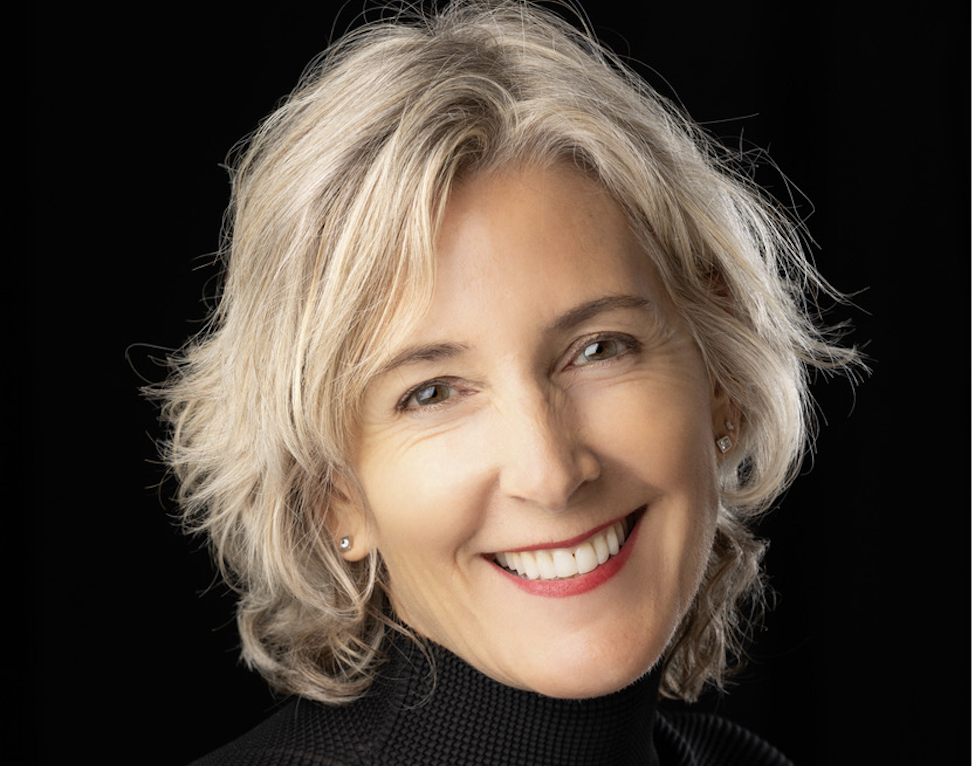

Jane Metcalfe, a co-founder of Wired Magazine, is an entrepreneur, editor, journalist, speaker, and advisor. She currently serves as the executive board chair of the Human Immunome Project (HIP), a global, nonprofit, open science initiative that aims to transform the study of immunology, and ultimately the practice of medicine worldwide, by building the largest, most diverse set of advanced immunological data, and using that data to generate quantitative and predictive models of the human immunome. Such models will aim to provide insights into human immune response variability across the globe, paving the way for more tailored therapeutic interventions, new biomarkers of disease, and new medications.
Metcalfe is the co-founder and former president of Wired Ventures, Inc., a diversified media company whose businesses included Wired Magazine (US, UK, and Japanese editions), Wired Digital, and Wired Books. More recently, she was the CEO and founder of proto.life (formerly known as NEO.LIFE), a weekly newsletter, website, book, and events company that tracked how digital tools and an engineering mindset are revolutionizing human biology. Prior to that, Metcalfe made chocolate on a pier in San Francisco as the President of TCHO Chocolate. The TCHOSource program continues to transform the lives of cacao farmers in Latin America and Africa.
She is a scheduled speaker at the Frontiers Science House, a meeting venue on the Davos Promenade, created for participants of the World Economic Forum Annual Meeting (19–23 January 2026). Supported by over 30 global partners, (including The Innovator) it will connect breakthrough science with government, business executives, investors, and philanthropists to inform policy and investment decisions in emerging technologies ranging from precision biomedicine to the quantum revolution. Metcalfe spoke to The Innovator about the Human Immunome Project and what it hopes to achieve.
Q: How and why did you make the leap from launching Wired Magazine to a project to decode the human immune system?
JM: Wired focused on how technology impacts education, entertainment, finance, design and politics and envisioned the next 25 years in ways that turned out to be startingly accurate. We started out reporting how technology could make the world a better place but then things changed—there was a lot of greed and mission drift in the tech industry, so I moved on and decided to do other things. The food industry was super interesting to me and my partner had invested in a chocolate factory start up, so I started looking at how tech would disrupt food, the science of nutrition, the microbiome and probiotics. Then my mother, father and stepfather all got sick, and I went looking for leading-edge solutions. It seemed all very hopeless, so I began looking at the frontiers of neuroscience and along the way discovered what was happening in genetics and longevity. I created NEO.LIFE (later called proto.life) because I believe this is the next stage of the digital revolution: applying our engineering mindset to our own biology. It was at a point of time when CRISPR and the learnings from the Human Genome Project were making news, huge strides were being made in brain computer interfaces, and a biohacker culture was emerging. A lot of technologies enable incredibly powerful ways to help prevent famine and genetically inherited diseases, or get the right treatment to cancer patients faster, but various companies and actors blew it in their go-to-market strategy. Monsanto is an example. It applied bad business practices and very bad communications and destroyed the opportunity for genetically modified crops. The world could have benefited from golden rice and disease resistant crops for decades if things had unfolded differently. I think things like this are very important. They are core to my life’s work of ushering in new ideas and promoting the humane deployment of these technologies.
A friend called about five years ago and asked if I would be interested joining an organization focused on immunology and vaccines, and I was interested. And then the COVID-19 pandemic hit, starkly illustrating that there are dramatic differences in immune responses that determine who thrives and who succumbs. But as we are increasingly understanding, immune differences don’t just dictate a response to pathogens but also to non-infectious diseases, such as autoimmune disorders, cancers, and neurodegenerative disease. I quickly understood that there is an urgent imperative to transform our fragmented, siloed understanding of human immunity into actionable intelligence that can predict, prevent, and precisely treat disease across all populations. Our immune systems contain a memory of everything that has happened to us individually, like which pathogens we’ve been exposed to, how our immune system responded, and also external factors like diet, stress and pollution. But our study of the immune system has lacked this holistic perspective. The field of systems immunology is still relatively new, maybe 20 years old, and only made possible since the advent of high throughput technologies and computational methods.
Then in the fall of 2022, we put together a conference with [former chairman and CEO of Google] Eric Schmidt, a Nobel prize winning immunologist named Pete Doherty and Eric Topel, the founder and director of the Scripps Research Translational Institute, and we invited people from pharmaceutical companies, from research institutes and experts all over the world and we asked them whether it would be possible to model the human immune system, and if so who were the people who could do it? Since that day we have been moving forward with the goal of decoding immunity for all humanity. I fully expect that when we’re done it will count among humanity’s greatest accomplishments.
Q: Where are you on your trajectory?
JM: At that meeting, we broke out into working groups, each of which was to sketch out a potential strategy. Two scientists in my group– Shai Shen-Orr and John Tsang – seemed to have the clearest vision, and they are now the co-chief science officers of the Human Immunome Project. Since then, we have fleshed out the strategic plan, the scientific plan, and a fund-raising plan to make it happen.
In September, we announced our Scientific Partner Network which is so far comprised of 10 research organizations:
Allen Institute: A U.S. non-profit medical research organization founded by the late Microsoft cofounder Paul Allen, dedicated to understanding life and advancing health.
The European Hub for HIP: DZNE, University of Bonn and the Swarm Learning Consortium:The German Center for Neurodegenerative Diseases (Deutsches Zentrum für Neurodegenerative Erkrankungen, DZNE), the Cluster of Excellence ImmunoSensation at the University of Bonn, as well as the Consortium on “Swarm Learning for Precision Medicine in Infectious Diseases and Pandemic Preparedness” are an interconnected research ecosystem focusing on innovative approaches to medical data analysis and research.
The Human Functional Genomics Project: a large-scale project coordinated from the Radboud University Medical Center in the Netherlands, it aims to identify the genetic and environmental factors that impact inter-individual variation in immune responses in homeostasis and immune-mediated diseases.
HypoVax Global: A hub that aims to tackle the problem of vaccine hyporesponsiveness by creating a platform that mobilizes global researchers
RIKEN: Japan’s largest comprehensive research institution renowned for high-quality research in a diverse range of scientific disciplines.
The Center for Human Systems Immunology at Stanford Medicine: A leader in the biomedical revolution, its focus is on pioneering research and effective clinical therapies.
The Sustainable Sciences Institute (SSI): A non-profit organization dedicated to developing scientific research capacity in areas of the world with pressing health problems. Its main research center is in Nicaragua.
Technion – Israel Institute of Technology: Through its Systems Immunology & Precision Medicine Laboratory it focuses on developing novel analytics for studying the immune system and applies these tools to investigate the drivers of immune variation and advance immune-based precision medicine.
Australia’s WEHI (The Walter and Eliza Hall Institute of Medical Research): It specializes in making transformative discoveries in cancer, infection and immunity, and lifelong health.
CSEI, The Yale Center for Systems and Engineering Immunology at Yale University: Part of the Yale University School of Medicine, this center of research develops cutting-edge experimental, computational, and AI technologies to predict and engineer immune system behavior in health and disease.
In November, our Scientific Partner Network got together for the first time at Cold Spring Harbor Laboratory’s prestigious Banbury Center in Long Island, where the Human Genome Project strategy was incubated. Researchers from each of the ten founding institutions across five continents came to collaborate on the development of the world’s first comprehensive, state-of-the-art dataset of immune profiles from diverse global populations.
Q: What role will technology play?
JM: A huge one! This project wouldn’t be possible without machine learning and AI modeling. We’ll also leverage the latest scientific advances in measurement, including single cell technologies, high dimensional immunophenotyping, and multi-omic integration. We’ll be combining analysis of genomics (DNA), epigenomics (DNA modifications), transcriptomics (RNA), proteomics (proteins), and metabolomics (metabolites). The Scientific Partner Network is beginning now to engage their ongoing research cohorts, and will collaborate to establish the standardized protocols and data frameworks required. It’s quite apparent to all of them that this vision would not be possible for any single institution, government, or corporation to achieve. Once we establish the standards and protocols, we will recruit new cohorts in much larger numbers, around the world.
Q: What is the timeline?
JM: The plan is to collect this data from study participants over the course of five years to build a very diverse, very representative data set that will help us better understand immune response variability. This will dramatically change the way we develop drugs. For example, the NIH [U.S. National Institutes of Health] developed a malaria drug in Maryland that was 85% effective on Americans, but only 25% effective in Africa. We need to know why that is. This whole project could be done from start to finish in 10 years—and within 3 years, we should already start to see important differences in immune response based on sex, age, and race. We already know women respond differently to certain medications than men. Within three years,we can start to see what the immune drivers are that might be causing those different responses. Also, given that this is already the largest collaboration in the history of systems immunology, and given the scale of operation we’re planning, we should be able to create the de facto global standard for immune profiling within very short order.
Q: Will this help us get closer to personalized medicine?
JM: Absolutely, and I honestly don’t know how we get there without this initiative. But let me just clarify that personalized medicine has a certain elitist ring to it because it is, for the most part, still relatively expensive and time consuming and within reach of only a small group of privileged people. We want to engineer the cost of immune monitoring down to something that is affordable to the more than 50% of humans who live in low and middle-income countries. And we want to see immune monitoring kits become as ubiquitous in the 21st century doctor’s office as a stethoscope once was in the 20th century.
Q: What do you hope to achieve through your talk at Science House in Davos?
JM: We want to generate awareness with country leaders and ministers of health, NGOs, investors, and philanthropists that this project exists and that understanding the immune profiles of these different populations can be an extremely valuable tool in managing public health and costs. We’ll be bringing this highly specialized and expensive technology to their country, making it less expensive and more robust and accessible along the way. At the same time, we’ll make sure their specialists are supported and mentored and connected to our global network for education and communication. In return, we’d like their help, in countries where we do this clinical work, to facilitate our operation and minimize red tape. Obviously we will at all times respect their data sovereignty, privacy, and security concerns. But we want everyone in Davos to understand the power of these models, and the potential they offer to develop medical systems and interventions that are uniquely tailored to local populations and conditions.
Q: Are you interested in working with pharmaceutical companies?
JM: Our humanitarian mission is front and center, and we absolutely look forward to conversations with pharmaceutical companies who share our vision.