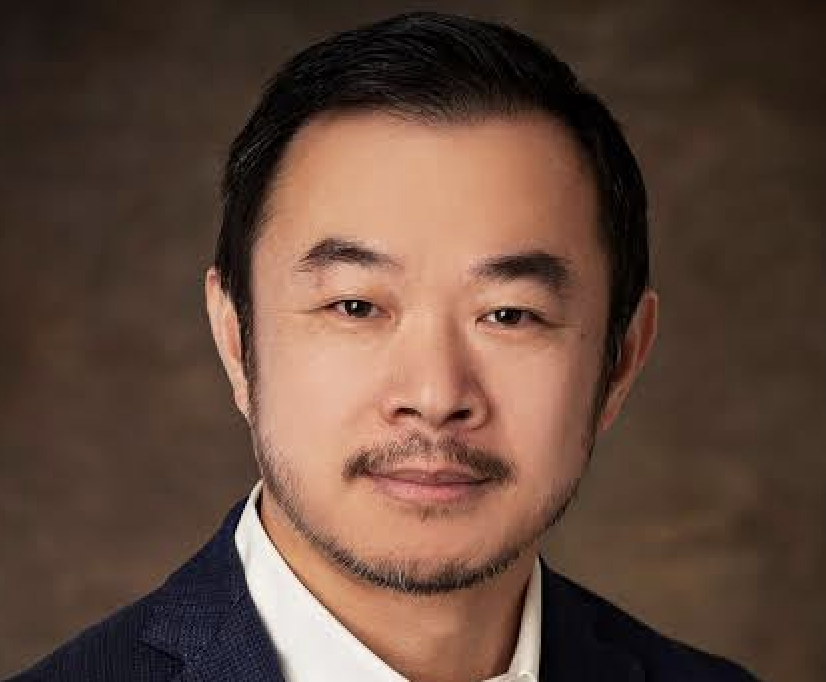
Professor Eric Xing is the co-Founder and Chief Scientist at GenBio AI, the President of Mohamed bin Zayed University of Artificial Intelligence (MBZUAI), an internationally renowned computer scientist, AI innovator, and entrepreneur. His work spans cutting-edge machine learning research, groundbreaking AI systems development, and transformational applications in healthcare, computational biology, and beyond.
GenBio AI is laying the foundation for a new era in medicine and biotechnology. Its system of integrated multi-scale foundation “world models” aim to obtain a global view of the underlying biology of living cells, tissues and organs to unlock biological and biomedical discovery with applications ranging from basic research to translational medicine and drug discovery. In 2024, GenBio AI unveiled the world’s first AI-Driven Digital Organism (AIDO), a platform that simulates and programs biological systems
As a leading authority in AI, Xing has made significant contributions to the fields of statistical machine learning, distributed systems for large-scale AI, and computational biology. He has authored over 500 research papers, which have been cited more than 89,000 times, underscoring his influence in advancing both foundational AI methodology, system development, and applications.
Xing, a scheduled speaker at the Forum’s annual meeting in Davos and at the Science House, an initiative of Frontiers, the open science publisher, sat down for an interview with The Innovator at the annual meeting, to speak about the next phase of intelligence.
Q: Tell us about GenBio and why your approach to applying AI to biology is different
EX: Some people are saying AGI [artificial general intelligence] – a supreme intelligence that is way better than human intelligence – is half a year away. I have a more grounded vision of AI and where the opportunity is. If, for example, you ask today’s LLMs a question from literature, it might remember better than you. It’s like interacting with a good librarian who can point to the right book. But if you want to solve a problem that is unknown and not explicitly written in one of the books, it won’t help you. I don’t want to ask obvious questions. I want to ask how to cure a disease and turn this idea into a product. You don’t find an answer to that kind of question on today’s AI. I want AI to solve every problem in health. Rather than just focusing on drug design I want AI to help us understand how to better understand diseases so we can design different therapies – not just drugs but lifestyle and nutrition. That is why we are not doing pattern matching or retrieving knowledge. We are developing a new generation of AI systems that use very different LLMs, similar to next generation world models.
Q: Please explain what you mean by world model?
EX: By world model I mean a way of simulating world possibilities and doing thought experiment based reasoning with it. Imagine you are playing the game of Go or chess. Just because you understand a few rules doesn’t mean you play well. But if you use the rules or other ways to simulate all the possibilities then you understand which way to play is better. A world model in biology doesn’t predict the outcome, instead it simulates all possible scenarios and ranks them by the likelihood, so you make your decisions and choices based on “virtual experiments”.
One of the major challenges in building foundation models for biology is that biology operates in a language vastly different from natural languages and images. They encompass multi-scale complexities spanning from the molecular level (DNA, RNA, and proteins), through network levels (protein interaction networks, regulatory networks, and gene expression within cells), to intricate systems like cell-cell interactions, organs, individuals, and societies. Historically, numerous specialized machine learning and computational biology models have been developed to address specific issues within various facets of biology and life sciences.
For example, right now companies, such as the Arc Institute, are racing to build an RNA-seq perturbation predictor which they (wrongly) called a ‘virtual cell’, but it is not enough to look at any real cellular aspects such as morphology, shape, fate, and molecular response other than RNA counts of single cell, nor along multiple cells such as in tissues. You need to look at the system level, not at the RNA count level, to understand all the consequences, to gather all the cellular data – the molecular information, sequence and structure, as well as cellular information, including cell imaging and so forth for each of these modalities. The vocabulary for different modalities must be consistent. Cross modularity alignment is necessary because if something happens to the gene, the whole stack of information is affected. We need to know how the cellular evolutionary dynamics change. World models can simulate all the possibilities.
The AI-Driven Digital Organism (AIDO) that GenBio AI develops is such a world model for biology, which learn representations for a diverse range of biological data, from molecular interactions to cellular behaviors to phenotype information. to create a unified AI-driven framework for predicting, simulating and programming biology across all scales. We will use this system to address fundamental questions in drug discovery, bio-engineering, and disease prevention.
Q: How will this change drug discovery?
EX: If you look at drug design, it involves multiple stages and trials. It is a process problem not a technology problem. The current process was developed some decades before AI and before DNA was decoded. It is based on the classical theory of medicine and drug development which includes double blind tests and cohort development, which contradicts the idea of modern personalized medicine and data driven decision-making. To speed up that process Alphafold has used AI to design protein structures, reducing the time from one year to one day. But that is just-one step in a multi-step process reducing a 10 year process into nine years and one day. It brings to mind a 2020 viral image [by MythBusters host Adam Savage, where he tasked a Boston Dynamics Spot robot with pulling a custom-built, Victorian-style carriage.] The analogy is apt: even if we introduce a robot, we are still using a carriage when we should be taking an aircraft. What we are trying to do at GenBio is to ask whether the process itself is correct. If we are going to understand disease, we need to tackle the problem holistically by using a simulation approach before we even start building things.
W: Where are you on your trajectory?
EX: It’s a multi-phase development. Let’s use the autonomous car as an example. They have level 1, 2, 3, 4 to indicate different levels of autonomy and advancement. We could use the same spirit and measure our progress by using level 0 all the way to 5. Systems like AlphaFold that are able to predict molecular structures are at level 0 which can be called virtual molecule. GenBio has a full-stake level 0 AIDO that is able to generate virtual DNA, RNA, Protein structures, and their complexes. Level one is looking at a virtual cell holistically, which should arrive in a year or two. Level two is a virtual tissue, this will take another year but even at level zero or one there is commercial value, as we already see from the market enthusiasm of pure protein design companies such as Isomorphic or even small molecule design teams like Insilico.
With virtual cell (level 1), one of the key users we are interested in serving first is the entire biological research community to help them design experiments. Biologists lack the tools to design and optimize their experiments. The virtual cell we will develop for level 1 will help them narrow down which gene to knock out and where to look for defects and outcomes. This application will help us encourage adoption and collect feedback. Pharmas have their own research labs so they can use our technology more sophistically and aggressively. Like physical cells must be handled and experimented with in a web-lab using physical device, virtual cells can be manipulated and experimented with in a virtual lab with computational prompts. So along with the virtual cell, we are developing a software platform – the Virtual Cell Lab with agentic AI to bridge the AI-driven VC with human researcher, e.g., knowing how to talk to a cell and tell it to simulate a certain action on a particular gene or any combination of targets. This will permit a scientist that is not a software engineer to use natural language to do experiments by asking questions such as ‘Can you turn yourself into a stem cell? or ‘Can you present a number of vulnerabilities into gene targets that could have this particular outcome?’ The agentic AI will turn these kind of questions into the right prompt to let the virtual cell simulate what you want to see, and with full analytical results backed with literature contexts and suggested actions. You could ask it about simulating the top 10 hypotheses, removing the need for mathematical programming. One of the major pharmaceutical companies has already expressed interest in having their researchers and biologist use our Virtual Cell Labs.
The second level – virtual tissue – has clear and even greater potential. When you do the actual trial on an animal- tissue model or a tissue system, our technology will allow you to simulate and monitor changes to the subjects.
Q: World models were a hot topic in Davos. Can you talk about why you think they will usher in the next level of intelligence?
EX: World models allow AI to understand the physical environment, to have spatial intelligence and also the tools to purposefully do long horizon reasoning and actionable planning. It allows AI to go into the real world to do things; they turn book knowledge into a sequence of actions. We will need world models for different sectors, but they are currently hampered by a lack of correct AI architectural designs that goes beyond LLM-style transformers, training methods that surpass self-supervision based on pattern reconstruction, and proper data that only records patterns and facts, but not intents, purposeful planning and executions.
In terms of managing expectations, if you use OpenAI as an example, the first couple of years was not about commercialization, it was about developing an AI that could carry out generic conversations on any topic. OpenAI started in 2018 and it was 2022 or 2023 before it was viable. Similarly developing a minimum viable simulation of the cell and tissue using a new generation of AI models will take a few years.
This article is content that would normally only be available to subscribers. Become a subscriber to see what you have been missing