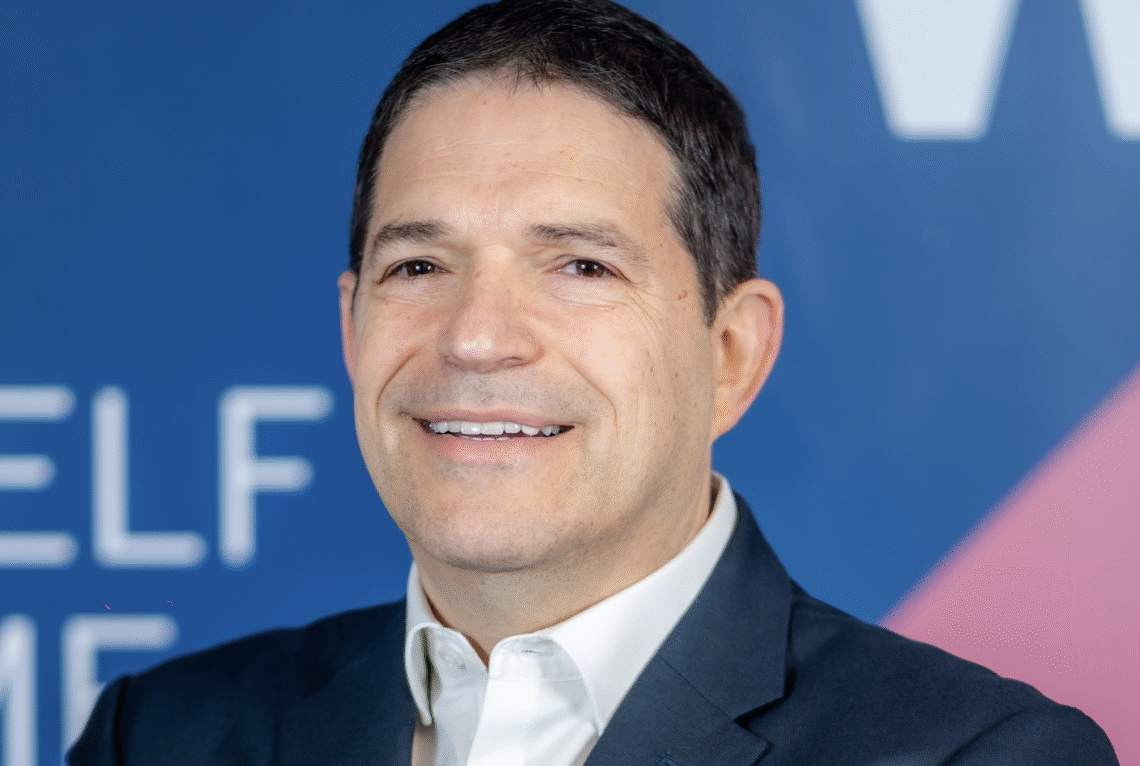
Alon Stopel, Ph.D. is the Chairman of the Israel Innovation Authority and Chief Scientist for Innovation at the Ministry of Innovation, Science and Technology. He previously served as Vice President and Chief Scientist of Elbit Systems, an Israel-based international military technology company and defense contractor and held a variety of senior positions in the Directorate for Research and Development of Military Weapons and Technological Infrastructure in the country’s Ministry of Defense.
Stopel brings extensive experience in business development and has expertise in leading international collaborations in research and development, including establishing R&D centers around the world and the creation of collaborations between governments. He has an in-depth knowledge of Israeli and international R&D work in both the civil and military sectors.
He earned a Ph.D. in Electronic Engineering – Physical Electronics, and a Master’s degree in Business Administration, both from the Tel Aviv University, as well as a Bachelor’s degree in Electrical Engineering from the Technion – Israel Institute of Technology.
The Innovator caught up with Stopel during the World Economic Forum Annual Meeting in Davos to speak about how Israel’s tech ecosystem continues to scale and attract investment, even amid geopolitical uncertainty, and the country’s ambitions in quantum, dual-use technologies and bio-convergence..
Q: How has the war and geopolitics impacted investment in Israeli tech?
AS: Already before the outbreak of the war, Israeli tech companies suffered from a severe plunge in investments due to the global economic slowdown. Despite everything Israel still ranks fifth globally in deep tech and life sciences VC investment. Since 2019, over one-third of total VC in Israel has consistently flowed into deep tech and life sciences, amounting to over $28.6 billion. The country has created 39 companies with $100 million plus revenues and/or $1 billion plus valuation. AI, medical devices, and biotech and pharma have the largest pool of VC backed companies, with AI and medical devices raising the most funding in recent years. Cybersecurity is the segment where Israel claims the largest share of global funding with over 20%. Last year Israel had more than $70 billion in M&A. This was driven by Google’s $32 billion acquisition of cloud security firm Wiz and Palo Alto Network’s acquisition of cybersecurity company CyberArk for $25 billion dollars.
Q: Beyond cybersecurity which tech areas are seeing growth?
AS: 2025 was a standout year for AI and Quantum VC activity. Quantum is going to be the main tech engine after AI. Israel has 30 startups in the quantum industry, including Quantum Machines, which has developed a hybrid control technology that enables execution of some of the most demanding computational requirements across all types of quantum computers. More than half of quantum computing companies use its technology.
Some of Israel’s quantum computing companies are developing the qubit itself, including superconductors, as well as qubits made of a diamond substance. For example, QuamCore aims to overcome current limitations in quantum computing by introducing a quantum processor architecture that can implement a million-qubit computer within a 50 cm cube.This innovation is poised to significantly reduce power consumption and costs compared to existing technologies. Other companies are working on software. For example, Kedma, which counts IBM among its investors, specializes in error-mitigation software. Its main piece of software, QESEM, or quantum error suppression and error mitigation, analyzes noise patterns to suppress some classes of errors while the algorithm is running and mitigate others in post-processing.
All of this to say that Israel is in a good global position in quantum R&D to become a world leader, with the goal of disrupting the market in several sectors. We need to extend the number of graduated PHD students and bring talent to Israel with the right budget so they can establish labs. To aid the quantum ecosystem, the Israel Innovation Authority is supporting the Israeli Quantum Computing Center (IQCC) at Tel Aviv University, the world’s first quantum computing center built to host multiple co-located quantum processors spanning different qubit modalities, tightly integrated with classical HPC [High Performance Computing] capabilities and Cloud access. The center provides a plug-and-play ecosystem for advancing quantum and hybrid computing at scale and serves as a hub for international quantum collaboration.
Q: How far away is quantum computing and what do you think the impact will be?
AS: There are still technological challenges that need to be overcome. Once we solve these problems quantum will give us a huge step up in capability. The combination of quantum and AI together will shorten the time to develop new drugs, new materials and new components and have a huge impact on our lives in ways we can’t imagine. It will be like the early days of the Internet. At first, we were not sure what we could do with it. Now we can’t do anything without it.
Q: There is a lot of talk today about the importance of technology sovereignty. How does Israel view this?
AS: The world is moving from globalization to separation, between East and West. S. Korea’s K-Chips Act, [a legislative initiative to boost its semiconductor industry through significant tax incentives and regulatory support,] is an example of this. Governments need to reduce dependencies on foreign countries for key technology components, secure their supply chains and develop their own centers of excellence. I believe Israel should look at this as well. It is a question of national security.
Q: There is a global rise in defense and dual-use technologies. What opportunities does this represent for Israel?
AS: Globally we are seeing increased investment in defense and dual-use technologies as countries focus on resilience, secure supply chains and technological sovereignty. For Israel this creates meaningful market and collaboration opportunities. The recent war on multiple fronts and Israel’s resilience and technological prowess provided substantial proof of concept regarding Israel’s technological capabilities. Many of Israel’s core strengths, including AI, sensing, advanced materials, cyber and quantum, are foundational technologies that operate across civilian and security environments. As global demand grows for resilient infrastructure, secure systems and advanced capabilities, companies developing these technologies are well positioned to scale faster, attract investment and expand into defense and dual-use markets. Moreover, the past couple of years created a situation in which people were taken out of their comfort zone by meeting new challenges both on the battlefield and in civilian life and meeting people they otherwise wouldn’t have met, resulting in an uptick in the number of new Israeli startups being founded for the first time in a decade.
The opportunity for Israel is to convert deep technological excellence into globally competitive companies that can serve commercial industries and government customers alike. By continuing to strengthen R&D infrastructure, talent development and commercialization pathways, we ensure that Israeli companies remain adaptable and positioned for growth in strategically important sectors.
Q: What is the next big thing for Israel?
AS: Bio-convergence, which is the integration of biology, engineering, AI, and data science to create technologies and solutions that can be implemented in the medical sector like the invention of new drugs, organ-on-chip, mental health and much more, but also sectors like agriculture, climate, energy, and even construction,. We have not yet succeeded in developing this industry in the same way as cybersecurity or software, but Israel is in a great position for this sector to flourish as we have very good assets such as academic research in this area that can serve as the basis for this sector to further develop and revolutionize multiple sectors in the years to come.
This article is content that would normally only be available to subscribers. Become a subscriber to see what you have been missing