
Personalized medicine — also known as precision medicine — promises to replace today’s inefficient “one-size-fits-all” model with targeted therapies that improve outcomes by tailoring prevention, diagnosis, and treatment to each patient’s unique genomic, environmental, and lifestyle profile, while reducing unnecessary costs.
Yet despite remarkable scientific advances, personalized medicine has not yet achieved its full potential at the population level. There are multiple reasons why. Chief among them is that effective personalized medicine depends on integrating information from multiple sources: genomic data, electronic health records (EHRs), imaging, wearable devices, and patient-reported outcomes. But today’s healthcare data landscape is deeply fragmented. The management and exchange of electronic health records remain critical challenges in healthcare, with fragmented systems, varied standards, and security concerns all hindering smooth interoperability.
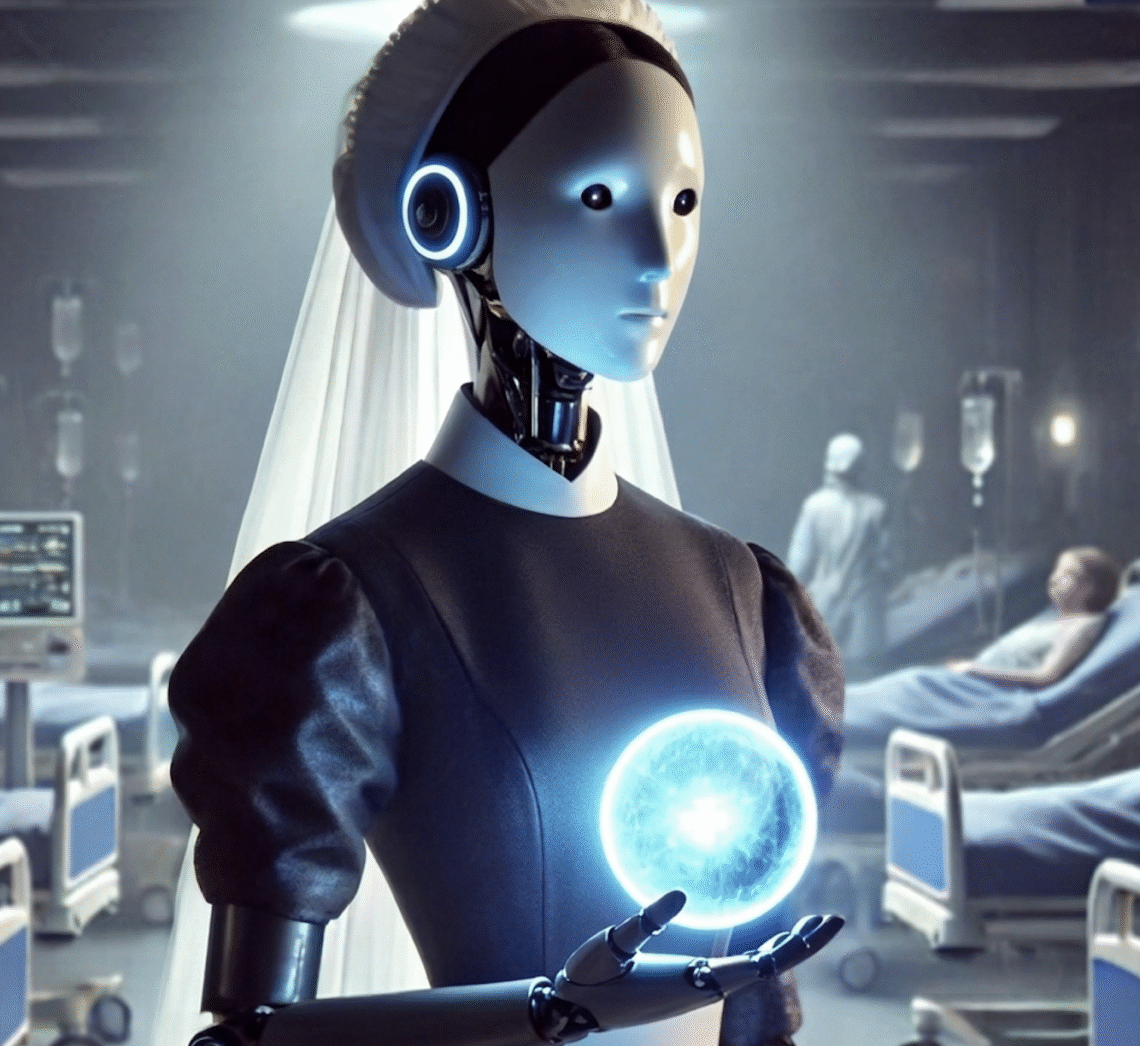
Nightingale AI, led by Imperial College London and named after Florence Nightingale, the 19th-century pioneer of modern nursing, who was dubbed the “lady with the lamp” for her continuous care of wounded soldiers in the Crimean War, is aiming to change that by leveraging Europe’s advance in digitizing healthcare records to build the world’s largest health foundation AI model, says Professor Aldo Faisal, Director of the UKRI Centres in AI for Healthcare at Imperial College London, one of the few computer scientists worldwide leading clinical trials to translate his work from algorithm to bedside.
Unlike models that use written language as the basis for reasoning, Nightingale AI will learn from multi-modal healthcare data. This means it is being designed to read data as varied as medical records, lab results, X-rays, genetic and imaging data and published medical research, with a goal of being able to better reason about patients, providing medical insights that are novel and tailored to healthcare and biomedicine.
Europe’s Advantage
The UK’s National Health Service is three to four years ahead on digitizing medical records, so with the government’s support, Nightingale AI is starting with the 60,000 digitized records that are already in the public domain, with plans to quickly expand from there, eventually including the digitized records of all 65 million of the people in the UK when they become available, says Faisal. The UK government’s Sovereign AI Unit awarded it one million hours (H100 equivalent) compute time on the world’s eleventh fastest supercomputer, Isambard-AI in Bristol, and that access is expected to be expanded.
Under an EU law scheduled to go into effect in March of 2029, the medical records of all 450 million people on the Continent will also be digitized. By combining UK and EU patient records, Nightingale AI’s goal is to use half a billion patients’ data to feed the AI model by 2030.
“This is about a coalition of the willing coming together to provide healthcare data for the greater good,” Faisal says.
Already, Imperial and California-based Nightingale AI partner the Children’s Hospital of Orange County (CHOC), part of Rady Children’s Health, have announced a plan to boost AI for children’s diseases that have been typically under-served by AI by working on anonymized electronic patient records.
But the bulk of the data will be European because most other countries — including China and the U.S. — don’t have nation-scale digitized medical records and no easy way to build connections between disparate private systems.
Europe can use this to its advantage, says Faisal. The first to benefit will be patients. Since the foundational health model gets better the more data it amasses, it will be able to tell a patient that most people fitting your profile benefit from doing X when they suffer X health ailment. Personalized factors, such as a patient’s weight, prior medical history and lifestyle, will also be added to the calculation to get the best outcome.
Take the case of a person with rheumatoid arthritis. TNF inhibitors used to treat the disease don’t work on 40% of patients. If the person also had another disease, like diabetes and/or depression, the chances that a drug tested on one disease would help them improve decrease even further. “Health is holistic,” says Faisal. “Once we have a complete picture of a person and data from half a billion patients, you will have enough cases of patients that have all these diseases at once and patterns will emerge.”
The amassed data will create the foundation of a digital healthcare market, says Faisal, roughly two times the size of the current market for European pharmaceuticals. Use cases include exploring new types of health tools that, based on your personalized health data and massive amounts of data about other patients, can predict trajectories for patients, says Faisal. It will be possible to run simulations of what might happen to a patient and how likely the scenarios are, helping the medical profession to shift from treating patients to preventing disease or catching it early enough to limit its impact. The AI could act as a sherpa, using protected personalized medical data and aggregated data from billions of records to help patients protect their health and navigate their way through the healthcare system. Nightingale AI could also be used in hospitals to optimize dosage of drugs, to train doctors better by allowing them to simulate what happens if they do this or that with patients; and to improve pharmaceuticals and medical devices.
A One-Stop Shop for Digital Health Algorithm Developers
While it is developing sponsorships with pharma and medical technology companies that will benefit its partners — British United Provident Association Limited (Bupa), a British multinational health insurance and healthcare company with over 43 million customers worldwide, is one of its sponsors — Nightingale AI will not be owned by commercial entities, says Faisal. He is creating in parallel a Testbed in Digital Health that will serve as a one-stop shop for digital health algorithm developers so they can access data in a privacy-preserving way and test it on multiple healthcare systems in parallel and internationally and obtain advice from experts on regulatory, technical and human factors.
Health systems can choose how they want to use the foundational model. In some countries the public health system might deploy it at scale and use the system to make recommendations to individual patients and promote preventative care, says Faisal. In other countries, apps may be developed to give people in different health systems access to the best health expert advice.
Addressing Privacy Issues
Balancing the need for data sharing — which is essential for building the large datasets required for precision medicine — with the imperative to protect patient privacy is one of the field’s most difficult challenges.
The testbed on which Nightingale AI is being built is using a federated approach. Instead of collecting vast amounts of sensitive data into a single, central location, the federated learning brings the training process directly to the data and learns from the data without moving it. Under data protection laws, federated algorithms can’t do this automatically. A human data protection officer needs to manually check the results to make sure the data can’t be used to reconstruct personal information. Nightingale AI is currently working on a way to automate the process by giving the data protection officers guarantees that a secure data environment has been created. “This technological leap will ultimately allow Nightingale AI to move from one country and one supercomputer to many countries and many supercomputers,” says Faisal.
Transforming Human Health
The foundational health model that Nightingale AI is building has the potential to transform human health, says Faisal. “Once we have learned from the data of half a billion people, it will be able to do what no human, no healthcare system and no medical school can do alone and discover interactions that we could never imagine.”
The era of personalized medicine will finally begin, he says. Patients will be better off than if they had 1,000 of the world’s top specialists reviewing their case, because AI will come up with novel ideas, just as it did when pitted against human players in the game of Go.
“We will be able to treat diseases at a much better level than before,” he predicts. “Simply by improving our understanding we will be able to increase life expectancy by two years, reduce preventable deaths by 20%, make drug development less risky and therefore cheaper, free up doctors for the hard cases, reduce burnout of clinicians by 50% and democratize access to health care.”
This article is content that would normally only be available to subscribers. Become a subscriber to see what you have been missing