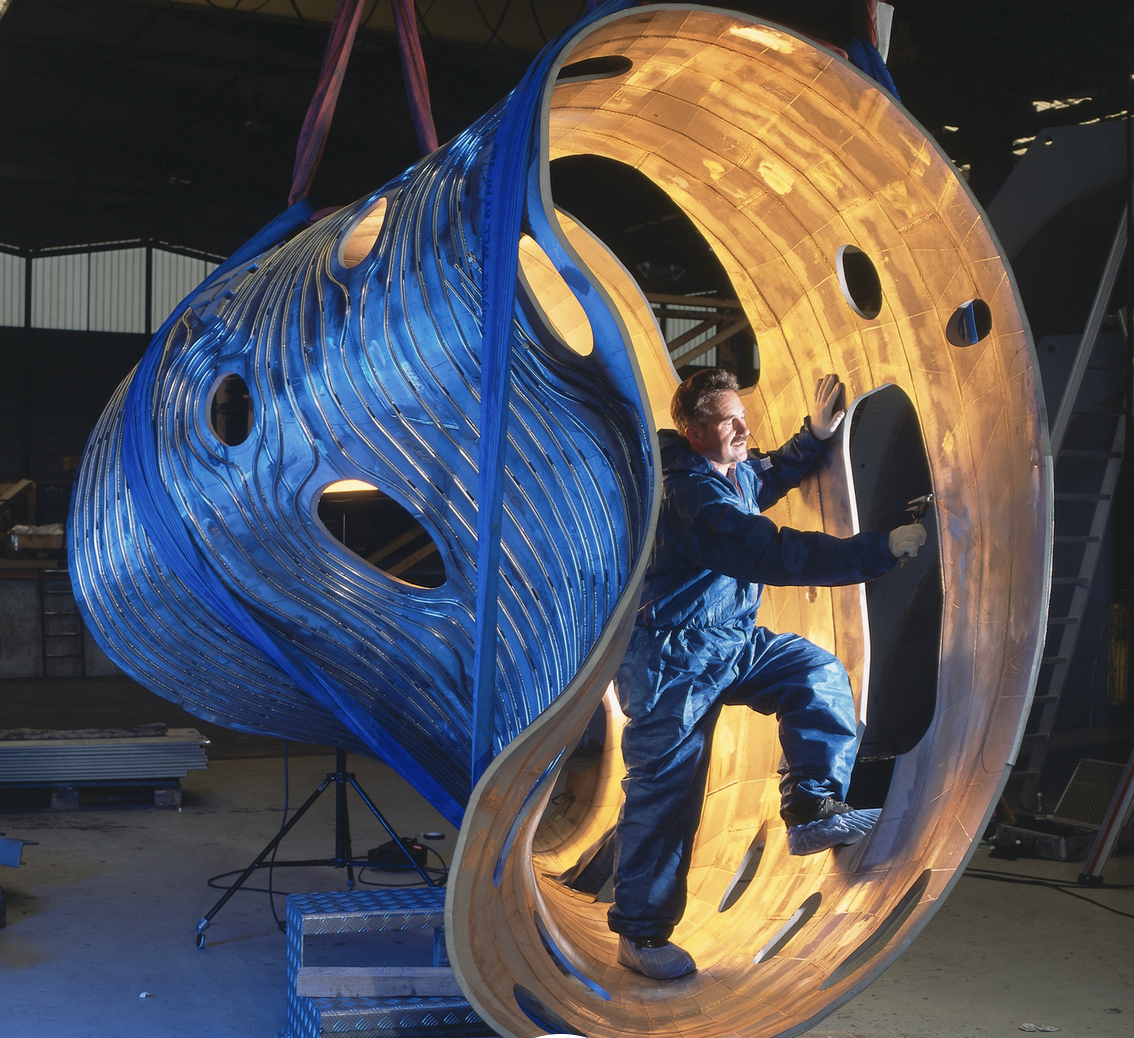

In the storied halls of the Max Planck Institute for Plasma Physics in Garching, just outside Munich, scientists have spent six decades chasing one of humanity’s most elusive ambitions: a machine that generates limitless, clean energy by replicating the nuclear reactions that power the sun. For most of that time, the institute’s most advanced fusion device — the twisting, pretzel-shaped Wendelstein 7-X stellarator located at its branch in northern Germany— sat at the frontier of physics, admired by the scientific world but seemingly destined to remain a laboratory curiosity rather than the seed of a commercial industry.
That is changing fast. In 2023, Proxima Fusion — spun directly out of the Max Planck Institute — became the first-ever commercial company to emerge from the respected institution, one of the largest centers for fusion research in Europe. Now, with hundreds of millions of euros in venture capital raised and a landmark public-private deal just inked with the German state of Bavaria, energy giant RWE, and the institute itself, Proxima is positioning itself to build Europe’s first commercial fusion power plant by the 2030s at a cost of over $2 billion. The ambition is audacious. The science, its backers argue, has never been more ready.
“This project matters because it converts scientific leadership into industrial capability,” says Proxima CEO Francesco Sciortino, an Italian physicist who earned his PhD at MIT before returning to Europe. “It mobilizes engineering companies, manufacturing partners, and supply chains around a concrete project rather than a purely academic research program. That is what will ultimately determine who builds the first commercial plants. If we align science, industry, and policy, which is exactly what we are doing, Europe has a credible chance to build the first generation of commercial fusion power plants and establish a new energy industry. That is the opportunity we are working toward.”
From Pretzel To Power Plant
To understand why Proxima’s approach is generating such excitement — and investment — it is important to know the peculiar history of the stellarator. The concept was first imagined by physicist Lyman Spitzer at Princeton in 1951. His idea: use a series of external magnetic coils to suspend a superheated mass of hydrogen plasma in three dimensions, forcing atomic nuclei to fuse and release vast quantities of energy. The design was elegant in theory. In practice, the mathematics required to perfectly shape those coils lay far beyond the computational power of the 1950s.
In 1958, Soviet physicists introduced a simpler alternative: the tokamak, which confines plasma in only two dimensions using external magnets and a large electrical current running through the plasma itself. The tokamak is shaped like a donut. It is far easier to build. For the next six decades, it attracted the lion’s share of global fusion funding — including the massive international ITER project in southern France.
But easier to build doesn’t necessarily mean easier to operate. Tokamaks carry a persistent and potentially catastrophic flaw: the large current running through the plasma can trigger sudden, violent losses of confinement known as “disruptions.” Sciortino offered a vivid analogy in a 2024 interview with The Innovator. “Tokamak devices are like helicopters,” he said. “In the absence of engine power, helicopters will start to lose altitude and fall — you always have to be careful. Stellarators are more like airplanes: they have to be designed properly, but once you are flying, you don’t have to worry and can operate on autopilot.”
Max Planck scientists never abandoned their belief in the stellarator. Starting in 1994, they leveraged new manufacturing techniques and superconducting technologies to build one, something that had never been done before. The Wendelstein 7-X, completed after a decade of development and representing more than €1 billion in public investment, represented the culmination of that effort and forms the scientific foundation for Proxima’s work.
In 2022, it achieved a landmark result: overcoming the energy-loss problems that had plagued an earlier design and meeting its key design targets: confirming that extreme manufacturing precision is achievable on the scale needed for an optimized stellarator and that the theoretical physics behind the machine works. A landmark paper showed that the predictions from complex simulations matched experimental results. No other country on the planet, Sciortino notes, has invested as much in this approach.
That bet is now paying off. Technology advances over the last five years in high-temperature superconducting magnets, computational design and large-scale simulation are simultaneously helping to advance the plasma physics and engineering needed to power stellarators, he says. What’s more, stellarators offer an inherent advantage for power plants; they can operate continuously rather than in pulses (compared to tokamaks), which is important for stable electricity generation.
Proxima is not alone in betting on the stellarator. According to the Fusion Industry Association’s 2024 annual report, at least eight private companies worldwide are now pursuing stellarator-based fusion.
France’s Renaissance Fusion is pioneering a novel approach to magnet construction that deposits superconducting films directly onto cylindrical surfaces. Japan’s Helical Fusion has completed testing of a commercial-scale superconducting magnet.
Other players include Type One Energy Group in the United States, which is building its Infinity One stellarator prototype at the site of a former coal-fired power plant in Clinton, Tennessee, in partnership with the Tennessee Valley Authority and Oak Ridge National Laboratory.
In the UK, the government’s flagship STEP program — a prototype fusion power plant to be built at the former West Burton A coal station in Nottinghamshire’s so-called ‘Megawatt Valley’ — received a record £2.5 billion commitment in June 2025.
It is no accident that Type One and the UK project are being built on the sites of retired conventional power plant sites. These sites already have grid connections, cooling infrastructure, industrial zoning and energy-sector expertise – the elements needed for a large power plant, says Sciortino. “What is distinctive about our approach is the combination of a stellarator program, a former nuclear site, and a full industrial roadmap from demonstrator to commercial plant,” he says.
The Race Europe Nearly Missed
For nearly a hundred years, Germany has nurtured some of the most transformative physics in human history — from Einstein to Heisenberg to the quantum revolution. But while Max Planck’s scientists perfected the physics for fusion energy, the commercial momentum in the sector was building steadily on the other side of the Atlantic. Today there are more than 40 private fusion startups worldwide; roughly two-thirds of them are American.
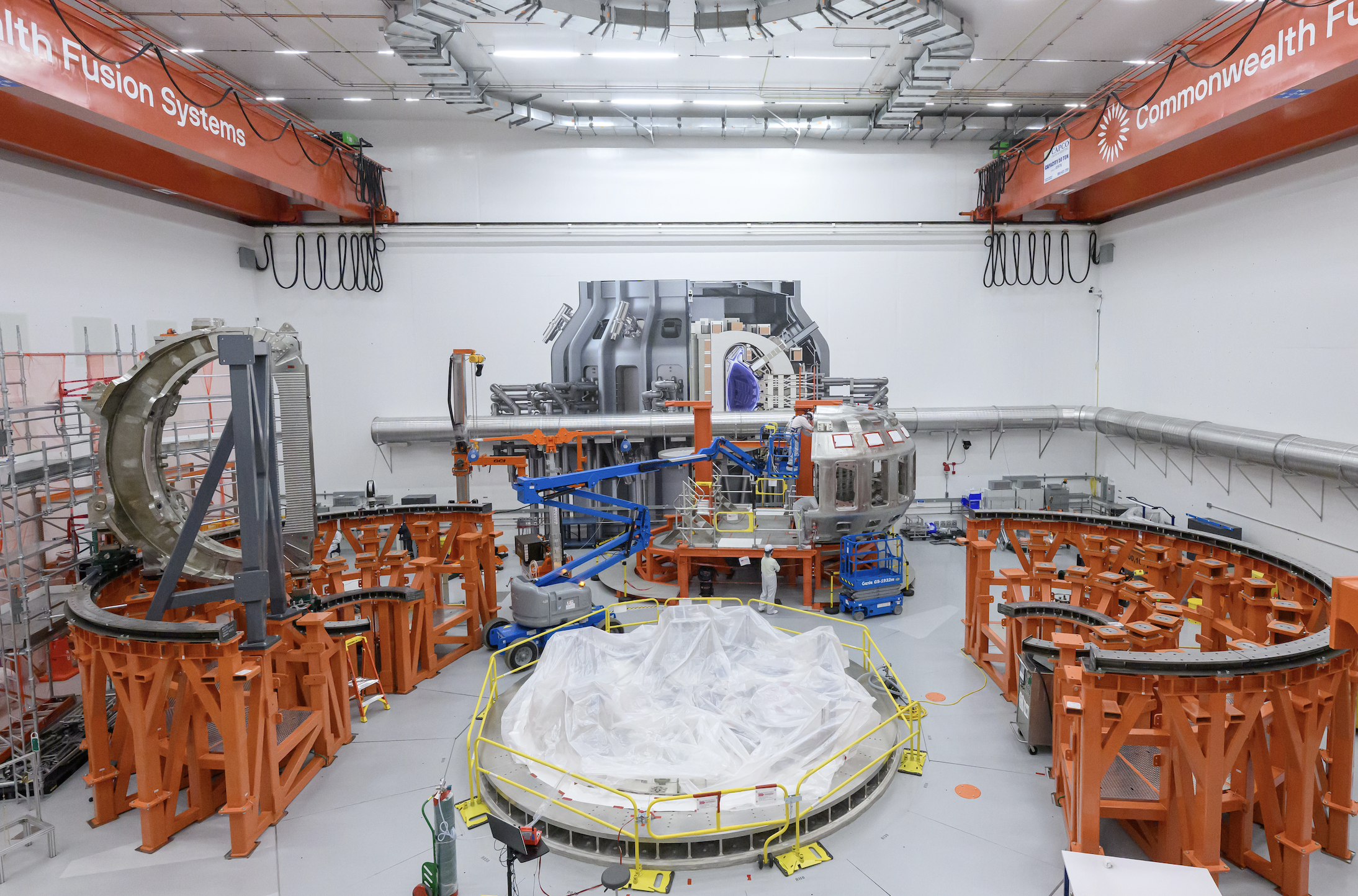
Commonwealth Fusion Systems (CFS), spun out of MIT in 2018, has raised close to $3 billion to date. Investors include Nvidia, Google, energy company Eni and a consortium of 12 Japanese companies led by Mitsui and Mitsubishi. Eni and CFS have signed a power offtake agreement worth more than $1 billion and CFS has forged a partnership with GoogleDeepMind to use AI to advance its technology. The partnership builds on the Silicon Valley tech company’s work using AI to successfully control a plasma. With academic partners at the Swiss Plasma Center at EPFL (École Polytechnique Fédérale de Lausanne), Google showed that deep reinforcement learning can control the magnets of a tokamak to stabilize complex plasma shapes.
Helion, a U.S. fusion energy startup focused on a pulsed magneto-inertial approach, has raised over $1 billion. OpenAI CEO Sam Altman is also Helion’s executive chairman and has been its most prominent backer. In July 2025, Helion broke ground on Orion, its first commercial fusion power plant, located in Malaga, Washington. The 50-megawatt facility is being built to fulfill a power purchase agreement with Microsoft, with electricity expected to be delivered by 2028. The 2028 commercial delivery date to Microsoft remains the most aggressive timeline in the private fusion sector by a wide margin. Helion has also inked a deal to build a 500-megawatt plant for Nucor, a steel producer that participated in its latest funding round.
Meanwhile, EconSight, a Swiss company that tracks technology trends and patents, published a report last year on China’s technology focus in its new five-year plan 2026-2030. Fusion Energy is number one on China’s list and EconSight shows that China is far ahead of both Europe and the U.S., filing 67% of world-class patents in fusion energy compared to 19% for the U.S. and 5% from Europe.
It is an example of how the United States and China are mobilizing large-scale public and private capital for fusion with a speed and ambition that Europe has struggled to match.
The pattern is a familiar one. “Europe has extraordinary scientific leadership, but historically it has been slower in translating research into industrial projects,” says Sciortino, who was at MIT during the early years of Commonwealth Fusion’s development and watched firsthand how the American team’s willingness to take risks and move fast gave them a decisive edge.
The investors and institutions rallying behind Proxima are acutely aware of this history. “This was a German story that was being given away,” Benjamin Erhart, a partner at UVC Partners, one of Proxima’s lead investors told The Innovator in a 2024 interview. “Germany has been a sleeping giant, with the largest and most advanced stellarator globally, but no effort to commercialize its results. It did not take long to identify the opportunity here — to imagine how we could connect the dots in an area where our country has a great specialty.”
Building The Alliance
What distinguishes Proxima from earlier European deep-tech ventures is not just the quality of its science, but the deliberate architecture of the coalition it has assembled around it. The memorandum of understanding signed in early 2026 brings together four pillars: Proxima itself, responsible for engineering and execution; the Max Planck Institute for Plasma Physics as the world-leading scientific partner; RWE, Germany’s largest electricity producer, providing operational expertise and infrastructure; and the Free State of Bavaria as political and financial sponsor.
The plan unfolds in stages. First, Proxima will build the Alpha stellarator demonstrator in Garching, working closely with the Max Planck Institute, with the goal of demonstrating net energy gain in the early 2030s. Then, using the lessons learned from Alpha, it will develop Stellaris — a full commercial fusion power plant — at the site of a former nuclear power station in Gundremmingen, Bavaria, where RWE has existing grid connections, cooling infrastructure, and industrial zoning already in place.
Earlier this month Bavaria announced that it had committed €400 million toward the €2 billion Alpha facility, with Proxima contributing a similar sum from private investors. The remaining €1.2 billion is expected to come from the German federal government — funding that has not yet been guaranteed. Sciortino believes the project is well positioned to secure it, given the state-level commitment and private co-investment already locked in. “By committing first, Bavaria de-risks federal participation and creates the conditions for private capital to follow,” Sciortino wrote on LinkedIn after the deal was signed. “In a global race where the U.S. and China are mobilizing large-scale capital for fusion, having a public-private partnership that structurally unlocks our path to fusion power is a strategic differentiator – and one we intend to press to its full advantage.”
Extending the coalition further, Proxima has assembled the Alpha Alliance — a consortium of more than 30 industrial partners across Europe tasked with coordinating the supply chain for the Alpha program. This matters because fusion machines are among the most complex engineering systems ever built, requiring superconducting magnets, advanced cryogenics, precision vacuum systems, power electronics, and large-scale plant infrastructure that no single company could provide alone, says Sciortino. The Alpha demonstrator alone will require more than 40 high-performance high-temperature superconducting magnets.
Europe’s Supply Chain Advantage
What is often overlooked in discussions of European fusion is how much of the global supply chain already resides on this continent. Decades of major public research programs — JET in the UK, ASDEX Upgrade and Wendelstein 7-X in Germany, and the vast ITER project in France — have quietly cultivated a world-class ecosystem of specialized manufacturers capable of producing fusion-grade components. In a striking illustration of this fact, many of the components for U.S.-based Commonwealth Fusion Systems’ SPARC device — are sourced from European suppliers.
The talent pool runs equally deep. “At MIT there are around 150 people working on fusion,” says Sciortino. “At Max Planck there are 1,100.” Italy, which has not operated a nuclear power plant since 1989, has continued to train nuclear engineers, turning Turin and Palermo into centers of excellence whose graduates now populate research labs across Germany, France, and the UK. The Proxima founding team itself reflects this European diversity, drawing not just from Max Planck but from MIT and Google X.
Seizing The Opportunity
One of the clearest signs that fusion is moving from a scientific experiment to a commercial reality is that the IAEA World Fusion Outlook 2025 for the first time includes global modelling of fusion energy deployment. Conducted by the Massachusetts Institute of Technology (MIT), the study, which was released October 25, explores how fusion could contribute to the future electricity mix under diverse policy, cost and technological assumptions.
While fusion energy is nearer than ever, its champions are careful to acknowledge the challenges that remain. Building and integrating the complex systems required — in the case of stellarators high-temperature superconducting magnets, plasma heating, tritium handling, neutron-resistant materials — at the scale and reliability needed for a commercial power plant represents an immense undertaking. And, the cost of energy from first-generation fusion plants cannot yet be reliably calculated.
Sciortino is not one to minimize these hurdles but says he believes that Europe has every resource it needs to clear them — if it can overcome its traditional reluctance to move fast and back big ideas with decisive capital.
“The physics is understood, the computational tools exist to design better reactors, superconducting magnet technology has advanced dramatically, and industry is ready to build,” Sciortino told The Innovator. If Europe seizes this opportunity to take advances in the field and put fusion on the grid, he says, it is well-placed to become a major contender in the nascent fusion energy field.
This article is content that would normally only be available to subscribers. Become a subscriber to see what you have been missing