
Microbes can manufacture almost anything — proteins, chemicals, fuels, fiber — more sustainably and efficiently than conventional industrial processes. The hard part, the part that has derailed more well-funded companies than almost any other sector, is making it work at scale for a price that the market will pay.
Australian scale-up Cauldron Ferm thinks it has cracked the problem with what it calls “hyper-fermentation” — a proprietary technology that enables a continuous fermentation process, built on more than four decades of R&D.
Biomanufacturing uses living cells as programmable factories, where bio-engineered microbes convert simple inputs like sugars into valuable products. Traditional industrial fermentation uses a batch method: fill a vat, grow the microbes, harvest the product, clean, repeat. It is slow, capital-intensive, and expensive per unit. Cauldron’s key advantage is keeping these microbes in a highly productive steady state and running processes continuously for long periods. This increases output while significantly lowering production costs, helping bioproducts compete with conventional industrial alternatives.
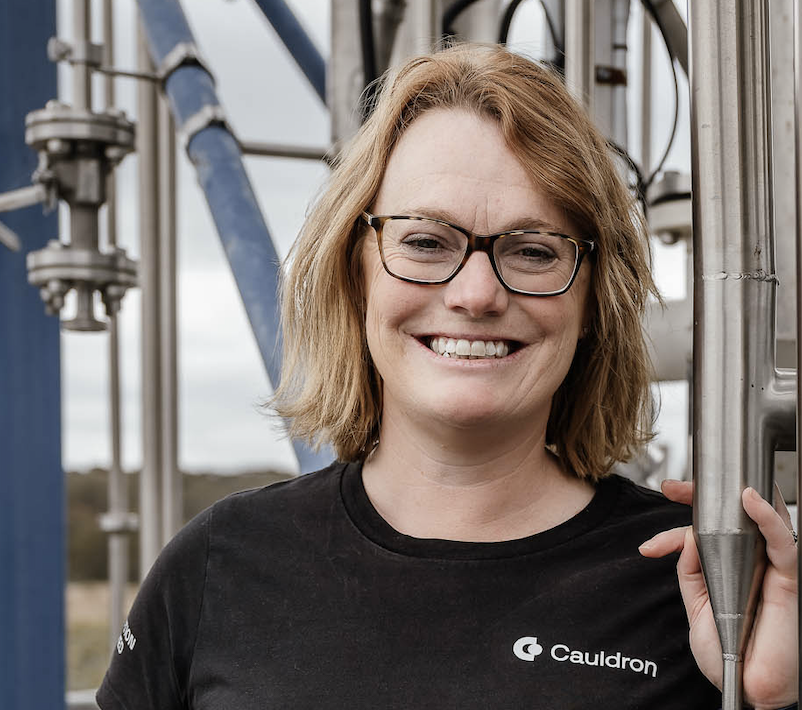
“We can make products 30% to 50% cheaper while also manufacturing significantly more,” says CEO Michele Stansfield, who co-founded the company with CFO David Kestenbaum in 2022. The vision? “New products and new supply chains for an increasingly fragile world,” she says.
To read this article and gain access to over 1000 stories about the global tech sector become a paying subscriber to The Innovator. Click here to sign up.