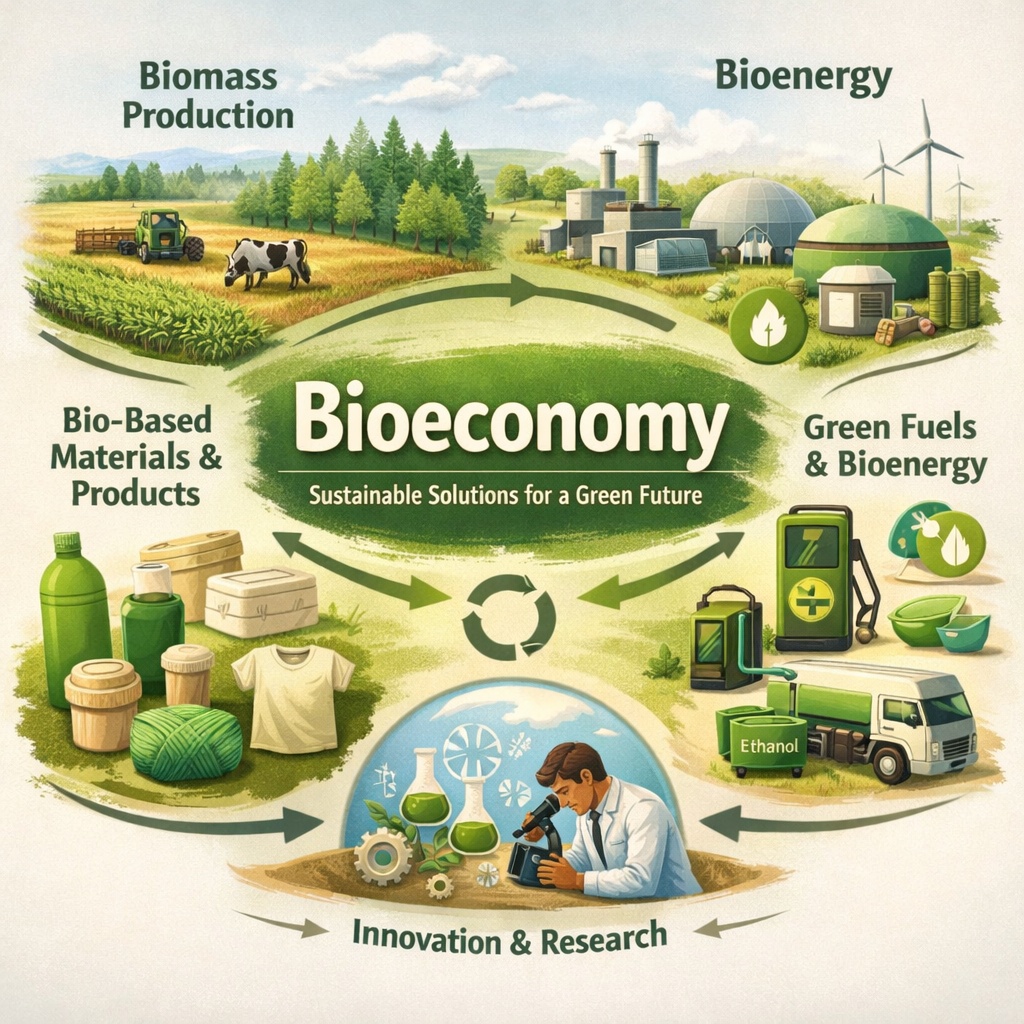

Biology, its champions have long insisted, is the new silicon. The twentieth century belonged to chemistry and software; the twenty-first, they argue, belongs to the cell. Harnessing microbes, enzymes and engineered proteins to manufacture medicines, materials, fuels and food would free humanity from dependence on fossil carbon, slash greenhouse gas emissions and introduce greater flexibility into production systems, unlocking a new industrial revolution built on renewable, living feedstocks.
The appeal has never been greater as geopolitical upheaval causes supply chain disruptions to shift from being an episodic risk to a structural concern. Meanwhile pressure from consumers and regulators is increasing demand for greener products that use biological processes and genetically modified microorganisms in place of traditional production methods.
By some estimates synthetic biology could contribute extensively across nearly $30 trillion of global manufacturing industry value, accounting for a third of global output.
The objective of the bioeconomy is not to just replicate what we are making with hydrocarbons. The aim is to make things functionally better. “There are lots of materials that we could make that would be new to Earth and functionally superior to what we have right now,” says serial entrepreneur Edward Shenderovich, co-founder of Roebling, an AI-powered platform for industrial project planning and capital cost estimation that serves the biomanufacturing, chemicals and critical minerals sectors.
So, what is holding bio back from wider deployment as a supply chain solution and what could enable a future in which more materials, molecules, processes and inputs are grown rather than extracted or transported over long distances? That was the focus of a January 22 panel entitled “Grow Anything Anywhere” during the World Economic Forum’s annual meeting in Davos moderated by The Innovator’s Editor-in-Chief. This article builds on that discussion to delve into what it would take for bio innovation to move from promise to practice across key sectors.
In pharmaceuticals, the bioeconomy has delivered some of its most spectacular gains, and a new wave of AI-driven natural-product companies like Enveda Biosciences, which participated on the Davos panel, is pushing the frontier further. In the chemicals and food sectors, steady progress by companies such as Genomatica and EVERY Company is starting to reshape supply chains.
But the cautionary tales are real too, and none more instructive than the implosion of Zymergen — a story that underscores the brutal gap between laboratory results and manufacturing reality.
The Zymergen Debacle
When Zymergen, a Forum Tech Pioneer, raised half a billion dollars in a NASDAQ IPO in May 2021, valuing the company at over $3 billion dollars, it was supposed to be synthetic biology’s coming-out party. Founded in 2013 by Josh Hoffman, Zach Serber and Jed Dean — all veterans of Amyris — the Emeryville, California company had spent nearly a decade and accumulated over $850 million in venture capital perfecting a platform that used machine learning and robotics to engineer microbes capable of producing novel materials. Its debut product, Hyaline, was a biomanufactured polyimide film for flexible electronics displays, co-developed with Sumitomo Chemical.
Three months after the IPO, the company revealed that it did not expect any product revenue in 2021 and that income in 2022 would be, in its own clinical phrasing, ‘immaterial.’ Several key customers had encountered technical difficulties implementing Hyaline into their manufacturing processes. The market for foldable display applications — the intended home for the film — was growing more slowly than projected. CEO Hoffman departed immediately. The stock, which had opened at around $37 per share, began a collapse that would eventually see the company acquired by Ginkgo Bioworks for around $300 million in an all-stock deal in July 2022, and then file for Chapter 11 bankruptcy in October 2023. Since then Ginkgo Bioworks, another Forum Tech Pioneer, own stock has plunged.
Post-mortems have been plentiful. Industry observers noted that Zymergen had disclosed gaps in its commercial-scale manufacturing capabilities in its own IPO prospectus — a red flag that received insufficient attention. The company had no internal commercial-scale manufacturing and was struggling to meet production targets with its contract manufacturing partners. In a field where biological processes are notoriously sensitive to conditions at scale, the inability to guarantee consistent output was fatal to its electronics ambitions. Investors in synthetic biology companies, warned analysts at KdT Ventures, needed to scrutinize product-market fit as rigorously as scientific platforms: the ability to generate molecules in a laboratory is emphatically not the same as the ability to deliver them reliably and economically to a demanding industrial customer.
The deeper lesson of Zymergen is that despite advances in reading, writing and editing DNA, the complexity of living systems means that scaling from bench to bioreactor to commercial plant is still a formidable engineering and operational challenge, one that requires sustained capital, deep process knowledge and, crucially, customers who have been involved in the development process from the beginning.
Biopharma Is Leading the Way
Enveda, a bioscience company, is an example of how the broader biopharma sector of the bioeconomy has matured considerably. Founded in 2019 in Boulder, Colorado, Enveda was built on an insight that nature has been running drug-discovery experiments for hundreds of millions of years, and the plant kingdom contains a vast, largely unexplored library of bioactive molecules. Most pharmaceutical companies, constrained by their synthetic chemistry workflows, have largely ignored this library. Enveda is determined to mine it.
“We have our map of the world’s genetics; we can take almost any organisms in the world and we can ID the genes and can also predict which ones of those form parts of biosynthetic pathways that can be used for fermentation but so far we have only had a genetic first lens to this problem,” Enveda CEO Viswa Collaru, a speaker on the Forum panel, said during the Davos discussion. “By being able to understand the chemistry of any organism completely independent from the genetics we have created a path to what I like to call the skeleton key of synthetic biology. If you know all of the genes and all of the molecules and understand it across the biosphere, then you can understand precisely why this hibiscus flower with the exact same genes is pink instead of red. That can teach you new things about the chemistry of nature and how nature itself makes the myriad miracle molecules that she does. “
Collaru explained that the same technology that allows us to discover new chemistry—and turn it into medicines— allows us to make sense of complex chemical reactions, generating data at scale to create AI systems that could massively increase yield. This could “maybe create redundancies in starting materials that chemists would not normally think about and we are very, very excited about that,” he said. “Our technology directly helps us innovate and make our own future supply chains more resilient. This can fundamentally change the speed and scale of how Enveda can use fermentation.We have taken one early stage of molecules that were creating a bottleneck in a supply chain – an interesting Indian plant –and explored pathways to reduce [barriers] and are working with a fermentation partner to see what that would look like if it scaled,” he said during the panel.
“When you understand all of the chemistry , then you can understand the one thing you care about and develop a breakthrough precursor or a breakthrough for a drug,” Collaru explained during the panel. “We can break some genes so it is forced to make more of what it does or do more of what it does so it can be grown in Rajasthan or Mexico and we can develop a globally resilient carbon free supply chain. We are using both of these approaches to enable medicines in phase 1 and phase 2 trials.“
Enveda’s PRISM platform uses machine learning and mass spectrometry to analyze thousands of plant-derived molecules simultaneously — bypassing the expensive, slow process of nuclear magnetic resonance analysis that has traditionally made natural-product drug discovery prohibitively laborious. From this platform, Enveda has nominated multiple novel chemical entities as development candidates, targeting conditions including atopic dermatitis, inflammatory bowel disease, obesity, fibrosis and neurological disorders. In October 2024, its lead candidate, ENV-294 — an oral anti-inflammatory for atopic dermatitis representing a genuinely new chemical class — received IND clearance from the FDA to begin Phase I clinical trials, a milestone that few AI-driven drug discovery companies have reached.
The company has raised a total of $450 million and has a pipeline of ten drug candidates and multiple Phase I programs either running or planned, Enveda has become one of the more compelling examples of what rigorous platform science combined with genuine clinical ambition can achieve in the bioeconomy.
The COVID-19 pandemic demonstrated the extraordinary speed at which mRNA-based biological manufacturing could respond to a novel pathogen, compressing what would once have taken a decade into less than a year. Antibody-drug conjugates, cell therapies and precision biologics have transformed oncology. The question for the bioeconomy is whether lessons from these high-value, well-funded segments can be transferred to lower-margin industrial applications.
Progress in Chemicals and Food
The chemicals and food sectors have also been making progress. For example, Genomatica, a San Diego-based industrial biotech company, has industrialized bio-based production of 1,4-butanediol (BDO), a chemical building block used in spandex, plastics and pharmaceuticals. Its bio-BDO process reduces greenhouse gas emissions by more than 50% compared to petroleum-derived routes. Genomatica has also developed bio-based routes to caprolactam, the precursor to nylon, and has signed commercial partnerships with major chemical companies including BASF and Novamont.
In the food sector, precision fermentation has moved from novelty to nascent industry. By programming microorganisms to produce specific proteins, fats or functional ingredients, companies are manufacturing dairy proteins, egg whites, heme for plant-based meat and a growing range of food-grade compounds without the associated animal agriculture. As of May 2025, there were some 186 companies operating globally in the precision-fermentation space. The global market for fermented ingredients was valued at $47.7 billion in 2024 and is projected to reach $79.3 billion dollars by 2030. In Europe alone, precision-fermentation companies raised $120 million euros in 2024, more than three times the amount raised the year before.
The food applications that have gained commercial traction tend to be ingredient plays rather than whole-food replacements — a pragmatic response to the persistent difficulty of matching the taste, texture and price of conventional animal products. EVERY, a California scale-up which creates real egg white proteins using precision fermentation and a pioneering, patented process, is a case in point. Hundreds of large companies in the food business such as General Mills and McDonalds, have made commitments to be 100% cage-free, helping to create demands for its egg protein products, says CEO Arturo Elizondo. “Cage-free eggs- was one leg of the stool, the second was genuine market pull -solving a real problem at scale . The egg market is volatile, the price of eggs can double or triple in a matter of weeks. Shortages and supply shocks are big risks for consumer packaged goods (CPG) companies. The bio economy’s approach has a fundamental advantage to conventional egg protein procurement: it can offer a long-term stable price. The third leg is scale, the biggest lever to driving down prices, and also the biggest challenge. One of the things that EVERY has deployed to solve that is to leverage existing infrastructure without having to build its own large-scale facilities, which typically cost $200 to $500 million. It has been able to design its fermentation process to plug into large scale fermentation plants that are already in use, using off-the-shelf equipment. The company is establishing a network of global manufacturing partners, so that it can produce enough powdered egg protein to feed the market.
“We have a manufacturing partner, a global fermentation player, that has fermentation assets that we can completely repurpose and plug in our strain and process there and produce our powdered egg proteins there,” says Elizondo. “That is what we are using to get into the mass market. It’s a small-scale facility but it is large enough for us to enter the market. Now our ingredients are in every Walmart in the U.S. We are in Target nationwide as well, and on e-commerce and customer websites.”
Another positive sign is that new types of more efficient fermentation methods are emerging. Microbes can manufacture almost anything — proteins, chemicals, fuels, fiber — more sustainably and efficiently than conventional industrial processes. The hard part, the part that has derailed more well-funded companies than almost any other sector, is making it work at scale for a price that the market will pay.
Australian scale-up Cauldron Ferm, a Forum Tech Pioneer, thinks it has cracked the problem with what it calls “hyper-fermentation” — a proprietary technology that enables a continuous fermentation process, built on more than four decades of R&D.
Biomanufacturing uses living cells as programmable factories, where bio-engineered microbes convert simple inputs like sugars into valuable products. Traditional industrial fermentation uses a batch method: fill a vat, grow the microbes, harvest the product, clean, repeat. It is slow, capital-intensive, and expensive per unit. Cauldron’s key advantage is keeping these microbes in a highly productive steady state and running processes continuously for long periods. This increases output while significantly lowering production costs, helping bioproducts compete with conventional industrial alternatives.
California’s Pow.bio, founded by Ouwei Wang and Shannon Hall in 2019, has found a different way to maintain microbes in an ultra-productive state for weeks in a process it claims can cut capex costs and increase biomanufacturing capacity by orders of magnitude by combining continuous fermentation with advanced control methodology. In December the scale-up announced that it had formed a partnership with Bühler Group, a global solution provider for food, feed, and advanced materials, to bring an integrated continuous precision fermentation platform to market.
The chemical sector’s progress has been even more steady. Bio-based succinic acid, lactic acid, isobutanol and a growing range of specialty chemicals are being produced at commercial scale, often underpinned by long-term offtake agreements that give investors confidence in revenue streams. The key driver has been the willingness of large incumbent chemical companies to adopt bio-based routes when they offer a meaningful cost, performance or sustainability advantage — not merely because they are green, but because they make commercial sense.
Barriers To The Bioeconomy
For all this progress, the bioeconomy has not yet delivered on the sweeping transformation its proponents have been promising for two decades. The obstacles are structural, financial and cultural — and they interact in ways that make them difficult to resolve individually.
The most persistent challenge is the gap between laboratory performance and commercial-scale economics. Biology at the bench is often elegant; biology at 100,000-litre fermentation scale is frequently unpredictable. Yields that look attractive in a flask can deteriorate dramatically as volumes increase. Contamination, substrate variability, oxygen transfer and heat management all create problems that cannot be predicted from small-scale data alone. The capital required to systematically de-risk scale-up — building demonstration and pilot plants before committing to commercial facilities — is substantial, and the timeline to returns is long. The European Investment Bank has identified structural financing gaps across biomanufacturing scale-up as one of the primary barriers to the bioeconomy achieving its potential.
Venture investment in synthetic biology and industrial biotech fell sharply from its 2021 peak. Investors who were burned by high-profile disappointments — not only Zymergen but also Ginkgo Bioworks, which saw its own valuation collapse after going public via SPAC — became more demanding about near-term revenue visibility. The result has been a bifurcation: well-advanced clinical-stage biopharma companies like Enveda continue to attract capital, while earlier-stage industrial biotech companies find fundraising more arduous.
Regulation presents a different kind of obstacle. Novel bio-based products frequently fall between existing regulatory categories, creating uncertainty about approval pathways, timelines and costs that deter both investment and commercial adoption. In Europe, novel foods produced by precision fermentation must navigate the EFSA novel foods process, which can take several years — a timeline that is difficult to reconcile with the financing cycles of early-stage companies. The European Commission acknowledged in its 2025 Strategic Framework for a Competitive and Sustainable EU Bioeconomy that regulatory complexity remains a major challenge, with market entry often delayed because novel bio-based products do not clearly fit within existing legally recognized categories.
Catalysts
The World Economic Forum has a flagship initiative dedicated to accelerating the global transition to a biobased economy which unites government, academia, industry leaders, civil society organizations, government officials, private industry, and academia.
Entrepreneurs and investors interviewed by The Innovator have their own ideas about what they think needs to be done for the bioeconomy to live up to its potential.
“The challenge is that when you go after large markets with low price points, the biggest bottleneck is the unit economics, so then you get the proverbial chicken and egg problem,” says EVERY’s Elizondo. “To underwrite that kind of scale you need very strong commercial traction and you need the technology to be able to produce the yield. You have these three legs of a little stool and all three need to be there.”
Many young companies have died by trying to build large scale facilities because they can’t find capacity from existing infrastructure, he says. This is in part because the large incumbents are not used to and are not built to leverage their existing capacity. “Ultimately to get these kind of contracts you need to already be able to exhibit market traction,” says Elizondo. “The large manufacturers are taking a risk because it’s a bio-based ingredient, and they need to know what consumer acceptance looks like, so you need to have at least a couple of years in the market before you even get to those conversations. There are a lot of companies that don’t even have the luxury of being able to stay in that intermediate walk phase. You need to sustain yourself until large-scale capacity comes online and most companies die during that process.”
EVERY, like PowBio, make a plea for large CPG companies to commit to offtake agreements that signal ‘if you build it we will come.’ “If the larger companies were willing to make these bets and structure long term off-takes it would be a great signal to the large fermentation players,” he says.
Hall, Pow.bio’s co-founder and CEO urges large companies to clearly articulate their needs. “We wish we had a summarized view of who is doing what and where,” she says. “Who is in the supply chain and ready to partner.”
On the regulatory side it would be helpful if there were a common thread globally, says Hall. “The U.S. and Europe have very different rules about genetic modifications. If there could be an MVP [minimum viable product] across the world it would be very helpful.
EVERY’s Elizondo would like to see governments offer intermediate capacity at a lower cost to help young bio companies build the market and get the customer traction. In the U.S. the Berkeley National Lab has a government run pilot scale facility but it is not large enough to do customer trials. “Having something like that but 5x larger for the industry would help startups prove their technology at scale,” he says.
Steven Gamo, technical lead at McWin Capital Partners, a U.K. fund that invests in food-focused venture capital and private equity in restaurant chains, says he remains optimistic. “Biology is inconveniently slow,” he says. So McWin is playing its part in helping the sector live up to its promise. “We have found that partnering with the right CPG companies can help us break through some of these impasses,” he says. The fund is also partnering with a large beer brewing company. “Beer consumption is decreasing and many companies in the brewing field are working to reinvent themselves as fermentation companies,” says Gamo. “There are some brewers out there that have real experience in large scale operations that could build much more lucrative businesses for themselves if they invest in infrastructure,” he says.
Atoms Don’t Move As Fast As Bits
The bioeconomy’s foundations — the ability to read, write and edit genomes; to engineer metabolic pathways; to screen vast molecular libraries with AI; to scale fermentation industrially — are real and maturing. The evidence from biopharma, from industrial chemicals, from fermentation-based food ingredients, is that biological manufacturing can deliver products that are better, cheaper or more sustainable than their petrochemical or animal-derived equivalents, at least in the right applications.
But the bioeconomy is also not yet the revolution it was sold as in the heady fundraising years of 2018 to 2021. Zymergen showed what happens when platform science is mistaken for commercial readiness, when investor enthusiasm outpaces manufacturing reality, and when the voice of the customer is an afterthought.
What the bio economy needs most is patient, long-horizon capital willing to fund the unglamorous work of process engineering, scale-up and market development. It needs CPG companies to commit to offtake agreements and regulatory frameworks capable of evaluating novel products without strangling them. And it needs innovative young companies — like Enveda in pharma, like Genomatica in chemicals and EVERY in food— that solve real problems for real customers, rather than building platforms and hoping the market will come to them.
The transition from fossil carbon to biogenic carbon is inevitable, but slow. The science says it can; the economics are slowly saying it should. “The bioeconomy is real, but it will still take time,” says Roebling’s Shenderovich. “This isn’t a field that will be won by the boldest pitch deck. It will be won by whoever can engineer biology, chemistry, and physics to be in perfect unison for the finance angle to work.”
Atoms don’t move as fast as bits, he says. “Some VCs and startup founders thought this would be like data centers and AI, but biology doesn’t move at that pace. Still, I am not just hopeful I am enthused by some of the progress,” he says, “It is moving slowly and unpredictably, but the market is there.”