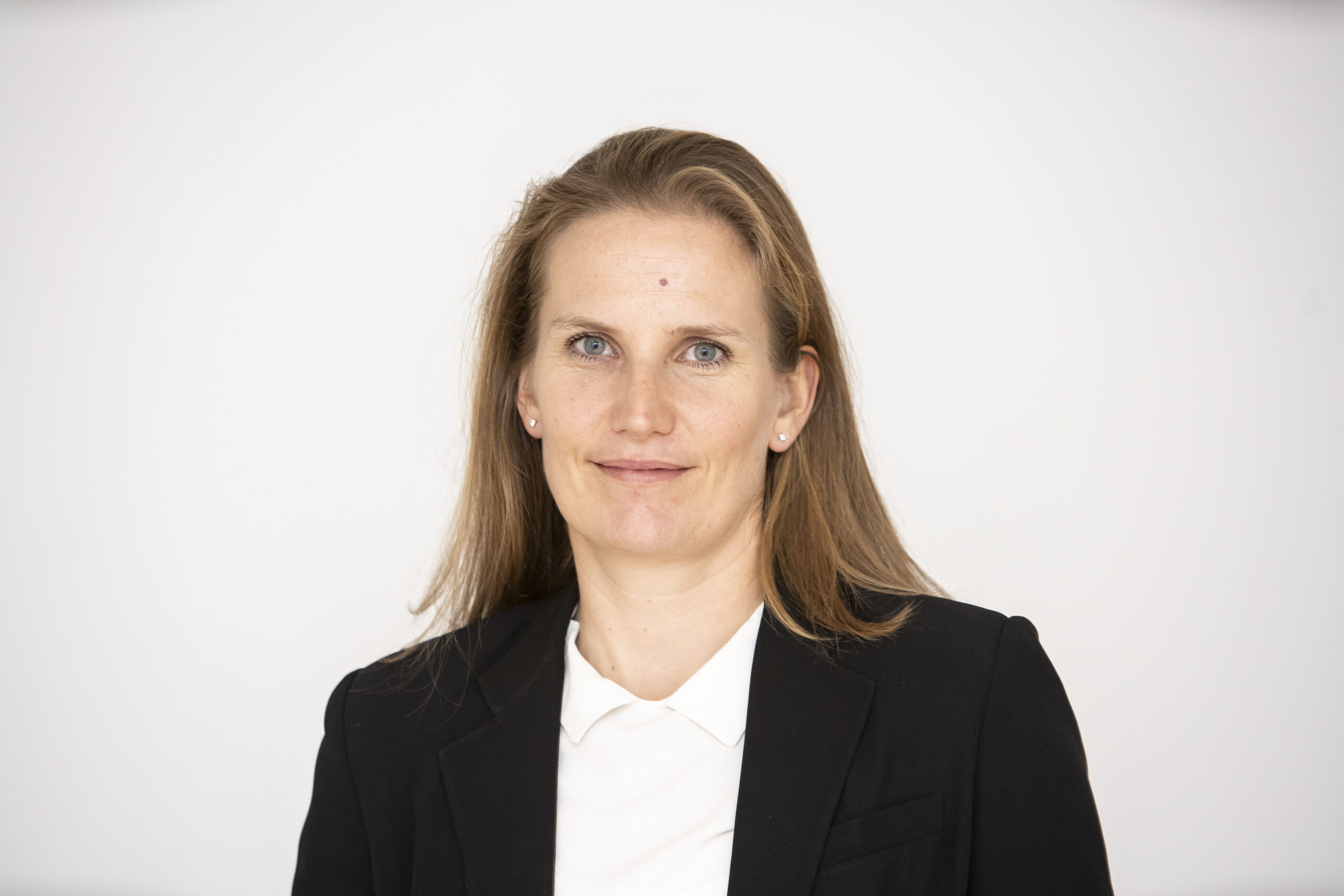

Verena Kuhn is head of the World Economic Forum’s Innovator Communities which include Technology Pioneers, Global Innovators and Unicorns. In this role, she sits at the intersection of frontier technology, global business and public policy. Kuhn has worked for the Forum since 2017. Prior to that she worked for Procter & Gamble, in brand management and finance. She recently spoke to the Innovator about the members of the Innovator Communities who attended this year’s annual meeting and the tech trends that should be on the radar of business.
Q: Why, in the 26 years since the Forum launched its Tech Pioneers program, does the role of tech startups in the annual meeting keeps expanding?
VK: Davos has evolved because the world has evolved. Twenty-six years ago, innovation largely was found in universities and large corporates. Today, many of the most consequential breakthroughs are coming from startups. These companies are not just suppliers of technology anymore. They are shaping markets, infrastructure, and even public goods. In areas like AI, biotech, and digital infrastructure, startups increasingly perform functions that used to sit with governments or large incumbents. That makes them powerful actors, and it raises important questions about governance, accountability, and impact. This is exactly where the World Economic Forum plays a unique role. Our Innovator Communities ensure that the people building frontier technologies are in the room with policymakers, CEOs, and civil society leaders, not just to scale faster, but to scale responsibly. Also worth mentioning is that this doesn’t only happen in Davos. Our Annual Meeting of the New Champions in China in early June is another important meeting where Innovators play a big role. This year, one of the most exciting areas we’re seeing is neurotechnology. Companies like Precision Neuroscience and INBRAIN Neuroelectronics show how quickly science is moving out of the lab and into real-world applications. These are the kinds of breakthroughs that need early, cross-sector dialogue and we bring the founders to the table.
Q: Can you talk about the role of large corporates in helping these companies scale?
VK: Startups are great at driving innovation and disrupting markets but often they struggle with scaling. This is what big companies know how to do. They have more experience, capital, human resources, big customer networks and know how to ramp up production. Scaling up production is very hard. Innovators excel in driving innovation and using digital, but when it comes to the real world and developing infrastructure it becomes difficult. Look at AI infrastructure. Last year model makers were the kings and hyperscalers looked like they could lose importance. Now we see you need to partner with hyperscalers and the most limiting resource is in the data center space and the availability of energy in the next 12-24 months.
Davos (and Summer Davos in China) is a unique opportunity for founders to meet large corporates, but increasingly the large corporates also value the opportunity to meet leading innovators.
Q: There was a big emphasis on AI in Davos this year. What, in your view, are the key trends?
VK: We are clearly moving into a new phase of AI. The focus is shifting from large language models toward so-called world models. World models are systems designed to understand and interact with the physical world, not just text. That has huge implications for science, robotics, and industry. Yann LeCun’s new startup AMI Labs is a good example of this trend. He left Meta, an LLM maker, to start a physical AI company.
At the same time, we are still very early in figuring out sustainable business models. Many AI companies are experimenting with outcome-based pricing but there is still a lot of uncertainty about what will ultimately scale. In Davos, Sarah Friar from OpenAI explained that they are looking to try and take a cut of revenue earned from using their AI for scientific discovery, an indication that AI companies are moving to outcome- based business models. In search of sustainable business models many are moving to infrastructure: examples in our communities include Poolside, Coreweave, NScale and Crusoe. We also see more and more applications. Interesting examples include HippocraticAI, Parloa, and ElevenLabs.
What makes this moment especially complex is information asymmetry. On the supply side, companies have incentives to overpromise. On the demand side, some organizations overstate productivity gains, while others stay silent because they see competitive advantage. One of the Forum’s roles is to help leaders separate real progress from hype and to help feature successful use cases of where AI is genuinely transformative. An example is our MINDS program which highlights real-world success stories of AI-enabled transformations that are creating tangible impact.
Q: What about quantum? When will we stop talking about qubits and start talking about revenue and impact?
VK: Even experts can’t agree on the quantum timeline. The real challenge is moving from scientific milestones to industrial reliability, and in my view, we are still some distance away from that – at least not as close as some pitch decks make us believe.At the same time, most companies are significantly underprepared for quantum-safe encryption. When quantum capabilities mature, the implications for today’s encrypted data will be profound, and this is an issue that requires attention well before the technology is fully realized. The jury is also still out there on the best technological approach to quantum. Companies like PlanQC in Europe and PSIQuantum in the United States are pursuing very different technical approaches, illustrating both the diversity of strategies in the field and the long road from breakthrough science to scalable, reliable systems.
Q: There is a lot of talk now about how next gen energy technologies such as fusion, new nuclear and geothermal companies can help power data centers. What new approaches to providing energy are you seeing in the Forum’s Innovators communities?
VK: Our Innovator Communities reflect the full diversity of energy technologies. Fusion companies like Proxima Fusion and Commonwealth Fusion Systems are working on next-generation clean power, while companies like Eolian are focused on deploying that power at scale and Antora is addressing the challenge of storing and using it for industrial heat. Oberon Fuels tackles a different but equally critical problem by providing low-carbon fuels for sectors that cannot be easily electrified. What this illustrates is that the energy transition is not a single technology story, but a real system redesign that spans electrons, molecules, and infrastructure. What we see in Davos is that energy is no longer a background issue for digital innovation. With the rapid growth of AI, energy availability is becoming a central constraint, forcing much closer alignment between technology development, energy systems, and industrial policy.
Q: Space is the next frontier. How are companies in the Forum’s Innovators community approaching this sector?
VK: Space is moving quickly from exploration to industrialization. We are seeing companies build the infrastructure of a real space economy from reusable spacecraft and Earth-observation networks to space stations and even space-based data centers. Two years ago, the Forum published a report on the Space Economy, predicting that it would grow to $1.8 trillion by 2035, up from $630 billion in 2023. A big part of that will be driven by startups. I am personally excited about European players like The Exploration Company and ICEYE who sit alongside U.S. companies such as Vast and Starcloud, all pointing to a future where space is tightly integrated into our industrial and digital systems. This is also an area where we will see a lot of growth in the coming years, partially driven by the desire of many countries and regions to have a somewhat sovereign tech stack.
Q: In Davos Elon Musk said he believes there will soon be more robots than people. What is your view?
VK: I do expect a significant surge in robotics, but not for the reasons people often focus on. What makes me bullish is simple math. In many economies, the future human labour force does not add up to the demand we are facing, particularly in logistics, manufacturing, and infrastructure. For a long time, the limiting factors were physics and economics. Robots were too expensive, too fragile, or too narrow in what they could do. What’s changing now is that rising labour shortages are making the business case much clearer, and advances in AI, perception, and hardware are finally converging.We see this across our Innovator Communities. Companies like China’s Mech-Mind are enabling robots to see and reason in complex industrial environments. In the U.S., Agility Robotics is already deploying humanoid robots like Digit in logistics operations, while companies such as RoboForce and Skild AI are building the foundation models and full-stack systems needed for robots to operate safely and adaptively in the real world. The real question for me is no longer whether robots will become widespread, but how we manage their integration into the workforce in terms of productivity, skills, and social impact. The Forum’s Global Risks Report 2026 identifies adverse outcomes of AI as one of the top long-term global risks, rising sharply in ranking. AI-related technological risks include automation and autonomous systems so it is very important for us to haves some of the key players in this field at the table when discussing how this long-term concern should be mitigated.
Q: We are starting to see real impact of AI in the health sector. Can you talk about that?
VK: Health is one of the first areas where AI delivers tangible impact. We’re seeing it embedded in drug discovery, diagnostics and patient care, moving beyond pilots into clinical workflows. We see this across drug discovery, diagnostics, and patient care. Companies in our Innovator Communities like Enveda Biosciences and GenBio.AI are accelerating drug development by combining AI with biological data. Viz.ai is helping clinicians detect critical conditions faster, while companies such as Abridge and HippocraticAI are improving how clinicians interact with patients and manage care at scale. The next phase will be a system level re-think building on these new capabilities and capacities. This will not be only about technology but also about trust, regulation and integration.
Q: There was less talk about climate and sustainability this year at the annual meeting, a reflection of a green backlash movement that perceives climate policies as unfair and costly. How is this impacting startups and scale-ups in this space?
VK: What we’re seeing is not a retreat from climate innovation, but a shift in how it’s framed. Many startups are moving away from leading with sustainability as a moral argument and instead emphasizing performance, efficiency, and resilience, even though what they do in practice remains largely the same. Startups and scale-ups with business models that rely heavily on government funding or subsidies are clearly more vulnerable in the current environment. By contrast, companies that can help customers increase profits or reduce costs while also driving sustainability are proving far more resilient.In some cases, the business case is becoming stronger because of climate change itself. ClimateAi, for example, uses AI and climate modelling to help agriculture and food companies anticipate climate risks and adapt their operations and supply chains. As extreme weather events become more frequent, the value of these solutions becomes increasingly tangible.
Q: What trends are you seeing in cybersecurity?
VK: As AI makes it easier to build and scale digital capabilities – we are waiting for the one-person unicorn – it’s not just empowering small teams and startups, it’s also lowering the barrier for attackers.That changes the risk landscape quite fundamentally. Attacks can be launched faster, at greater scale, and with much more precision, which is why cybersecurity is becoming a critical issue not just for companies, but for infrastructure and public services as well. Companies in our Innovator Communities such as Dragos, Dream Security and Darktrace, are focused on helping organizations stay ahead of these threats, detecting and responding earlier rather than reacting after the damage is done. Cybersecurity is no longer just a technical function; it’s becoming a major industry in its own right, and one that I expect to grow rapidly, driven largely by new players.
Q: What do you want business readers to take away from this interview?
VK: The key takeaway for business leaders is that these innovators are no longer operating at the margins of the global economy. They are shaping critical systems, from energy and health to AI infrastructure and security, and they are doing so at unprecedented speed. For established companies, this means innovators are not just sources of R&D or partnership opportunities; they are becoming competitors, collaborators, and system builders. Keeping these technologies and companies on the radar is no longer optional, it’s a strategic necessity and hopefully the Forum’s Innovator Community helps highlight the most noteworthy disruptors from all around the world.
This article is content that would normally only be available to subscribers. Become a subscriber to see what you have been missing