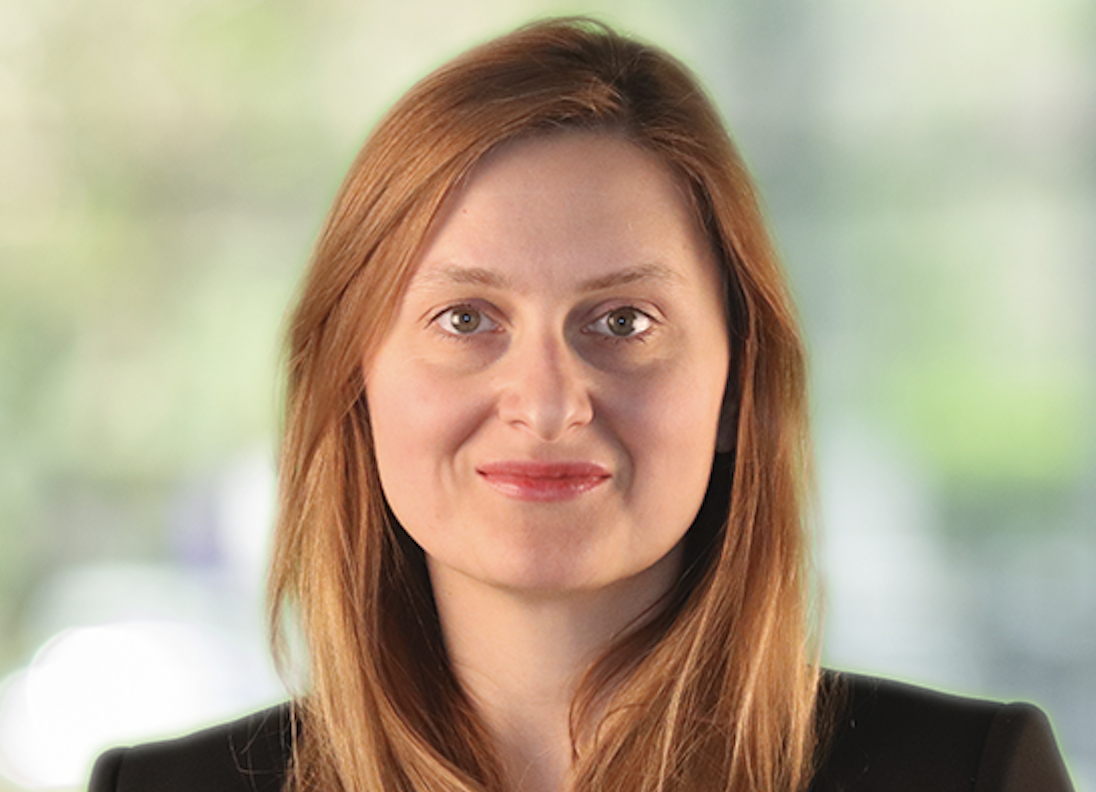

Kamila Markram, PhD, is a neuroscientist and the CEO of Frontiers, an open-science publisher based in Switzerland. Frontiers, which she co-founded with her husband neuroscientist Henry Markram, comprises an editorial program of over 200 open-access journals, covering more than 1,700 specialty areas, constituting one of the largest editorial boards in scientific publishing. It has published the work of over three million authors, and its research articles have been cited more than 10 million times and viewed over four billion times. She has also launched initiatives like Frontiers for Young Minds, a journal which engages children in reviewing scientific articles, and the Frontiers Planet Prize, a global competition that rewards and funds groundbreaking research to maintain planetary health.
Markram holds an MSc in Psychology from the Technical University of Berlin, did her Master thesis at the Max-Planck Institute for Brain Research in Frankfurt and obtained an award-winning PhD in Neuroscience from the Swiss Federal Institute Lausanne. Her groundbreaking “Intense World Theory of Autism” was featured in popular science magazines and was subject of a book about her family entitled “The Boy Who Felt Too Much.”
Her leadership and innovation have earned her numerous accolades, including recognition by L’HEBDO Forum 100 and the EU Prize for Women Innovators. Markram recently spoke to The Innovator about why Frontiers has decided to launch Science House in Davos during the World Economic Forum’s annual meeting January 19 to 23.
Q: Let’s start by talking about why there is a need for open science
KM: Henry and I recognized that open access resolves many of the functional problems built into the traditional scientific publishing system. With peer review, for example, you submit your article to a first high impact journal, you get rejected, and then you move to the next one, then the next, and in the end, you lose years before you finally get your work published. Then you discover that your article is behind a paywall and you can’t share it with anybody.
When I published my first paper while at EPFL, the Swiss Federal Institute of Technology in Lausanne, one of the richest universities in the world, I discovered that we didn’t have a subscription to that particular journal. So, I ended up buying access to my own paper with my own credit card. This was an important article on the wiring and functioning of autistic brains inspired by my stepson Kai. It dawned on me that if I am not able to download my own paper at my own university – one of the richest universities in the world – what about researchers at other less fortunate institutions or parents of autistic children? They would not be able to read these articles. It was at this point that Henry and I, after discussing it with our colleagues, said ‘Let’s do it, let’s build a better system. How difficult can that be?’ That was about 18 years ago, and our goal was to build a platform that by default is open to anybody in the world, but at the same time validates all articles with rigorous peer review and quality control before entering the stream of knowledge.
Q: In what ways do you think the Frontiers’ open publishing platform has helped advance science?
KM: Our mission is to make all of science openly accessible. When we started off 18 years ago, maybe 10% to 20% of science was openly accessible. The rest sat behind a paywall. Today, I would say it’s around 50%. We played quite a big role as an innovator in this space by building this technology platform for rigorously peer reviewing articles. We demonstrated that the open-access model provides quality publishing at scale. Our goal is to keep on pushing to make sure that science is opened across the many different fields of research.
The COVID story illustrates why. During COVID it became very clear to everybody that if we want to have treatments and vaccines at the pace needed to save lives, we would have to accelerate scientific research by making it open. And so, at that point in time, the White House launched the CORD-19 initiative with the goal of making all the research articles behind COVID openly accessible. This quickly became a comprehensive database into which all the major publishers inserted their COVID and previous coronavirus papers, and it was openly accessible. That was in March 2020. Three months before that, scientists had shared the genetic code of the coronavirus in a databank. These two things came together – the open sharing of the genetic sequence and the sharing of all the articles – triggering the race for the vaccine. At the start, there were about 30,000 articles in the database, with much of them based on earlier research on MERS and SARS. Within a year, there were more than half a million articles. At its peak, this resource included about a million coronavirus-related research articles, all of them openly accessible. This is what sparked the very fast progress that led to the vaccine development, as well as the different treatment strategies and medications for COVID. It was by far the fastest vaccine development in human history, an amazing historical feat.
Now, at this point, I thought everybody would finally understand why open science is so important for human health, planetary health, and prosperity – but the lesson was quickly forgotten, and much of this knowledge was moved back behind a paywall. As a result, what we learned first-hand during COVID pandemic, that the open science dynamic allows us to achieve technological feats in record time, has been largely forgotten, rather than being extended to other societal challenges in human health, such as other respiratory diseases. For cancer, only 30% of the research is openly accessible. And for the most urgent challenge of our lifetimes, the state of our planet’s health, most of this research is also behind a paywall. Open science is required if we hope to transition towards a Net Zero economy within 30 years. We need new, transformative science and much more funding into science if we are to succeed – and this research has to be open to researchers, policy makers, and the public. The fastest, most effective way to accelerate any type of innovation is to make science openly accessible. It’s cheap, it’s effective, and it immediately delivers results. That’s something that we are making happen with the development of Frontiers.
Q: Why Science House and why now?
KM: The idea for the Frontiers Science House emerged during last year’s WEF annual meeting, where we felt that the role of science needs to be more visible to these high-level participants. The project grows out of the relationship we have had with the World Economic Forum for some time – we became a full center partner about a year ago. Over the past four years, we have co-published the “Top Ten Emerging Technologies” report, which is one of their most read reports. For this report, we are able to pull expertise from our network of 300,000 top-notch researchers on our editorial boards. The concept for the Frontiers Science House is an extension of these reports – let’s bring our network of scientists together with policy makers and business leaders in Davos to showcase some amazing cutting-edge science, and also to use the opportunity to advocate for investing in science and accelerating the entire innovation cycle by simply just making all the science openly available. Many of the discussions in Davos need an evidence-based science foundation, and where better to get this discussion going than on the Promenade in Davos during the WEF annual meeting.
It is important that scientists have a seat at the table when it comes to important decisions about the approaches to improving our planet’s environment, how to transition towards Net Zero economies, how to find treatments for cancer – and for every other challenge we face as a global society. The scientific perspective is needed to prioritize policy decisions and guide investment into the development of technology. We have about 40 partners that we’re working from academia, business, policy makers, and funders. And so, I think that’s what the magic is going to be at the at the Frontier Science House: bringing all these people together and making sure that their voice is heard, so that the leaders meeting in Davos can walk away with actionable insight around these important subject areas.
We’re really putting together and quite an amazing program. Topics include advanced precision biomedicine; antimicrobial resistance; biomanufacturing for food and pharma; physical AI and the future of intelligence; the next frontier of quantum computing; and energy demand for data centers. We will start with an afternoon plenary session on Open Science for Global Challenges, which will include the leadership of Novartis and Microsoft and include five presidents of leading universities, just to give an idea of our plans.
Q: What will success look like?
KM: Many of the science funders already understand that the best return on investment is to make the science that they fund openly accessible so that many more people can benefit from the work they pay for. But in science ministries people come and go and policies change, so somebody needs to be there and really push the message that the fastest and most effective return on investment into our universities and into the R&D cycles is to simply mandate to make the science openly accessible. Everybody benefits. The citizens of every country, those who pay the taxes that fund universities, and every company, whether at the scale of Microsoft and Google or in the startup or scale-up phases, benefit when the science is openly accessible.
My personal agenda for the Frontiers Science house is to drive the message that open access to scientific knowledge is required for progress. At Frontiers, we know the problems that early innovators are confronted with; when we started Frontiers, we incubated initially at EPFL but moved off campus when we started to grow. We immediately lost access to publication platforms and were no longer able to access most research articles. This is what happens to every startup company that is incubated within a university. The moment that they move off site, they lose access to the scientific literature, slowing it down. We want to let everyone in Davos know that innovation can be accelerated with open science.
Our partners for the Frontiers Science House and our community of scientists all share our excitement about bringing science to Davos. There’s a lot of interest in the dialogue around building trust in science, given the level of misinformation circulating on social media. Just look at vaccines – they got us out of the COVID situation, and yet the level of mistrust in vaccines is at the highest levels ever. It makes no sense, so we do need to explain science better. One of the indicators for success will be the enthusiasm of the people that we’re talking with in the Science House – that they see that our venue dedicated to science provides needed insight and context. My hope is that it will lead to new collaborations with many of the organizations that are joining us, and, above all, that the Frontiers Science House will give scientists a platform from which their voice can be heard and acted upon.